

 Cart is empty
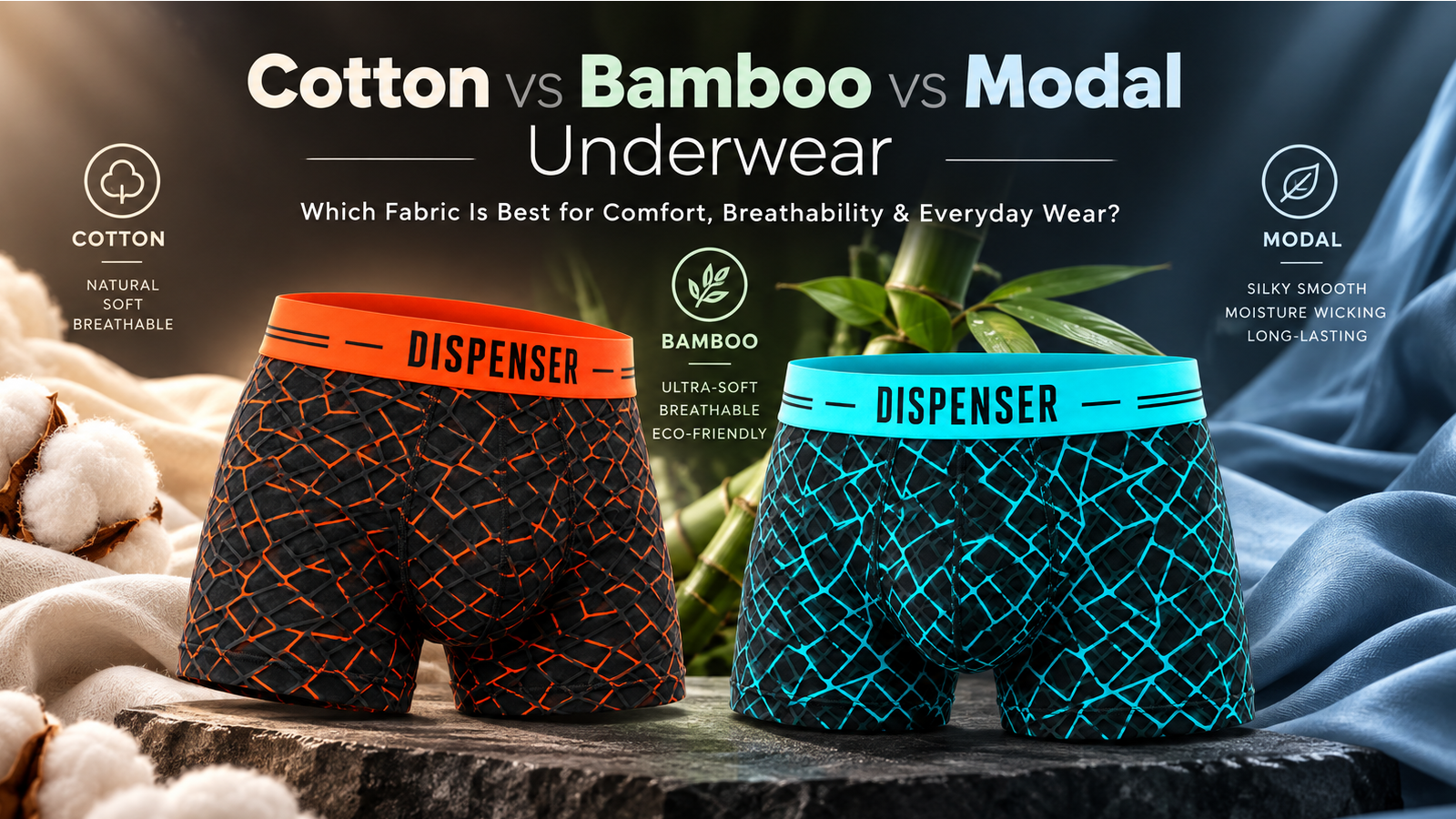
When purchasing underwear, most people pay attention to the size, colour, design and brand, but the fabric is often the most important factor determining how comfortable the garment will feel throughout the day. Since underwear stays in direct contact with the skin for several hours, its softness, breathability, ability to manage moisture and overall fit can make a noticeable difference during everyday activities.
In India, where climatic conditions vary from extremely hot summers to humid monsoons and cooler winters, choosing the right underwear fabric becomes even more important. A fabric that feels comfortable while sitting in an air-conditioned office may behave differently during a crowded commute, a long journey or a physically active workday.
Cotton has traditionally been one of the most popular materials for everyday innerwear because of its natural origin, familiar texture and comfortable feel. However, fabrics such as bamboo-derived viscose and modal have become increasingly popular among consumers looking for softer textures, smoother finishes and premium wearing experiences.
At DISPENSER, a manufacturer and supplier of men’s, women’s and kids’ innerwear based in Surat, Gujarat, fabric selection is an important part of developing comfortable and practical garments. The brand’s product range includes cotton-Lycra trunks, printed underwear, modal-based innerwear and bamboo-modal options designed for different consumer preferences.
So, when comparing cotton vs bamboo vs modal underwear, which material is actually better? The answer depends on your lifestyle, climate, skin comfort preferences, budget and the quality of the finished garment.
1. Cotton Underwear: The Traditional Choice for Everyday Comfort
Cotton is a natural plant-based fibre that has been used in clothing for generations. Its popularity in innerwear comes from its comfortable texture, ability to absorb moisture and versatility across different types of knitted fabrics.
Unlike materials made through a regenerated-cellulose manufacturing process, cotton fibres are obtained directly from the cotton plant before being cleaned, spun into yarn and converted into fabric. This makes cotton a familiar choice among people who prefer natural fibres for their everyday clothing.
Benefits of cotton underwear
Breathable comfort: Cotton can be knitted into fabrics that allow air and moisture vapour to move through the garment, making it suitable for everyday underwear, particularly when the construction is lightweight and not excessively dense.
Good moisture absorption: Cotton absorbs perspiration, which can initially feel comfortable against the skin, although it may remain damp for longer when someone sweats heavily or the surrounding air is humid.
Familiar skin feel: Many consumers prefer cotton because of its soft, natural texture and the way it feels during daily wear. However, suitability for sensitive skin also depends on dyes, finishes, seams and individual sensitivities.
Practical durability: Well-constructed cotton underwear can tolerate regular laundering, although shrinkage, colour fading and changes in fit may occur depending on fibre quality, fabric finishing and washing practices.
DISPENSER cotton underwear example
Consider a DISPENSER men’s cotton-Lycra trunk made with a composition such as 95% cotton and 5% elastane. The cotton provides the familiar textile feel and moisture absorption, while the elastane improves stretch and recovery, allowing the garment to move more comfortably during sitting, walking and everyday activities.
DISPENSER also offers printed cotton-stretch trunk combinations, making this type of construction practical for consumers who want regular-use underwear with a flexible fit and a choice of colours or prints.
Cotton-Lycra trunks are particularly suitable for customers who prefer a supportive shape rather than a loose-fitting garment.
2. Bamboo Underwear: Understanding Its Softness and Comfort
Bamboo underwear has attracted considerable consumer interest because it is commonly associated with softness, a smooth surface and a comfortable wearing experience.
However, there is one important technical distinction that consumers should understand: most soft bamboo-based underwear is not manufactured directly from mechanically extracted natural bamboo fibres.
Instead, bamboo is commonly converted into dissolved cellulose and regenerated into a material known as bamboo-derived viscose or rayon. The resulting fibre may feel smooth and soft, but its properties and environmental impact should not automatically be equated with those of the original bamboo plant.
Benefits of bamboo-derived viscose underwear
Smooth texture: Bamboo-derived viscose can create a soft and fluid fabric surface that many customers find comfortable for close-fitting garments.
Moisture absorption: As a regenerated cellulosic material, bamboo viscose can absorb moisture, although how quickly the finished underwear dries depends on fabric structure, weight, blend and surrounding conditions.
Comfortable drape: Bamboo-viscose blends often have a flexible, flowing hand feel that works well for soft briefs, panties and other close-to-skin garments.
Premium appearance: Its smooth fabric finish makes bamboo-derived viscose popular in comfort-focused innerwear collections, especially when combined with appropriate stretch fibres.
DISPENSER bamboo-based innerwear example
DISPENSER’s bamboo-modal product category is relevant for customers looking for soft, lightweight-feeling innerwear, including women’s underwear designed for everyday comfort.
For example, a woman selecting underwear for regular office wear, travel or relaxed daily activities may prefer the smooth texture of a well-made bamboo-modal brief over a more structured cotton product.
Nevertheless, customers should check the actual fibre composition shown on the specific DISPENSER product label, because bamboo viscose, modal and bamboo-modal blends are not identical materials.
It is also important to understand that bamboo underwear should not automatically be described as antibacterial, infection-preventing or environmentally sustainable without reliable evidence for those claims.
3. Modal Underwear: A Premium Fabric for Smooth, Soft Comfort
Modal is a regenerated cellulose fibre typically produced from wood pulp, often sourced from beech trees. Although it begins with plant-based raw material, it undergoes industrial processing to form a textile fibre with a smooth surface and comfortable drape.
Modal has become a popular option for premium innerwear because it can produce fabrics that feel exceptionally soft and flexible, particularly when blended with elastane.
Benefits of modal underwear
Soft and silky hand feel: Modal fabrics are often smoother than conventional cotton knits, making them appealing to consumers who prioritise a luxurious texture.
Moisture absorption: Modal can absorb moisture effectively, although the performance of a finished garment depends on its knit, thickness, finishing and fibre blend rather than fibre type alone.
Flexible drape: Modal fabrics often conform comfortably to body movement without feeling excessively stiff, making them suitable for fitted underwear designs.
Appearance retention: Well-manufactured modal fabrics can maintain a smooth appearance through regular use, although pilling, shrinkage and stretching still depend on production quality and garment care.
What is the difference between modal and micro modal?
Micro modal is a finer-fibre version of modal that can produce an especially smooth, soft textile surface.
This makes it attractive for premium innerwear, where the wearer may prefer a lighter and more refined feeling against the skin.
DISPENSER modal underwear example
A DISPENSER micro-modal trunk with elastane, where available in the confirmed product composition, is an example of how a fine, soft fabric can be combined with stretch to create premium everyday underwear.
For someone who spends long hours travelling, attending meetings or sitting at work, the smooth fabric surface and a correctly fitted waistband may create a more comfortable wearing experience than a rougher or poorly fitted garment.
The fabric itself is only one component of that comfort. The waistband, sewing construction, elastic recovery and garment size must also be suitable for the wearer.
4. Cotton vs Bamboo vs Modal Underwear: Complete Fabric Comparison
| Feature | Cotton | Bamboo-derived viscose | Modal |
|---|---|---|---|
| Fibre origin | Natural cotton plant | Regenerated cellulose, usually from bamboo pulp | Regenerated cellulose, commonly from wood pulp |
| Typical texture | Soft, familiar, slightly structured | Smooth, fluid, soft | Smooth, silky, refined |
| Breathability | Good in suitable knits | Good in suitable knits | Good in suitable knits |
| Moisture absorption | Good | Good | Good |
| Drying performance | May remain damp after heavy sweating | Depends on construction and finishing | Depends on construction and finishing |
| Stretch | Usually needs elastane for fitted styles | Usually needs elastane for fitted styles | Usually needs elastane for fitted styles |
| Durability | Often robust with good construction | Requires attention to wet strength and care | Can perform well with suitable construction |
| Typical positioning | Everyday / value to premium | Soft comfort / premium | Premium / luxury comfort |
| Suitable styles | Trunks, briefs, boxers, vests | Briefs, panties, trunks | Trunks, briefs, premium innerwear |
Important: This comparison represents common material characteristics, not a laboratory ranking. The finished fabric’s GSM, yarn quality, knit construction, colour treatment and stretch blend can significantly influence its performance.
5. Which Underwear Fabric Is Best for Hot and Humid Indian Weather?
Indian weather presents a particular challenge for underwear because high temperatures, perspiration and humidity can make damp clothing uncomfortable.
In cities such as Surat, Mumbai, Chennai and Kolkata, a person may experience long periods of warmth and humidity, especially while commuting or working outside air-conditioned environments.
Cotton underwear remains a practical everyday option because it is breathable and absorbent, but a heavier cotton knit may retain sweat and take longer to feel dry after intensive activity.
Modal and bamboo-derived viscose fabrics are worth considering for consumers who prefer smoother and more fluid textures. However, it would be inaccurate to assume that every modal or bamboo garment is automatically cooler or faster-drying than every cotton garment.
For Indian summer comfort, the better approach is to select lightweight, breathable fabric with suitable moisture management, comfortable seams and a proper fit, irrespective of whether the fibre is cotton, bamboo-derived viscose or modal.
A DISPENSER cotton-Lycra trunk can be a suitable option for general daily wear, while the brand’s modal or bamboo-modal options may appeal to customers seeking a different, softer fabric feel.
For heavy exercise or very high perspiration, a purpose-designed moisture-wicking sports fabric may perform better than any of these three conventional underwear materials.
6. Which Is Better for Men: Cotton, Bamboo or Modal Underwear?
Men selecting everyday underwear should consider more than softness alone, particularly because the same garment must remain comfortable during walking, sitting, bending and other regular movements.
A cotton-Lycra trunk offers a familiar fabric feel while using stretch to improve flexibility, making it a useful everyday choice for office wear, college, commuting and casual activities.
A modal-based trunk may appeal more strongly to customers looking for a smooth, premium surface, particularly when they wear fitted trousers or spend extended periods travelling.
Bamboo-viscose-based underwear provides another soft-texture option, but the exact blend, waistband and stitching quality should be checked before purchasing.
For DISPENSER customers, choosing between these materials should begin with their preferred garment style and fabric composition, followed by the size, waistband construction and intended use.
7. Which Underwear Fabric Is Best for Women?
Women’s underwear must balance softness, coverage, fit, moisture management and ease of movement, particularly because different panty styles create different areas of fabric contact.
Cotton continues to be a popular option for everyday underwear, and cotton gussets are commonly preferred in underwear construction because cotton is absorbent and familiar against the skin.
Bamboo-derived viscose and modal can also provide comfortable options when used in suitable women’s briefs, hipsters or boyshorts, especially for consumers who enjoy smooth, flexible fabrics.
For example, DISPENSER women’s bamboo-modal briefs can be considered by customers who prioritise softness during routine daily activities, provided the product’s actual fibre blend and care instructions meet their requirements.
However, no particular fabric can guarantee prevention of irritation, rashes or infections, and women with persistent discomfort should consider fit, moisture exposure, hygiene and appropriate medical advice rather than relying only on material claims.
8. Is Expensive Modal or Bamboo Underwear Worth Buying?
One of the most common questions among customers is whether premium innerwear materials justify a higher price than conventional cotton products.
The answer depends on what the customer values.
Someone who mainly wants reliable everyday underwear may find that a good-quality cotton-Lycra garment provides an excellent balance of comfort, fit and affordability.
Another person may be willing to spend more on modal because they appreciate its smoother texture and refined fabric feel, while a customer attracted to bamboo-derived viscose may prefer its soft drape and overall comfort.
Premium pricing should not be justified by fibre names alone. Customers should also assess stitching quality, elastic comfort, shape retention, accurate sizing, fabric finishing and performance after washing.
At DISPENSER, the purpose of offering different fabric categories is to give customers more choices according to their wearing preferences and budget rather than suggesting that one material is automatically best for everyone.
9. How Cotton, Bamboo and Modal Underwear Are Manufactured
Understanding the manufacturing process helps explain why two underwear products made from similar fibres can differ significantly in comfort, durability and retail price.
The manufacturing journey generally begins with selecting the appropriate yarn and fabric blend according to the expected product performance, target customer and price segment.
For cotton-based innerwear, manufacturers may use cotton yarn blended with elastane to provide natural-fibre comfort together with the stretch and recovery needed for fitted trunks or briefs.
For bamboo-derived viscose and modal garments, the production process involves sourcing the appropriate regenerated-cellulose yarn and selecting suitable knitting and finishing methods to achieve the intended smoothness, fabric weight and dimensional stability.
Major stages in underwear manufacturing
1. Fibre and yarn selection: The manufacturer decides whether the product should use cotton, modal, bamboo-derived viscose or a blend, taking into account yarn count, fibre quality, stretch requirements and production cost.
2. Fabric knitting: The selected yarn is converted into knitted fabric, often using circular knitting machines, where stitch structure and machine settings influence fabric stretch, thickness, stability and surface texture.
3. Dyeing and finishing: The fabric is coloured and finished according to the required shade, hand feel and shrinkage targets, with proper process control important for consistent fabric performance.
4. Fabric inspection and cutting: The fabric is examined for defects and dimensional consistency before panels are cut according to approved patterns and size specifications.
5. Stitching and waistband attachment: The garment is assembled using suitable sewing methods, while waistband selection, seam placement and stitching accuracy help determine long-term comfort.
6. Quality checking and packaging: Finished underwear is checked for fit, measurement tolerance, stitching defects, appearance and other applicable standards before being packed for sale or wholesale distribution.
10. Why Fabric GSM, Stretch and Stitching Matter More Than Marketing Claims
In innerwear manufacturing, choosing cotton, bamboo or modal is only the beginning of product development.
GSM (grams per square metre) indicates fabric mass per unit area, and although it is useful when comparing fabric specifications, it does not independently determine whether a garment will feel breathable or durable.
A heavier fabric may provide more coverage and structure, while a lighter fabric may feel less bulky, but the actual wearing experience also depends on yarn, knit density, finishing and design.
Similarly, stretch and recovery are essential in fitted men’s trunks and women’s briefs. Elastane can improve recovery after movement, helping the underwear maintain a comfortable fit.
Stitching quality also affects the final product. Rough seams, incorrectly attached waistbands or inconsistent measurements can make even expensive fabrics uncomfortable.
For this reason, a DISPENSER cotton-Lycra trunk should be evaluated as a complete garment, including its waistband, fabric construction, stitching and fit, rather than only by the percentage of cotton mentioned on the label.
11. Cotton, Bamboo and Modal Underwear for Wholesale and Private-Label Brands
For retailers, distributors and businesses planning to launch their own innerwear brand, fabric selection influences product positioning, manufacturing cost, customer expectations and repeat-purchase potential.
Cotton-Lycra underwear is commonly suited to everyday and mass-market collections because consumers recognise the fabric and it can be developed into a range of familiar products, including trunks, briefs and stretch underwear.
Modal and micro-modal blends may be useful for businesses developing a premium collection where soft texture and refined fabric appearance are central selling points.
Bamboo-derived viscose blends can provide an additional comfort-focused fabric category, but wholesalers and brand owners should obtain accurate fibre compositions and avoid unsupported antibacterial or sustainability claims.
DISPENSER STORE, based in Surat, Gujarat, provides innerwear manufacturing and supply services for men’s, women’s and kids’ garments, including private-label and white-label business opportunities.
Depending on the product brief and production feasibility, business buyers can discuss fabric preferences, garment patterns, size ranges, waistband branding, labels, packaging requirements and bulk-order specifications.
Before finalising a wholesale order, buyers should request fabric-composition details, relevant samples, measurement charts, quality requirements, minimum order quantities and commercial terms.
Frequently Asked Questions About Cotton vs Bamboo vs Modal Underwear
Q1. Which is better: cotton or modal underwear?
Cotton is an excellent everyday option for customers who like a natural-fibre feel and a familiar level of structure, while modal is particularly appealing to people who prefer a smoother, silkier texture. The better material depends on the garment’s construction, fit, intended use and personal preferences.
Q2. Is bamboo underwear better than cotton?
Not necessarily. Bamboo-derived viscose can feel softer and more fluid than some cotton fabrics, but good cotton underwear can offer comparable everyday comfort, while product durability and moisture performance depend on the construction and manufacturing quality.
Q3. Is modal underwear good for Indian summer?
Modal can be suitable for Indian summer because it can be manufactured into comfortable, breathable and moisture-absorbing fabrics, although its actual cooling and drying performance depends on the finished garment and environmental conditions.
Q4. Is bamboo underwear naturally antibacterial?
Bamboo-derived viscose should not automatically be considered naturally antibacterial, because the industrial process used to convert bamboo into viscose changes the material. Any antibacterial claim should be supported by testing of the finished product.
Q5. Does cotton underwear absorb more sweat than modal?
Both cotton and modal absorb moisture, but their exact absorption and drying behaviour can differ with fibre blend, fabric weight, knitting and finishing. A reliable numerical comparison requires testing the specific finished fabrics.
Q6. Which fabric is best for sensitive skin?
There is no universally best fabric for sensitive skin, because irritation may be influenced by moisture, friction, dyes, finishes, detergent residue, garment fit and individual sensitivities. Choosing smooth, properly fitting underwear and changing damp garments promptly is a sensible starting point.
Q7. Is bamboo underwear more environmentally friendly?
Bamboo can grow rapidly, but turning bamboo pulp into viscose requires industrial processing, and the environmental impact depends on chemical management, energy use, sourcing and wastewater treatment. The word bamboo alone does not establish that a garment is environmentally friendly.
Q8. Where can I buy cotton, bamboo and modal underwear in India?
Consumers can explore DISPENSER’s available men’s, women’s and kids’ underwear collections on www.dispenserstore.in, checking the product description and composition label to confirm the material used in each style.
Conclusion: Which Fabric Should You Choose?
The comparison between cotton, bamboo and modal underwear shows that no single material provides the ideal solution for every customer.
Cotton is a practical and familiar choice for regular daily wear, especially when blended with elastane to improve stretch and recovery. Bamboo-derived viscose offers a soft, smooth texture that many consumers appreciate, while modal delivers a refined, silky feel that works particularly well in premium comfort-focused innerwear.
Nevertheless, a truly comfortable underwear product requires more than the right fibre. Fabric construction, breathability, moisture behaviour, elastic quality, stitching, accurate sizing and proper garment care all contribute to the final wearing experience.
At DISPENSER, the objective is to offer innerwear choices suited to different comfort preferences and everyday needs, from cotton-stretch men’s trunks to softer modal and bamboo-modal product categories.
Whether you are purchasing underwear for personal use or sourcing innerwear for a retail, wholesale or private-label business, understanding these fabric differences can help you select products more confidently.
Explore DISPENSER’s innerwear collections at www.dispenserstore.in and choose the fabric, fit and style that suit your everyday comfort.
Add a Comment