
what is purpose of men vest

Men’s Vest : Purpose, Types, Best Fabrics and Latest Trends

Parts of a man’s everyday wardrobe. Traditionally worn under a shirt or T-shirt, a vest creates a comfortable layer between the skin and outer clothing. Today, men’s vests are no longer limited to basic white cotton designs. They are available in modern fabrics, fashionable colours, improved fits and styles suitable for work, travel, exercise and home wear.

Choosing the right vest can make a noticeable difference in how comfortable and confident a man feels throughout the day.

What Is the Purpose of a Men’s Vest?

The main purpose of a men’s vest is to provide a soft and comfortable base layer under outer clothing. It protects the shirt from direct contact with the body and can help manage everyday perspiration.

1. Helps Manage Sweat

In India’s warm and humid climate, sweating is common during office hours, travelling, outdoor work and daily activities. A breathable vest absorbs or manages moisture before it reaches the outer shirt, helping the wearer feel more comfortable.

2. Protects Outer Clothing

Direct contact with sweat, body oils and deodorant can affect the appearance and freshness of shirts. Wearing a vest creates an additional protective layer and may help keep the outer garment presentable for longer.

3. Reduces Shirt Transparency

Light-coloured and thin formal shirts can sometimes appear transparent. A well-fitted white, beige or skin-tone vest provides extra coverage and creates a cleaner appearance under the shirt.

4. Improves Everyday Comfort

The fabric of a shirt may sometimes feel rough against the skin. A soft vest provides a smoother inner layer, especially under formal shirts, uniforms, kurtas and workwear.

5. Makes the Outfit Look Smoother

A properly fitted vest can create a cleaner base underneath the shirt. Modern invisible and seamless vests are specifically designed to reduce visible lines around the neck and armholes.

A vest is especially useful for men who:

  • Spend long hours at the office.
  • Travel regularly.
  • Work in warm or humid conditions.
  • Wear formal shirts or uniforms.
  • Experience frequent sweating.
  • Prefer an additional layer of coverage.
  • Want softer clothing against their skin.

The vest should not feel extremely tight or loose. A good regular-wear vest should sit close to the body while allowing free movement around the shoulders and arms.

Different Types of Men’s Vests

Men’s vests are available in several designs. Each type is created for a different wearing purpose.

1. Classic Sleeveless Vest

This is the most common type of inner vest. It has a deep neckline, broad shoulder straps and comfortable armholes.

It is suitable for:

  • Formal shirts
  • Uniforms
  • Kurtas
  • Everyday T-shirts
  • Regular office wear

A classic sleeveless vest is generally the most practical option for daily use.

2. Round-Neck Vest

A round-neck vest offers slightly more upper-body coverage. It can be worn as innerwear, loungewear or casual home wear.

It works well under:

  • Casual shirts
  • Sweatshirts
  • Jackets
  • Round-neck T-shirts

Current Indian vest collections include round-neck, sleeveless and extended-length options for different daily-wear requirements.

A racerback vest has narrower fabric coverage around the upper back and shoulders. It gives the arms greater freedom of movement and usually has a more athletic appearance.

It is suitable for:

  • Gym sessions
  • Sports activities
  • Walking
  • Casual summer wear
  • Home wear

3. Gym or Muscle Vest

A gym vest normally features larger armholes, a stretchable construction and a body-following fit. Cotton-elastane and performance fabrics are commonly used because they allow better movement during exercise.

A half-sleeve vest provides additional coverage around the shoulders and underarms. It is useful during cooler weather or under formal clothing when the wearer prefers more coverage.

4. Invisible or Seamless Vest

An invisible vest is designed with smooth or seamless edges around the neckline and armholes. It stays less visible under fitted formal shirts and creates a cleaner professional appearance.

Seamless and no-show constructions are becoming an important innovation in men’s innerwear.

For everyday wear, the best option is usually a soft, breathable sleeveless vest with a comfortable fit and sufficient length for easy tuck-in.

It should have:

  • Soft and breathable fabric
  • Smooth neckline and armholes
  • Comfortable stretch
  • Sufficient body length
  • Good shape retention
  • Lightweight construction
  • Easy wash care

Example: DISPENSER Men’s Vest

The DISPENSER men’s bamboo-modal vest can be presented as a modern regular-wear option for men who value softness and lightweight comfort.

A DISPENSER vest can be worn:

  • Under a formal shirt at the office
  • Under a kurta during functions
  • While travelling
  • With shorts as home wear
  • Under casual clothing during hot weather

Its clean design, stretchable fit and soft fabric make it suitable for long working days as well as relaxed home use. DISPENSER vest colour options such as white, black and orange also allow customers to choose between classic innerwear and modern casual styling.

Fabrics Commonly Used in Men’s Vests

The fabric determines how soft, breathable, stretchable and durable a vest feels.

1. Cotton

Cotton is the traditional choice for men’s vests. It is familiar, breathable, absorbent and suitable for regular use. Cotton vests are particularly popular for office wear and daily innerwear.

2. Combed Cotton

Combed cotton is processed to remove shorter fibres and impurities. This generally produces smoother, finer and stronger yarn than basic cotton.

Combed-cotton rib vests are widely available because they offer a familiar feel with improved softness and structure.

Cotton-elastane combines the comfort of cotton with added stretch. It allows the vest to move with the body and maintain a closer fit.

This fabric is commonly used for:

  • Gym vests
  • Muscle vests
  • Athletic innerwear
  • Fitted daily-wear vests

4. Modal and Micro-Modal

Modal is a regenerated cellulosic fibre made from wood-based raw material. It is known for softness and effective moisture regulation. According to TENCEL™, modal fibres can absorb and release moisture while supporting a drier microclimate near the skin. They are also designed to retain softness after repeated washing.

  • A smoother fabric feel
  • Lightweight comfort
  • Better moisture regulation
  • Premium everyday innerwear

5. Bamboo-Derived Fabric

Many bamboo garments use bamboo-derived rayon or viscose, sometimes blended with modal, cotton or elastane. These blends are increasingly used in premium vests because they can provide a soft, smooth and flexible feel.

The actual comfort and performance depend on the final fabric composition, knitting method and garment construction.

6. Polyester and Performance Blends

Polyester-based fabrics are mainly used in sports and gym vests. They can be lightweight, quick-drying and durable, but their feel is different from cotton or modal.

These fabrics are generally better suited to workouts than traditional office innerwear.

Which Fabric Is Best for Regular Daily Wear?

There is no single fabric that is perfect for everyone.

  • Cotton is best for customers who prefer traditional, breathable and easy-care innerwear.
  • Cotton-elastane is suitable for men who want additional stretch.
  • Modal or cotton-modal is suitable for customers who prefer a softer and more premium feel.
  • Bamboo-modal blends are suitable for long hours, warm weather and lightweight everyday comfort.
  • Polyester performance fabric is more appropriate for workouts and sports.

For long working days and regular Indian weather, a soft cotton-modal or bamboo-modal vest offers a useful balance of softness, moisture management, stretch and comfort.

This is where the DISPENSER bamboo-modal men’s vest can be positioned as a premium daily-wear alternative to an ordinary cotton vest.

What Are the Latest Trends in Men’s Vests in 2026?

Men’s vest designs are becoming more functional, fashionable and versatile.

1. Invisible and Seamless Construction

Customers increasingly prefer vests that do not create visible lines under fitted shirts. Seamless necklines, smoother armholes and second-skin fits are becoming important product features.

Modal, micro-modal, bamboo-derived fibres and cotton-modal blends are becoming more visible in premium innerwear collections. Current products from major innerwear brands include TENCEL micro-modal cotton and modal-cotton rib vests.

Basic flat fabrics are being joined by ribbed, pinstripe and subtly textured designs. These styles make a vest suitable for both innerwear and casual standalone use.

2. Neutral and Earthy Colours

White and black remain essential, but beige, olive, brown, grey and muted colours are becoming more popular. The wider 2026 menswear trend is also moving toward earthy greens and browns, natural-looking fabrics and personalised everyday styling.

Modern customers want products that can serve more than one purpose. A good-looking vest can be worn under a shirt, with shorts at home, during travel or as casual summer wear.

3. Extended-Length Vests

Longer vests that remain tucked inside trousers are gaining attention among office-going customers. Extended length helps reduce frequent readjustment during movement.

4. Tag-Free and Irritation-Free Designs

Printed labels, smoother seams and soft armhole finishes are replacing uncomfortable tags and bulky stitching. Comfort is now being improved not only through fabric but also through garment construction.

5. Better Size Inclusivity

Customers expect brands to provide more size options and clearer size charts. A vest should fit different body types without feeling excessively tight around the stomach, chest or shoulders.

Conclusion

A men’s vest is not just an additional piece of innerwear. It can help manage everyday sweat, protect outer clothing, improve coverage and provide a softer layer under shirts and T-shirts.

For regular daily wear, men should look for a sleeveless vest with breathable fabric, comfortable armholes, sufficient length and a fit that remains close to the body without restricting movement.

Traditional cotton remains a dependable option, while modal and bamboo-modal blends are becoming popular for their smooth feel and moisture-regulating comfort. The DISPENSER men’s bamboo-modal vest represents this new generation of everyday innerwear—combining practical daily use with modern fabric, comfortable stretch and versatile styling.

Whether it is worn at the office, during travel or while relaxing at home, the right vest can provide comfort and confidence from morning to night.
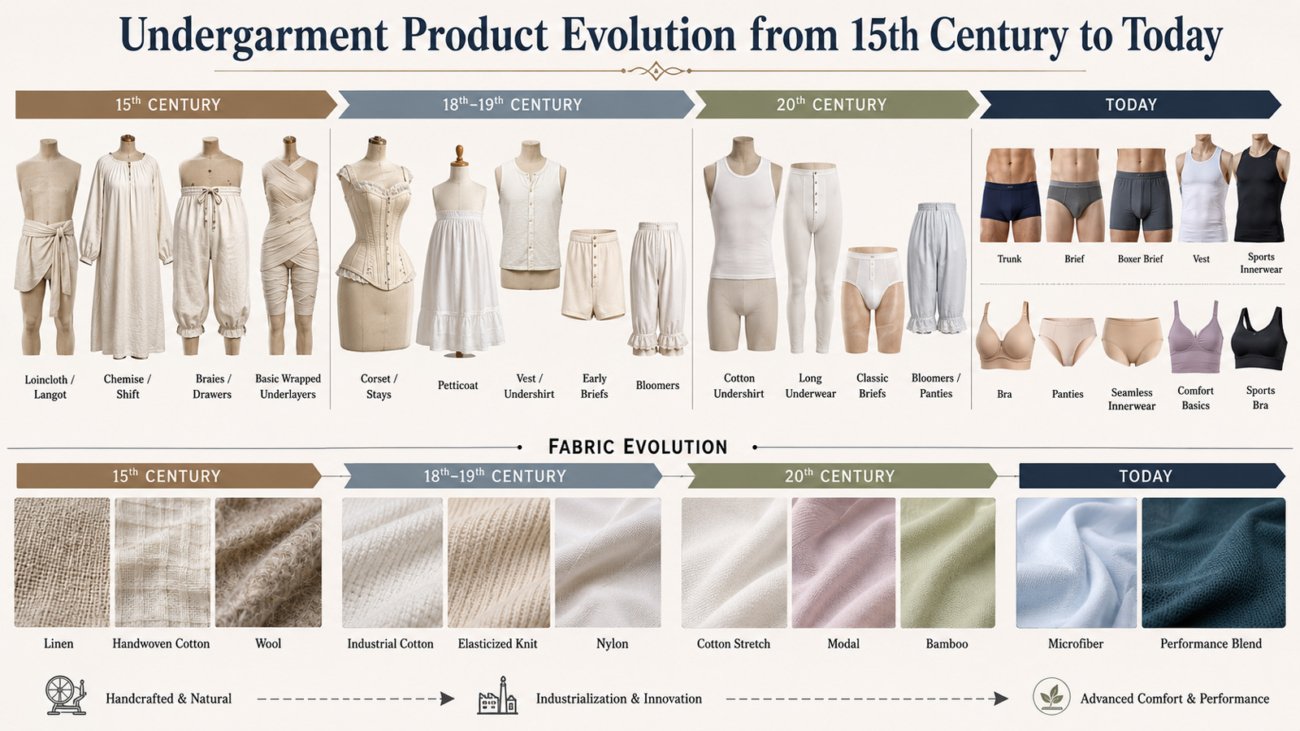
undergarment-evolutin-form-15th-century-to-now-days

Undergarment Product Evolution from 15th Century to now days

Undergarment / Innerwear means clothing worn close to the skin, mainly for hygiene, body support, comfort, modesty, warmth, and later fashion. Earlier, undergarments were mostly simple cloth layers. Today, innerwear is a full business category covering men’s underwear, women’s lingerie, vests, bras, shapewear, thermal wear, kidswear, sports innerwear, plus-size, maternity, and athleisure innerwear.

Around 1500 AD / 16th century, people did not wear modern underwear like today’s briefs, trunks, bras, panties, or vests. Men mostly wore linen shirts on the upper body and braies on the lower body. Braies were loose underpants, similar to long shorts or drawers, usually tied at the waist with a cord. Men also wore hose, which covered the legs, and sometimes a codpiece in front, especially in European fashion. Linen was common because it absorbed sweat and was easier to wash than outer garments.

Women usually wore a chemise, also called a shift or smock, under their gown. It was a simple loose linen garment worn next to the skin. In many places, women did not wear modern-style underpants at that time. The chemise protected expensive outer dresses from sweat and body oils, so it worked like both an inner layer and hygiene layer. Wealthy women used finer linen, while poorer women used rougher, simple cloth.

In India and South Asia, common male undergarments were more like langot / kaupina / loincloth-style cloth, especially for daily work, physical activity, and wrestling. The main purpose of undergarments in that period was modesty, support, sweat absorption, and protection of outer clothing—not fashion or branding. There was no innerwear “brand business” like today; most garments were handmade at home, stitched by local tailors, or produced by local weavers.

Historically, underwear changed because of four big forces: body coverage, hygiene, fashion silhouette, and fabric technology. The V&A notes that underwear reflects changes in gender, morality, hygiene, body image, fashion, and fabric innovation.

Century-wise Undergarment Product & Business Model

CenturyMain product developmentFabric & technologyCustomer / society useBusiness model
6th–10th century CEBasic loincloths, wrapped cloth, simple tunic-like underlayers. In India, traditional forms like kaupinam/langot were used as male underclothing and for wrestling/physical work.Linen, cotton in warmer regions, wool in colder regions, handwoven cloth.Main purpose was modesty, protection, sweat absorption, and support during labour.Mostly home-made, local weavers, village tailoring, barter/local market. No brand concept.
11th centuryIn Europe, men used loose lower undergarments similar to braies; women used simple chemise/shift under gowns.Linen became important because it could be washed more easily than heavy outer garments.Undergarment became a hygiene layer between body and outer clothing.Cloth was still expensive; people owned limited pieces. Local textile trade grew slowly.
12th centuryBraies, hose, chemise, tunics became more organized. Undergarments started differing by class.More wool, linen, silk for wealthy people.Rich people used finer fabric; common people used rougher fabric.Tailors, dyers, cloth merchants grew in towns.
13th centuryMen’s hose and braies became common in Europe; women continued chemise/shift as base layer.Better weaving and dyeing.Underwear was still not fashion product; it was practical and hidden.Local guilds and tailoring professions became stronger in Europe.
14th centuryMen’s garments became shorter outside, so fitted hose and supportive underlayers became more important.Linen underlayers, wool hose.Shape and fit became more visible in men’s clothing.Tailored garments increased among wealthy and urban customers.
15th centuryChemise became a major women’s undergarment. Men used linen shirts and drawers with hose. FIT’s Fashion History Timeline says that in the 1450s, women’s dress foundation was an undyed linen chemise worn by rich and poor, while men used linen shirts and drawers. (Fashion History Timeline)Linen was important because it was washable.Hygiene and layering became more structured.Tailoring, weaving, and laundering became service-based work in cities.
16th centuryRenaissance period: corset-like “bodies,” farthingales, codpieces, chemise, petticoats. Innerwear started shaping the body.Linen, silk, whalebone, leather, stiffening materials.Underwear moved from only hygiene to body shaping and social status.Elite customers ordered custom garments. Court fashion influenced demand.
17th century“Bodies” or early stays shaped women’s torso. The line between underwear and outerwear was not always fixed; some garments could be both. Dress historian Sarah Bendall notes that 17th-century “bodies” could be underwear or outerwear depending on status, occasion, and use. (Sarah A. Bendall)Boning, buckram, silk, linen, ribbons, hand-stitching.Underwear became linked with class, posture, and discipline.Specialist makers, tailors, and women garment workers developed stronger roles.
18th centuryStays, chemise, petticoats, panniers, drawers in some regions. Underwear created fashionable silhouettes.Linen, silk, cotton, whalebone, hand embroidery.Innerwear reflected morality, modesty, and upper-class fashion.Colonial textile trade increased cotton movement. Made-to-measure garments dominated.
19th centuryHuge change: corsets, drawers, petticoats, crinolines, bustles, union suits, undershirts. V&A describes the 1870s bustle as a separate undergarment used to support the back shape of skirts. (Victoria and Albert Museum)Sewing machine, steel boning, elastic, industrial cotton, factory production.Underwear became more structured, especially for women’s silhouette. Men’s practical underwear also became standardized.Industrial Revolution created mass production, sizes, catalogs, department stores, and ready-made underwear.
Early 20th centuryCorsets started declining. Bras, briefs, undershirts, vests, slips, girdles, union suits became common. Mary Phelps Jacob patented the “Backless Brassiere” in 1914; MIT notes she later sold the patent to Warner Brothers Corset Company. (Lemelson MIT)Cotton knits, elastic, rayon, early synthetic materials.Women wanted lighter alternatives to corsets. Men wanted comfort and movement.Branded innerwear companies began growing through department stores and advertising.
1930s–1940sMen’s modern brief became a major innovation. Jockey says its brief launched in 1935 and sold strongly through Marshall Field & Company. (Jockey) Nylon stockings also became a major textile breakthrough; Science History Institute notes national nylon stocking sales began in 1940 and sold out quickly. (Science History Institute)Nylon, elastic waistbands, better knitting machines.Innerwear became a modern consumer product, not just basic clothing.Branded packaging, store displays, advertising, and mass distribution expanded.
1950s–1960sBras, panties, briefs, boxers, vests, girdles, slips, and children’s underwear became common household products.Lycra/spandex changed fit. LYCRA’s history says Joseph Shivers invented “Fiber K” in 1958, later known as LYCRA/spandex, which could stretch and recover. (Coolmax)Fit, stretch, femininity, and modern lifestyle became selling points.Television advertising and national brands became powerful.
1970s–1980sFashion underwear, low-rise briefs, sports underwear, shapewear, branded waistbands, designer innerwear.Polyester, nylon, spandex blends.Innerwear became visible in fashion culture. Men’s underwear marketing became aspirational.Brand identity, celebrity endorsement, department stores, and export licensing grew.
1990sBoxer briefs, trunks, padded bras, seamless panties, microfiber innerwear, premium men’s underwear.Microfiber, modal, better elastics, improved stitching.Comfort + fashion + sex appeal became major demand drivers.Mall retail, brand stores, catalogs, and early e-commerce started.
2000sSeamless, no-line panties, athleisure innerwear, shapewear, performance underwear, kids branded innerwear.Modal, micro modal, bamboo blends, moisture-wicking fabrics.Customers started caring about comfort, body fit, skin feel, and brand lifestyle.Organized retail, franchise stores, private labels, OEM/white-label manufacturing expanded.
2010sD2C brands, online lingerie, plus-size, body positivity, sports bras, printed men’s trunks, subscription underwear.Bamboo, modal, organic cotton, antimicrobial finish, 4-way stretch.Innerwear became personal, fashionable, and identity-based.Marketplaces, influencer marketing, Instagram ads, Amazon/Myntra/Flipkart-style selling.
2020s–todayComfort-first innerwear, sustainable fibers, bamboo/modal, breathable trunks, anti-rash stitching, seamless bras, shapewear, gender-neutral products, AI-based sizing, online-first launches.Bamboo modal, recycled fibers, Tencel/lyocell, performance polyester, micro modal, elastane.Customer wants comfort, hygiene, breathability, style, correct fit, fast delivery, and trusted reviews.E-commerce, marketplaces, quick commerce, D2C websites, AI search, creator-led ads, marketplace SEO, and data-driven manufacturing.

Undergarment Product Evolution from 15th Century to now days

We have to update undergarment products from the 15th century to today because human lifestyle, fabric technology, hygiene needs, and customer expectations have completely changed.

In the 15th century, undergarments were very basic. People mainly used linen shirts, chemise, braies, drawers, or loincloth-style garments. The main purpose was only body coverage, sweat absorption, modesty, and protecting outer clothes. There was no concept of branded innerwear, stretch fabric, perfect fitting, antibacterial finish, or fashion design.

Today, undergarments are not just hidden clothing. They are connected with comfort, skin health, confidence, hygiene, body support, and lifestyle. People wear innerwear for office, gym, travel, sleep, sports, daily work, and fashion. That is why modern products need soft fabric, breathable material, stretch, proper fitting, anti-rash stitching, waistband comfort, plus-size options, and better durability.

So the main reason is: undergarments changed from “basic body covering” to “daily comfort and confidence product.” That is why every innerwear brand must keep updating product design, fabric, fit, packaging, photoshoot, listing content, and customer experience according to modern demand.

“DispenserStore manufactur & delivers innerwear that supports every undergrament lifestyle—whether it’s daily wear, active routines, or relaxed moments at home. We blend innovation with reliable manufacturing to create men, women, and kids undergrament products that not only look good but feel even better. At Dispenserstore, our goal is simple: to make innerwear that offers confidence, comfort, and trust in every wear.“

List Of following data of which are updated undergarments product from 15th century to now days

Undergarments Old versionUndergarments Modern version
Loincloth / langotBriefs, trunks, athletic supporters
Chemise / shiftCamisole, slip, nightwear, women’s inner top
Braies / drawersBoxers, briefs, boxer briefs, trunks
Corset / staysBra, shapewear, waist cincher
PetticoatSaree petticoat, underskirt, shapewear skirt
UndershirtVest, tank top, T-shirt innerwear
GirdleModern shapewear
Wool thermal layerThermal innerwear, winter base layer
Handmade cotton undergarmentBranded cotton/modal/bamboo/spandex innerwear

India-specific Undergarment’s Product evolution

India-specific undergarment product evolution from the 15th century to today started from very simple, functional clothing. Around the 15th century, common Indian undergarments were not like today’s briefs, trunks, bras, panties, or vests. Men mainly used langot / kaupina / loincloth-style underclothing, especially for daily labour, farming, wrestling, and physical activity. The langot was a simple cotton cloth tied around the waist and between the legs, used for modesty, support, and movement. Even today, it is connected with Indian wrestling, kushti, kabaddi, and akhara culture.

For women, the product evolution was different because Indian clothing was traditionally based on draped garments, not fully stitched garments. Women wore sari-style drapes, ghagra-choli, odhani, and regional clothing forms. In many communities, the idea of a separate stitched blouse and petticoat became more standardized much later. Before the 1870s, some sources describe Indian women’s sari dressing as more fluid, with unstitched fabric being the norm and tailored blouse or petticoat not yet universal.

During the colonial period, Indian undergarment and inner-layer clothing changed strongly. British Victorian ideas of modesty influenced women’s dressing, especially in urban and elite society. The stitched blouse and petticoat became more common under the sari, creating the modern sari silhouette. This was a very important stage because Indian women’s innerwear slowly moved from only draped coverage to more structured supporting garments under outerwear.

From the 1990s to 2010s, Indian innerwear changed from a basic necessity to a branded product. Customers started asking for better fit, fabric, elastic quality, stitching, size chart, color, and packaging. Men’s underwear evolved into briefs, trunks, boxer briefs, boxers, and printed waistbands. Women’s innerwear evolved into padded bras, T-shirt bras, sports bras, seamless panties, hipsters, maternity innerwear, and shapewear. Online shopping also helped because customers could buy innerwear with more privacy and more product choice.

In the 20th century, India’s undergarment market became more organized. Men’s innerwear moved from langot and loose cotton drawers to baniyan, briefs, vests, boxers, and elastic-waist underwear. Women’s products also expanded into bras, panties, slips, petticoats, camisoles, and shapewear. This period created the foundation of India’s hosiery and innerwear business, where local manufacturers, wholesale markets, and retail shops became important.

Nowadays, people no longer see undergarments as just basic clothing worn beneath outerwear. Consumers expect innerwear to provide all-day comfort, proper fit, breathability, skin-friendly fabric, and confidence. Modern customers pay close attention to fabric quality, softness, stretchability, waistband comfort, moisture control, and durability. Many people believe that a good undergarment can improve their daily comfort, productivity, and overall confidence, whether at work, during exercise, or while relaxing at home.

At the same time, undergarments have become a lifestyle and fashion product. Customers look for features such as premium fabrics like cotton, bamboo, modal, and microfiber, along with attractive colors, prints, and modern designs. Online reviews, ratings, brand reputation, and product images strongly influence purchasing decisions. Today’s consumers want innerwear that not only feels comfortable but also reflects quality, personal style, and value for money, making undergarments an important part of their everyday wardrobe rather than just a necessity.

“DispenserStore manufactur & delivers innerwear that supports every undergrament lifestyle—whether it’s daily wear, active routines, or relaxed moments at home. We blend innovation with reliable manufacturing to create men, women, and kids undergrament products that not only look good but feel even better. At Dispenserstore, our goal is simple: to make innerwear that offers confidence, comfort, and trust in every wear.“

Intimate Area Comfortable in 40°C+ Weather

Best Ways to Keep Your Intimate Area Comfortable in 40°C+ Weather

Hot weather can cause excessive sweating in the intimate area, which may lead to discomfort, itching, rashes, bad odor, and fungal infections. Wearing tight or non-breathable underwear can make the problem worse by trapping heat and moisture.

There are many solution to protect your intimate area but one of best and easy solution is patterns of underwear which are exist in market. Each underwear pattern is designed for different comfort levels, body types, and usage which help to protect your intimate area in high temperatures.

To keep the intimate area comfortable, it is important to wear soft breathable fabrics like cotton or modal, maintain proper hygiene, and change sweaty underwear regularly. Keeping the skin dry and cool helps prevent irritation and improves overall comfort during summer.

Which things to understand about underwear pattern for your body.

  • For men, Boxer Briefs and Trunks are considered best for daily use because they provide:
    • Men’s have understand about his privat area for which kind of fabric is suitable for his body. there are many fabric option which really protect your intimate Area like as Bamboo, Cotton, Micro modal and Moisture-Wicking Fabric. All this fabric is helpful Absorbs swea, Keeps body cool, Very soft and premium comfort and Pulls sweat away from skin.
    • There is no single “best” pattern option for everyone because comfort depends on body type and lifestyle but following thing men must have to check.
      • Good airflow
      • Proper support
      • Comfortable fitting
      • Less sweating and friction

“DispenserStore manufactur & delivers innerwear that supports every undergrament lifestyle—whether it’s daily wear, active routines, or relaxed moments at home. We blend innovation with reliable manufacturing to create men, women, and kids undergrament products that not only look good but feel even better. At Dispenserstore, our goal is simple: to make innerwear that offers confidence, comfort, and trust in every wear.“

  • For women, Hipsters and Boyshorts are usually best for comfort and breathability but during summer, women should take extra care of hygiene and comfort during periods because heat and sweating can increase irritation and infection risk.
    • Wear breathable cotton underwear for better airflow and comfort.
    • Keep the intimate area clean and dry to prevent rashes and fungal infections
    • Avoid very tight panties during hot weather
    • Wear Tag-free, Soft waistband, Anti-bacterial or hypoallergenic fabrics underwear

Things You Should Keep in Mind to Keep the Intimate Area Comfortable

  • Wear Breathable Underwear
  • Maintain Proper Hygiene
  • Choose the Right Fit
  • Change Underwear Regularly
  • Avoid Harsh Chemicals Underwear
  • Stay Cool and Hydrated
  • Use Skin-Friendly Fabrics for Sensitive Skin
  • Maintain Airflow During Sleep

Many types of underwear patterns are there, and which pattern is best for daily use in 40°C+ Weather .

Person are wearing tight, low-quality, or non-breathable underwear can cause several skin problems such as itching, rashes, redness, sweating, fungal infections, and skin irritation. Dirty or sweaty underwear can also increase bacteria growth and bad odor. Using soft, breathable fabrics and maintaining proper hygiene helps keep the skin healthy and comfortable.

Best Men’s Underwear Patterns in summer

  • Trunks
  • Boxer Briefs with breathable fabric
  • Loose boxers for home use

Avoid:

  • Very tight underwear
  • Thick synthetic fabric
  • Poor ventilation designs

Important tips:

  • Change underwear if sweating heavily
  • Avoid staying in wet underwear
  • Use lightweight fabrics in summer

Following list of pattern are available in market which are also helpful for easy life.

Popular Men’s Underwear Patterns

  1. Men’s Briefs
  • Tight fitting
  • Good support
  • Best for sports and tight pants
  • Less airflow compared to others
  1. Men’s Boxers
  • Loose and airy
  • Maximum ventilation
  • Very comfortable for sleeping and home use
  • Less support
  1. Men’s Trunks
  • Shorter version of boxer briefs
  • Modern stylish fit
  • Good balance of support and comfort
  • Very popular for daily wear
  1. Men’s Boxer Briefs
  • Combination of boxers and briefs
  • Excellent support and coverage
  • Prevents thigh chafing
  • Best for all-day comfort

“DispenserStore manufactur & delivers innerwear that supports every undergrament lifestyle—whether it’s daily wear, active routines, or relaxed moments at home. We blend innovation with reliable manufacturing to create men, women, and kids undergrament products that not only look good but feel even better. At Dispenserstore, our goal is simple: to make innerwear that offers confidence, comfort, and trust in every wear.“

Popular Women’s Underwear Patterns

  1. Women’s Bikini
  • Stylish and lightweight
  • Good for regular wear
  1. Women’s Hipster
  • Medium coverage
  • Comfortable for everyday use
  1. Women’s Boyshorts
  • Extra coverage
  • Comfortable during summer and sleeping
  1. Women’s Briefs
  • Full coverage
  • Very comfortable for long hours

Women should also choose underwear according to their lifestyle, weather, and clothing type. For daily use, comfortable patterns like hipsters, briefs, or boyshorts are usually preferred because they provide better coverage and support. In summer or during workouts, moisture-absorbing and lightweight underwear helps maintain comfort. It is also important to maintain hygiene by changing underwear regularly and selecting skin-friendly products for sensitive skin.

“DispenserStore manufactur & delivers innerwear that supports every undergrament lifestyle—whether it’s daily wear, active routines, or relaxed moments at home. We blend innovation with reliable manufacturing to create men, women, and kids undergrament products that not only look good but feel even better. At Dispenserstore, our goal is simple: to make innerwear that offers confidence, comfort, and trust in every wear.“

COTTON FIBER AND TYPE

NATURE GIFTED COTTON FIBER

HOW COTTON FIBER GROW FROM NATURE?

Cotton fiber is naturally produced by the cotton plant as soft, fluffy hairs that grow around its seeds inside a protective boll. As the plant matures, these bolls develop and eventually burst open, revealing the white cotton fibers. The fibers are made primarily of cellulose, which forms as the plant converts sunlight, water, and nutrients through photosynthesis. After harvesting, the cotton undergoes a process called ginning, where the fibers are separated from the seeds. These raw fibers are then cleaned, carded, and spun into yarn, making them ready for use in textile production.

Cotton fiber is a natural cellulose fiber obtained from the seed hairs of the cotton plant, widely valued for its softness, breathability, and comfort. It is composed primarily of cellulose, which gives it strength and the ability to absorb moisture efficiently. Cotton fibers have a twisted, ribbon-like structure that helps them spin easily into yarn, making them ideal for textile production. Due to its natural origin, cotton is biodegradable and generally considered skin-friendly, which is why it is extensively used in clothing, especially for innerwear and everyday garments.

In the textile industry, cotton fiber is preferred for its versatility and durability. It can be woven or knitted into a wide range of fabrics, from lightweight muslin to heavy denim. Cotton also has good dye affinity, allowing it to retain color well after multiple washes. However, it may shrink or wrinkle if not treated properly. The quality of cotton fiber is often determined by factors such as staple length, fineness, and strength, with longer fibers producing smoother and stronger fabrics.

HOWMANY TYPE OF COTTON FIBER USED IN INNERWEAR ?

Innerwear typically uses a few key types of cotton fiber, chosen based on comfort, softness, stretch, and durability. The most common is regular (upland) cotton, which is affordable, breathable, and widely used in everyday innerwear. A premium option is combed cotton, where short fibers and impurities are removed, resulting in a smoother, softer, and stronger fabric—ideal for high-quality underwear. Another upgrade is organic cotton, grown without harmful chemicals, making it more skin-friendly and suitable for sensitive skin.

For more premium or performance-focused innerwear, brands may use Pima cotton or Supima cotton, both known for their extra-long staple fibers that provide superior softness, strength, and color retention. In addition, cotton blends (such as cotton with elastane or spandex) are very common in innerwear, as they add stretch, shape retention, and a better fit. Overall, around 4–6 main types or categories of cotton fibers and cotton variants are commonly used in innerwear, depending on the quality level and intended comfort.

DispenserStore manufactur & delivers innerwear that supports every undergrament lifestyle—whether it’s daily wear, active routines, or relaxed moments at home. We blend innovation with reliable manufacturing to create men, women, and kids undergrament products that not only look good but feel even better. At Dispenserstore, our goal is simple: to make innerwear that offers confidence, comfort, and trust in every wear.

ABOUT UPLAND COTTON FIBER

Upland cotton is the most widely grown and commonly used type of cotton fiber in the world, especially in the production of everyday garments like innerwear, t-shirts, and casual fabrics. It belongs to the species Gossypium hirsutum and accounts for nearly 90% of global cotton production. This type of cotton has medium staple length, which makes it suitable for mass production while still offering a good balance of softness, strength, and affordability.

One of the key advantages of upland cotton is its versatility and durability. The fibers are strong enough to withstand regular washing and daily wear, making them ideal for products that require long-term use. While it may not be as soft or luxurious as premium varieties like Pima or Supima cotton, upland cotton still provides a comfortable and breathable fabric. This makes it a preferred choice for innerwear where comfort and cost-effectiveness are both important factors.

In textile manufacturing, upland cotton is easy to spin and dye, which allows it to be used in a wide range of fabric types and finishes. It absorbs color well, ensuring good color retention after multiple washes. Additionally, it can be blended with other fibers such as elastane to enhance stretch and fit, which is especially useful in modern innerwear design. Overall, upland cotton remains a practical and reliable choice for both manufacturers and consumers due to its availability, performance, and value.

Benifit of cotton trunk

Why Cotton Men’s Trunks Are the Best Choice for Hot Weather

Cotton men’s trunk underwear is one of the best choices for summer because of its natural breathability. Cotton fibers allow air to circulate freely, which helps keep the body cool even in hot and humid weather. This ventilation reduces heat buildup around the skin, making cotton trunks far more comfortable than synthetic alternatives during long, sweaty days.

Another major benefit is excellent moisture absorption. Cotton can absorb sweat efficiently and keep the skin feeling dry for longer periods. In summer, when sweating is unavoidable, this property helps prevent that sticky, uncomfortable feeling and allows you to stay fresh throughout the day, whether you’re at work or on the move.

Cotton is also extremely gentle on the skin, making it ideal for sensitive areas. Men’s trunk underwear made from cotton reduces the risk of irritation, itching, or rashes that are more common in hot weather. Its soft texture ensures minimal friction against the skin, which is especially important when sweat increases skin sensitivity.

Hygiene is another strong advantage. Because cotton is breathable and moisture-absorbing, it helps reduce bacterial growth caused by sweat and heat. This lowers the chances of odor, infections, or skin problems, making cotton trunks a healthier option for everyday summer wear.

DispenserStore manufactur & delivers innerwear that supports every undergrament lifestyle—whether it’s daily wear, active routines, or relaxed moments at home. We blend innovation with reliable manufacturing to create men, women, and kids undergrament products that not only look good but feel even better. At Dispenserstore, our goal is simple: to make innerwear that offers confidence, comfort, and trust in every wear.

Comfort and fit also play a key role. Cotton trunks provide a snug yet flexible fit that supports movement without feeling restrictive. In summer, when you’re more active or wearing lighter clothing, this balance of support and comfort becomes essential for all-day wear.

Lastly, cotton is a durable and easy-care fabric, which makes it practical for daily use in hot seasons. It withstands frequent washing, dries relatively quickly, and maintains its softness over time. This makes cotton men’s trunk underwear a reliable, low-maintenance, and cost-effective choice for staying comfortable during summer.