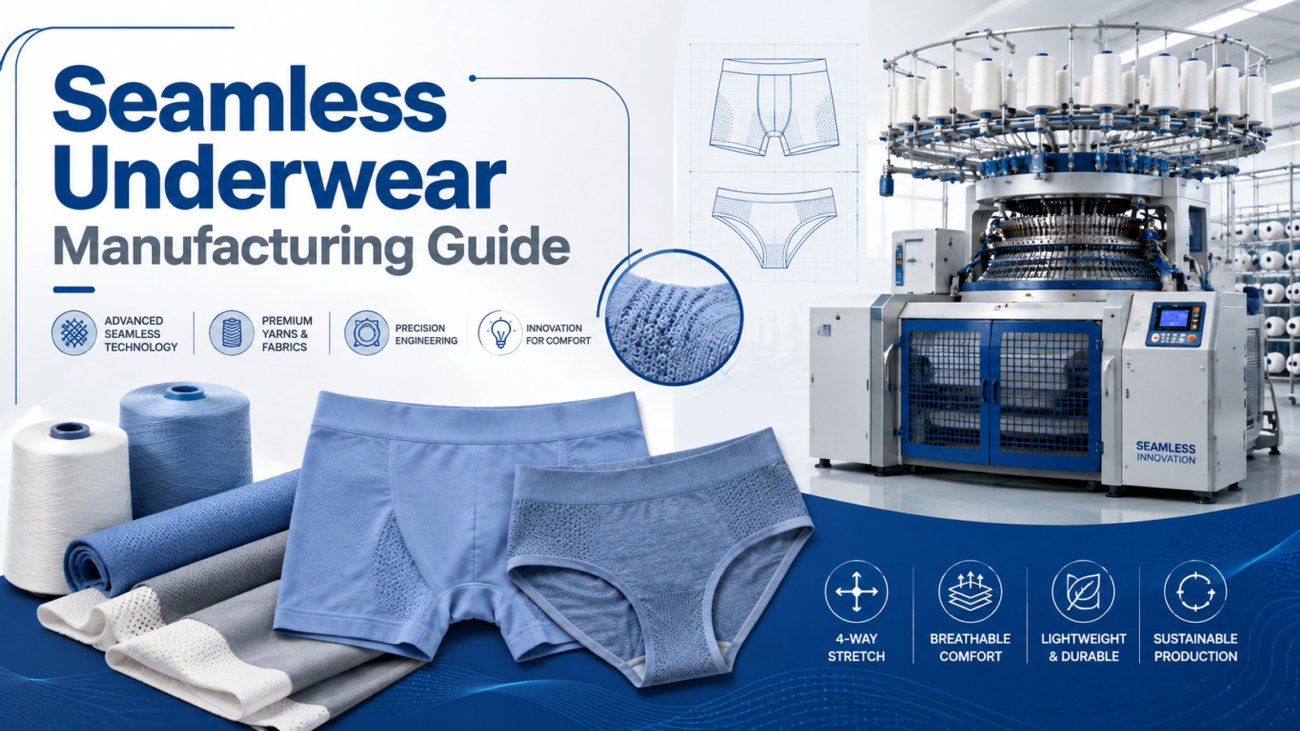
how to make micro modal fabric with complate guide

Micro Modal Fabric Guide: Origin, Quality, Benefits & Uses in Men’s Underwear

Men’s underwear remains in direct contact with the skin for many hours every day. Therefore, the fabric used in underwear must offer more than an attractive appearance. It should feel soft, manage perspiration, allow easy movement, retain its shape and remain comfortable after repeated washing.

Micro Modal has become a popular premium material for men’s underwear because it combines exceptional softness with breathability, flexibility and moisture-management properties. For a comfort-focused innerwear brand such as DISPENSER, Micro Modal can help create underwear designed for long working hours, travel, daily use and relaxed weekend wear.

Which Company and Country Developed Micro Modal?

Micro Modal is most strongly associated with Lenzing AG, a speciality fibre company headquartered in Austria. Lenzing manufactures regenerated cellulosic fibres derived from wood and is internationally known for its modal and lyocell technologies.

Lenzing has produced modal fibres from beech wood at its Austrian headquarters since 1965.

Micro Modal should not be confused with the original invention of modal rayon. Modal fibre technology developed gradually from earlier viscose-rayon processes. Micro Modal represents a finer and more specialised version of modal fibre rather than an entirely separate natural fibre.

Therefore, the most accurate explanation is:

Micro Modal was commercially developed and popularised as a fine modal-fibre technology by Lenzing AG in Austria.

Who Was the Founder of Micro Modal Yarn?

There is no reliable public record identifying one individual as the “founder of Micro Modal yarn.”

Micro Modal was developed through industrial fibre research, production improvements and textile-engineering innovations within companies such as Lenzing. It should therefore be credited to the company’s research and technical development rather than to one individual inventor.

Lenzing began producing modal fibres in Austria in 1965, while finer Micro Modal products were developed commercially later as fibre-spinning technology advanced.

Businesses should avoid publishing an unsupported personal name or invention year. A factually safer statement is:

“Micro Modal is a fine modal-fibre technology developed and commercialised by Lenzing AG of Austria, building on the company’s modal-fibre production experience since 1965.”

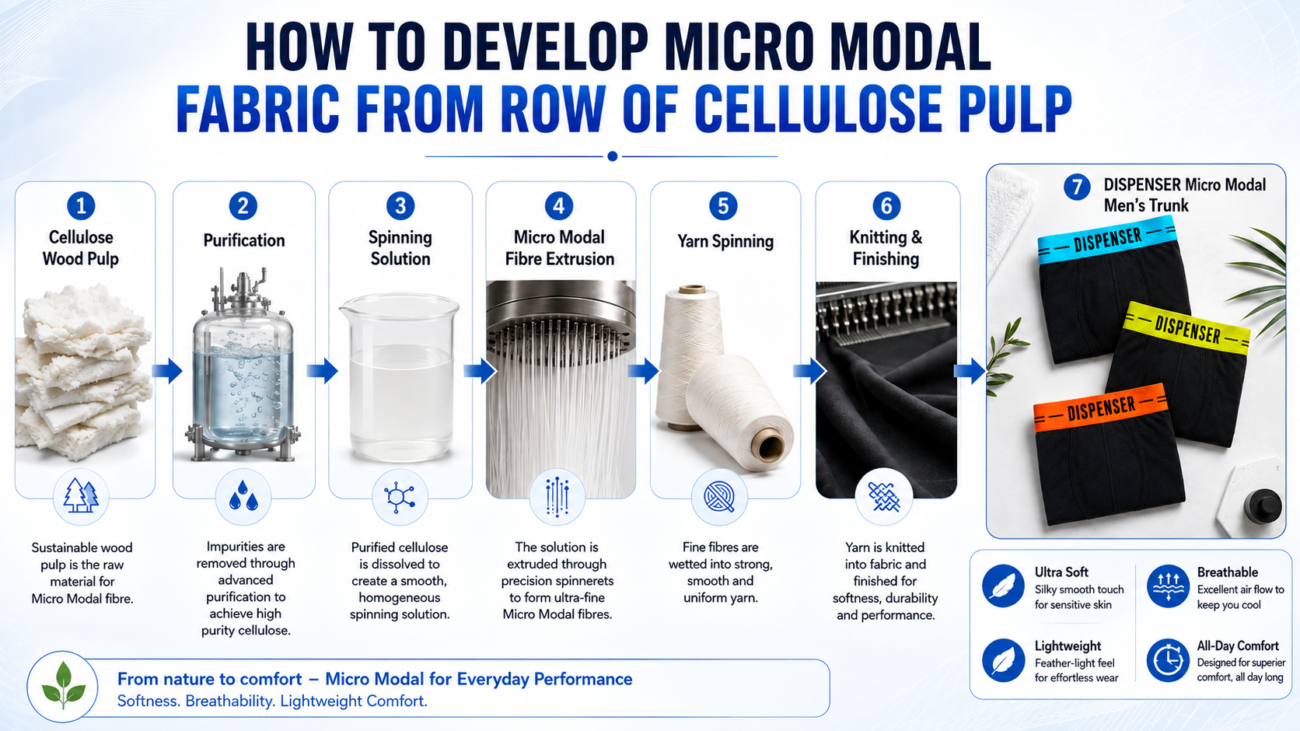
HOW TO DEVELOP MICRO MODAL FABRIC FROM ROW OF CELLULOSE PULP

Micro Modal does not come directly from a cotton plant like cotton yarn. It begins with cellulose-rich wood.

Lenzing states that wood and dissolving wood pulp are the main raw materials used for its cellulosic fibre production. The company sources wood and pulp from certified or controlled sources.

The process can be understood through the following example.

Step 1: Wood Is Collected

Wood, commonly including beech wood for modal production, is obtained from managed forest sources.

Think of the tree as the original natural source of cellulose. Cellulose is the structural material that gives plants and trees their strength.

Step 2: Wood Is Converted into Pulp

The wood is broken down and processed to separate cellulose from other components.

The resulting material is called dissolving wood pulp. It looks somewhat like thick, clean sheets of paper or compressed white pulp.

Step 3: Cellulose Is Purified

The pulp is further purified to obtain the quality of cellulose required for textile-fibre production.

Impurities are removed so that the cellulose can be dissolved and regenerated into an even, consistent fibre.

Step 4: Cellulose Is Made into a Spinning Solution

The purified cellulose is treated and converted into a liquid spinning solution.

This stage does not mean that the final fabric becomes plastic. The cellulose is chemically processed and regenerated into fibre while maintaining its cellulosic origin.

Step 5: The Solution Is Extruded into Fine Fibres

The spinning solution is pushed through extremely small openings called spinnerets.

A simple example is pressing soft dough through a very fine perforated plate. The material emerges as many thin, continuous strands. In Micro Modal production, these openings and spinning conditions are controlled to create exceptionally fine fibres.

Step 6: Fibres Are Washed and Finished

The newly formed fibres are washed, purified, dried and prepared for textile production.

The fibres may then be cut into staple lengths, depending on the required yarn and fabric construction.

Step 7: Fibres Are Spun into Yarn

The fine Micro Modal fibres are aligned, twisted and spun into yarn.

The yarn can be produced in different counts. A finer yarn usually creates a lighter, smoother fabric, while a slightly thicker yarn may be selected for better coverage or durability.

Step 8: Yarn Is Knitted into Fabric

For men’s underwear, Micro Modal yarn is generally knitted rather than woven.

Knitting creates loops that help the fabric stretch naturally. Elastane or spandex is often added to improve shape retention, body movement and recovery.

For example, a premium underwear fabric may combine:

  • Micro Modal for softness and moisture management
  • Elastane for stretch and shape recovery
  • A knitted structure for flexibility and breathability

The finished fabric is dyed, washed, heat-set, tested and then cut and stitched into garments.

Micro Modal is an exceptionally fine form of modal fibre. Modal belongs to the family of regenerated cellulosic fibres, meaning that its basic raw material is natural cellulose obtained from wood, which is then processed into textile fibre.

The word “micro” refers to the finer diameter of the fibre. Because Micro Modal fibres are finer than standard modal fibres, they can be used to produce lightweight fabrics with a smoother, softer and more luxurious surface.

Lenzing describes modal fibres made with its Micro technology as some of the finest fibres in its textile portfolio, resulting in greater softness and comfort. commanly micro modal fabric used in undergarment, premium t-shirt, activewear and sleepwear. Its soft hand feel makes it especially suitable for products that remain in direct contact with sensitive areas of the body.

How Many Types of Fabric Can Be Made from Micro Modal Yarn?

There is no universal system that divides Micro Modal into a fixed number of quality levels. Fabric quality depends on several technical factors rather than simply being labelled “Quality 1,” “Quality 2” or “Quality 3.”

The main quality differences include the following.

1. Fibre Authenticity and Source

Fabric made from traceable, branded modal fibre generally offers better consistency than material sold only under a generic “modal” description.

Lenzing uses identification and traceability technology for its branded modal fibres.

Manufacturers should ask suppliers for:

  • Fibre-source documentation
  • Blend composition
  • Test reports
  • Yarn specifications
  • Colour-fastness results
  • Shrinkage and pilling results

2. Standard Modal and Micro Modal

Standard modal is already soft and comfortable. Micro Modal uses finer fibres and normally creates an even softer, smoother and more refined fabric.

For premium underwear, Micro Modal is generally preferable where the objective is a lightweight, silky and luxurious skin feel.

3. Pure Micro Modal Fabric

Fabric may be made using a very high percentage of Micro Modal.

This offers excellent softness and drape, but underwear also requires stretch and shape recovery. Therefore, completely pure Micro Modal may not always provide the most practical performance for fitted trunks or briefs.

4. Micro Modal-Elastane Blend

A Micro Modal and elastane blend is often the best choice for premium men’s underwear.

Micro Modal provides softness, breathability and moisture handling, while elastane allows the garment to stretch and return to its original form.

A suitable composition may be selected after wear, wash and recovery testing. The exact ratio should be decided according to the underwear pattern, knitting structure, required stretch and target price.

5. Micro Modal-Cotton Blend

Micro Modal can also be blended with cotton.

This can provide a balance between cotton’s familiar feel and modal’s smoothness. However, the fabric may not feel as light or silky as a high-Micro-Modal composition.

6. Micro Modal Single Jersey

Single jersey is lightweight, flexible and widely used in underwear and T-shirts.

It can be a good option for everyday men’s briefs and trunks, provided the fabric offers sufficient opacity, recovery and dimensional stability.

7. Micro Modal Rib Fabric

Rib-knitted fabric offers greater natural stretch and can fit closely to the body.

It may be useful for vests, briefs, waist panels or garments requiring a flexible body-hugging structure.

8. Compact or High-Gauge Micro Modal Fabric

A high-gauge knitted fabric uses a finer, denser knitting structure. It can create a smoother surface and a more premium appearance.

For luxury men’s underwear, a fine-gauge Micro Modal-elastane fabric with proper GSM, good opacity and controlled recovery is generally one of the strongest options. A fine-gauge Micro Modal-elastane knitted fabric is generally an excellent choice for premium men’s trunks and briefs.

FOR EXAMPLE :
A premium DISPENSER Micro Modal men’s underwear range can use a fine Micro Modal-elastane fabric to offer a smoother and more comfortable everyday experience.

In this type of product, the Micro Modal component can provide:

  • A soft, skin-friendly surface
  • A lightweight and premium hand feel
  • Better moisture absorption and release
  • Comfortable wear in warm conditions
  • Smooth drape under trousers
  • Long-lasting softness with proper care

The elastane component can support:

  • Four-way movement
  • A close but comfortable fit
  • Improved shape retention
  • Reduced looseness after repeated wear
  • Better support during daily activities

The final performance also depends on garment design. DISPENSER can combine premium fabric with flat seams, a soft waistband, appropriate leg opening, sufficient front support and a correctly developed size chart.

Why Should Micro Modal Be Used in Men’s Underwear?

Superior Softness

Underwear is worn against the skin throughout the day. A rough or rigid fabric may create discomfort, especially during movement.

Micro Modal’s fine fibres create a smooth surface that can feel softer and more luxurious than many conventional fabrics. Lenzing specifically promotes modal fibres for intimate apparel because of their natural and long-lasting softness.

A DISPENSER Micro Modal trunk can therefore offer a soft-touch experience from the waistband to the leg opening.

Better Moisture Management

Cellulosic fibres can absorb and release moisture. This helps support a more comfortable microclimate next to the skin.

For a DISPENSER wearer travelling, working long hours or moving through warm Indian weather, this can help the underwear feel more comfortable than fabric that holds perspiration on its surface.

Micro Modal should not automatically be advertised as “quick-dry” unless the final tested fabric supports that claim. Moisture absorption and rapid drying are related but different performance characteristics.

Breathable Everyday Comfort

A lightweight knitted Micro Modal fabric allows comfortable airflow, particularly when the GSM and knitting construction are properly selected.

This makes it suitable for office use, daily commuting, travel and relaxed home wear.

Smooth Fit Under Clothing

Micro Modal fabric drapes smoothly and can create a streamlined fit beneath trousers, jeans or formal clothing.

A well-designed DISPENSER Micro Modal trunk can reduce bulky fabric folds and provide a cleaner appearance under slim-fit garments.

Comfortable Stretch

When blended with elastane, Micro Modal fabric can stretch with the wearer while walking, sitting, driving or exercising lightly.

The garment should move with the body instead of feeling stiff or restrictive.

Long-Lasting Softness

Lenzing states that the fibre structure and strength of its modal fibres support softness that remains through repeated washing and drying cycles.

This makes the material valuable for underwear, which is washed more frequently than many other garments.

Lightweight Luxury

Micro Modal creates a smooth, refined and lightweight fabric. This gives brands an opportunity to offer premium comfort without making the underwear feel heavy.

For DISPENSER, this can support a product position such as:

“Lightweight luxury engineered for everyday comfort.”

Good Colour Appearance

Micro Modal fabrics can achieve rich and attractive colours when dyed and finished correctly.

The smooth surface also helps the garment look refined. However, actual colour fastness must always be confirmed through laboratory testing.

Suitable for Sensitive Skin Comfort

The smooth surface of Micro Modal may reduce the rough sensation caused by coarse fibres.

However, brands should avoid making medical claims such as “prevents rashes” or “cures skin irritation” without clinical evidence. A safer product statement is:

“Soft and smooth fabric designed for comfortable skin contact.”

Responsible Wood-Based Origin

Modal is a regenerated cellulosic fibre derived from wood. Lenzing states that its modal fibres use certified or controlled wood sources and that selected products carry environmental certifications.

Any sustainability claim on a DISPENSER product should depend on the actual fibre supplier, certification and production documents. Generic modal fabric should not automatically be presented as certified Lenzing Micro Modal.

The final care instructions should always match the fabric supplier’s recommendations and garment test results.

Conclusion

Micro Modal is a fine regenerated cellulosic fibre made from wood-derived cellulose. It is closely associated with Lenzing AG of Austria, which has produced modal fibres from beech wood since 1965 and later developed finer Micro fibre technologies.

Its softness, lightweight feel, moisture-management capability, smooth drape and long-lasting comfort make it highly suitable for premium men’s underwear. A fine-gauge Micro Modal-elastane knitted fabric is generally one of the best constructions for fitted trunks and briefs because it combines softness with stretch and shape recovery.

By using authenticated fibre, tested fabric, comfortable seams, a soft waistband and an accurate fit, DISPENSER Micro Modal Men’s Underwear can be positioned as a premium everyday essential for men who expect softness, flexibility and dependable all-day comfort

Trunk-Brief-Boxer

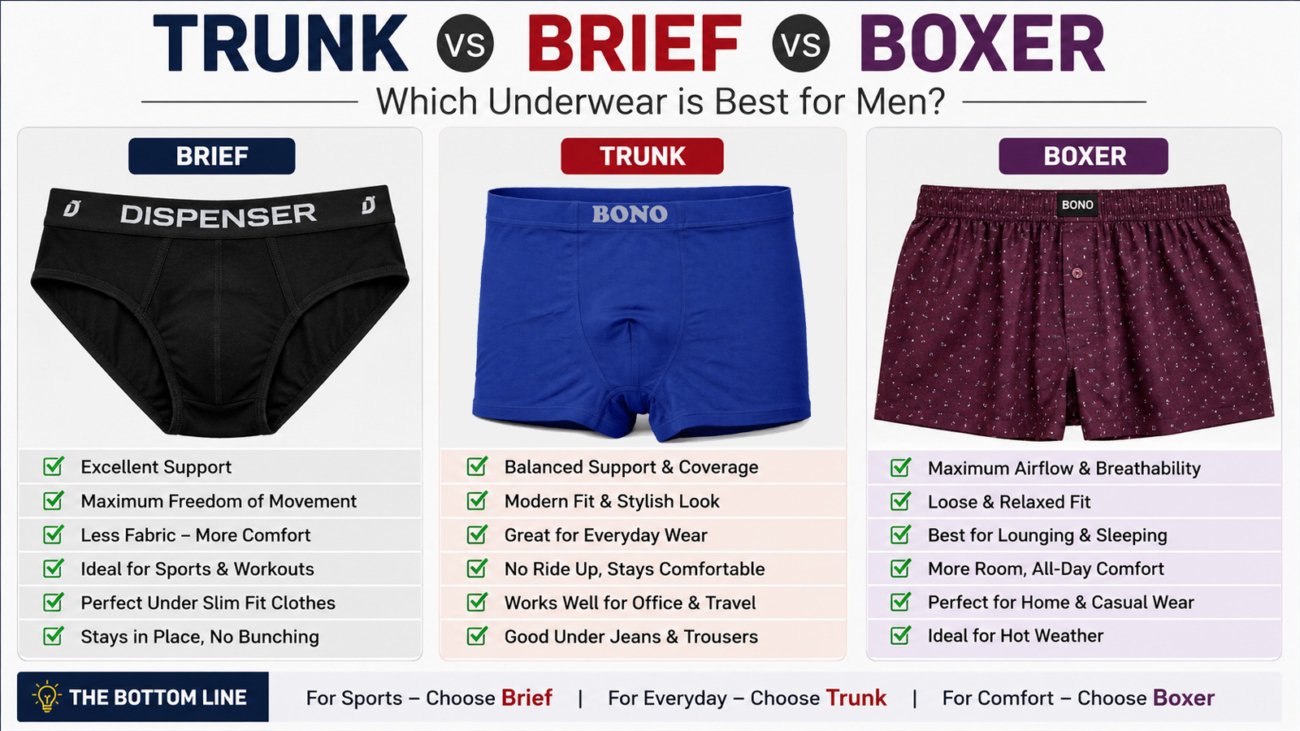
Trunk vs Brief vs Boxer: Which Underwear Is Best for Men?

Choosing the right underwear is not only about style. The correct underwear can affect your comfort, movement, confidence, and overall experience throughout the day. Men’s underwear is available in several styles, but trunks, briefs, and boxers remain the most popular choices.

Each style offers different levels of support, coverage, breathability, and flexibility. While briefs are known for their excellent support, trunks provide a modern balance between support and coverage. Boxers, on the other hand, offer a relaxed and airy fit.

So, which underwear is best for men? The answer depends on your body type, daily activities, clothing preferences, climate, and personal comfort.

This detailed comparison will help you understand the difference between trunks, briefs, and boxers so you can choose the right style for every occasion.

What Are Men’s Trunks?

Men’s trunks are a modern underwear style that combines the support of briefs with the coverage of boxer briefs. They usually have a square-shaped design, a fitted construction, and shorter legs than traditional boxer briefs.

Trunks sit comfortably around the waist and provide proper coverage without extending too far down the thighs. Their stylish shape and body-hugging fit make them a popular choice among younger consumers and men who prefer modern-looking innerwear.

Type of Trunk Underwear & when you have to use it

Classic Trunk
Regular fitted trunk with short legs, suitable for daily wear.

Low-Rise Trunk
Sits below the natural waist and works well under low-waist jeans or trousers.

Mid-Rise Trunk
Sits around the natural waist and offers balanced coverage and comfort.

Long-Leg Trunk
Has slightly longer thigh coverage to reduce rubbing and chafing.

Sports Trunk
Made with stretchable, moisture-wicking, and quick-dry fabric for gym and sports use.

Contoured-Pouch Trunk
Includes a shaped front pouch for better support, fit, and comfort.

Seamless Trunk
Made with minimal or flat seams to reduce irritation and visible underwear lines.

Plus-Size Trunk
Designed with wider waistbands, additional stretch, and better coverage for larger body sizes.

Advantages of Men’s Trunks

  • Provide good support and coverage
  • Create a stylish and modern appearance
  • Work well under jeans, trousers, and fitted pants
  • Reduce excessive fabric gathering
  • Offer better thigh coverage than briefs
  • Suitable for everyday wear, office use, travel, and light physical activity
  • Available in solid colours, attractive prints, and premium fabrics

Disadvantages of Men’s Trunks

  • The short legs may roll up if the fitting is incorrect
  • Tight trunks may feel uncomfortable during long hours of sitting
  • Low-quality fabric may lose elasticity after repeated washing
  • Men with larger thighs may need to select the size carefully

Why Men’s Have to Wear Trunks?

Trunks are ideal for men who want a balance of support, coverage, and fashionable appearance. They are especially suitable for men with slim, athletic, or moderately muscular body types.

They can also be an excellent everyday option when made from breathable and stretchable materials such as cotton Lycra, bamboo, modal, micro modal, or moisture-wicking fabric.

Example : You have try BONO men’s trunk underwear. it is designed for men who want the right balance of support, coverage, style, and everyday comfort. Its fitted shape provides better thigh coverage than a brief while using less fabric than a boxer brief, making it suitable for daily wear, office use, travel, and casual activities.

What Are Men’s Briefs?

Briefs are one of the oldest and most widely used men’s underwear styles. They provide full coverage at the front and back while leaving the upper thighs uncovered.

Because briefs do not have leg fabric, they allow unrestricted leg movement. Their supportive design makes them suitable for active routines, sports, gym workouts, and everyday use.

Briefs are available in different waist-rise options, including low-rise, mid-rise, and high-rise styles.

Type of Brief Underwear & when you have to use it

Classic Brief – Regular coverage, supportive, suitable for everyday use.

Low-Rise Brief – Sits below the waist, ideal under low-waist jeans.

Mid-Rise Brief – Sits around the natural waist and offers balanced comfort.

High-Rise Brief – Provides extra waist and back coverage.

Sports Brief – Made from stretchable, quick-dry, moisture-wicking fabric.

Contour-Pouch Brief – Has a shaped front area for improved support and fit.

Seamless Brief – Minimal stitching for a smooth feel and reduced irritation.

Best overall daily-use choice:
Mid-rise cotton Lycra brief with a soft waistband and breathable fabric.

Advantages of Men’s Briefs

  • Provide excellent support
  • Allow unrestricted thigh movement
  • Do not roll or bunch up around the legs
  • Work well under slim-fit trousers and formal pants
  • Suitable for gym workouts, running, cycling, and sports
  • Comfortable in hot and humid weather
  • Available in low-rise, mid-rise, and high-rise options

Disadvantages of Men’s Briefs

  • Provide less thigh coverage
  • May create visible underwear lines under certain garments
  • Tight leg openings may cause discomfort
  • Some men may prefer a more modern or covered appearance
  • Incorrect sizing may create pressure around the waist and thighs

Why Men’s Have to Wear Briefs?

Briefs are best for men who prioritise support, freedom of movement, and minimal fabric. They are suitable for men with active lifestyles and those who regularly participate in sports or gym activities.

Briefs can also be useful for men who wear slim-fit or tailored trousers because there is no extra fabric around the thighs.

Example : You have try DISPENSER men’s briefs. this are a smart choice for men who want dependable support, minimal coverage, and comfortable all-day wear. it’s Quality of fabric, stitching, and elastic help the brief retain its fit after repeated use and washing.

What Are Men’s Boxers?

Men’s boxers are loose-fitting underwear designed to provide maximum airflow and relaxed comfort. They generally have longer legs and more fabric coverage than briefs or trunks.

Traditional boxers resemble lightweight shorts and usually include an elastic waistband, front opening, and relaxed leg design. They are commonly made from cotton, cotton blends, or lightweight woven fabrics.

Boxers are mainly preferred for lounging, sleeping, and casual use.

Men’s boxers are commonly available in 7 main types:

  1. Classic Woven Boxer
    Loose-fitting boxer made from woven cotton fabric. Best for sleeping and relaxing.
  2. Knit Boxer
    Made from soft, stretchable knitted fabric. More flexible and comfortable than woven boxers.
  3. Boxer Brief
    Fitted like a trunk but with longer legs. Provides strong support and thigh coverage.
  4. Slim-Fit Boxer
    Slightly fitted compared with traditional boxers. Suitable under regular trousers and jeans.
  5. Long-Leg Boxer
    Offers extra thigh coverage and helps reduce rubbing between the thighs.
  6. Sports Boxer
    Made with quick-dry, stretchable, moisture-wicking fabric for exercise and physical activity.
  7. Open-Fly Boxer
    Includes a functional front opening for convenience and is usually available in classic woven styles.

Why Men’s Have to Wear Boxers?

Boxers are suitable for men who prefer relaxed, breathable, and loose-fitting underwear. They are a good choice for sleeping, resting at home, working from home, and casual weekend wear.

Men who live in warm or humid climates may also prefer boxers because they offer greater ventilation. However, they may not provide sufficient support during gym workouts or high-movement activities.

The knit boxer is generally the best loose-boxer option for daily use because it provides:

  • Soft and stretchable comfort
  • Better freedom of movement
  • Good breathability
  • Less stiffness than woven boxers
  • Comfortable fitting for home, travel, and casual routines

However, for office use, walking, travelling, or wearing under jeans and trousers, the boxer brief is usually the best overall option. It provides better support and does not bunch up as much as a loose boxer.

Example : You have to try DISPENSER men’s boxer. It is a suitable choice for men who prefer a relaxed fit, breathable comfort, and greater freedom of movement. Its loose construction provides more room around the thighs, making it ideal for sleeping, lounging, travelling, working from home, and casual daily wear.

Best Choice by Use

UsageBest Boxer Type
Everyday office wearBoxer brief
Home and casual wearKnit boxer
SleepingClassic woven boxer
Gym and sportsSports boxer
Large or rubbing thighsLong-leg boxer
Under fitted jeansSlim-fit boxer or boxer brief

Best overall for daily wear: A breathable cotton-Lycra boxer brief with a soft waistband, flat stitching, and proper leg length.

Advantages of Men’s Boxers

  • Provide maximum airflow and ventilation
  • Offer a loose and relaxed fit
  • Comfortable for sleeping and lounging
  • Suitable for men who dislike tight-fitting underwear
  • Provide good thigh coverage
  • Ideal for relaxed daily routines
  • Available in fashionable checks, stripes, prints, and solid colours

Disadvantages of Men’s Boxers

  • Provide less support than trunks and briefs
  • Fabric may bunch up under slim-fit trousers
  • Not ideal for intense exercise or sports
  • May create visible lines under fitted clothing
  • Loose legs may move upward while walking or sitting
  • Not suitable under tight jeans or formal trousers

Best for Daily Wear Use Underwear?

For regular everyday use, trunks are often the most balanced choice. They provide enough support for daily movement while offering more coverage than briefs. Their shorter legs also make them suitable under jeans, chinos, trousers, and casual clothing.

However, the best everyday underwear also depends on your routine.

Choose trunks when you want:

  • Balanced support and coverage
  • A modern and stylish fit
  • Comfortable wear under jeans and trousers
  • Minimal fabric bunching
  • An option suitable for office, travel, and casual use

Choose briefs when you want:

  • Maximum support
  • Complete freedom around the thighs
  • Minimal fabric under fitted clothing
  • Better comfort during active movement

Choose boxers when you want:

  • A loose and relaxed fit
  • Greater airflow
  • Comfortable sleepwear
  • Casual comfort at home

Best Underwear for the Gym and Sports?

Briefs are generally a strong option for gym workouts and sports because they provide excellent support without restricting leg movement. Their minimal construction prevents excess fabric from bunching during running, stretching, weightlifting, or cycling.

Sports trunks can also be suitable when they are made from stretchable, lightweight, quick-drying, and moisture-wicking fabric. A well-designed sports trunk provides support along with additional coverage around the upper thighs.

Loose boxers are usually not recommended for gym activities because they may move, bunch up, and provide insufficient support.

For gym or sports use, look for underwear with:

  • Four-way stretch
  • Moisture-wicking properties
  • Breathable fabric
  • Quick-drying performance
  • Soft and secure waistband
  • Flat or anti-chafing seams
  • Supportive front construction
  • Lightweight material

Best Underwear for Sleeping?

Boxers are one of the most comfortable options for sleeping because their relaxed design allows greater airflow and freedom.

Men who prefer a more secure fit while sleeping may choose soft cotton trunks. The trunk should not be excessively tight and should have a gentle elastic waistband.

Briefs can also be worn while sleeping, but some men may find them too supportive or close-fitting for overnight use.

For better sleeping comfort, choose soft, lightweight, breathable fabric with a non-restrictive waistband.

Best Underwear for Hot Weather?

In hot and humid conditions, breathability and moisture management become extremely important.

Loose boxers provide excellent airflow, making them suitable for resting or casual use. Briefs also work well in warm weather because they use less fabric and keep the thighs unrestricted.

Trunks can be comfortable during hot weather when they are made from breathable and moisture-absorbing fabrics such as cotton, bamboo, modal, or micro modal.

Avoid thick, non-breathable fabrics that trap heat and moisture for extended periods.

Best Underwear for Men With Large Thighs?

Men with larger or muscular thighs may experience rolling, tightness, or friction with incorrectly fitted trunks.

Briefs can be a comfortable option because they do not contain thigh fabric. However, the leg openings should be soft and properly sized.

Longer boxer briefs may also work better than short trunks for men who want thigh coverage and reduced friction. Loose boxers can be suitable for sleeping and relaxing but may bunch under trousers.

The most important factors are correct sizing, stretchable fabric, soft seams, and comfortable leg openings.

Which Underwear Is Best for Slim Men?

Trunks are especially popular among slim men because their square-shaped design creates a structured and modern appearance. The fitted legs and waistband provide a secure silhouette without excessive fabric.

Briefs can also work well for slim men who prefer minimal coverage, while loose boxers may look oversized when the fit is not selected correctly.

Which Underwear Is Best for Plus-Size Men?

Plus-size men should focus on fit, waistband comfort, leg construction, and fabric stretch rather than selecting underwear only by style.

Stretchable trunks with a wide, soft waistband can provide support and coverage. However, the legs should not be too short or tight.

Briefs can provide excellent movement freedom but should have comfortable leg openings. Boxers may provide relaxed comfort, although they should have enough room without appearing excessively loose.

Plus-size underwear should include:

  • Accurate waist sizing
  • Strong but soft elastic
  • Stretchable fabric
  • Breathable construction
  • Comfortable leg openings
  • Proper front and back coverage
  • Flat stitching to reduce friction

Common Mistakes Men Make While Buying Underwear

Choosing the Wrong Size

Purchasing underwear that is too tight or too loose is one of the most common mistakes. Always follow the brand’s size chart.

Wearing One Style for Every Activity

A loose boxer may be comfortable at home but unsuitable for the gym. Similarly, tight sports underwear may not be ideal for sleeping.

Ignoring Fabric Quality

A stylish design cannot compensate for rough, thick, or non-breathable fabric.

Keeping Old Underwear for Too Long

Underwear should be replaced when the elastic becomes loose, the fabric becomes thin, or the shape changes.

Selecting Style Over Comfort

Prints and colours are important, but fitting, fabric, support, and waistband quality should remain the priority.

how to make your own brand in underwear

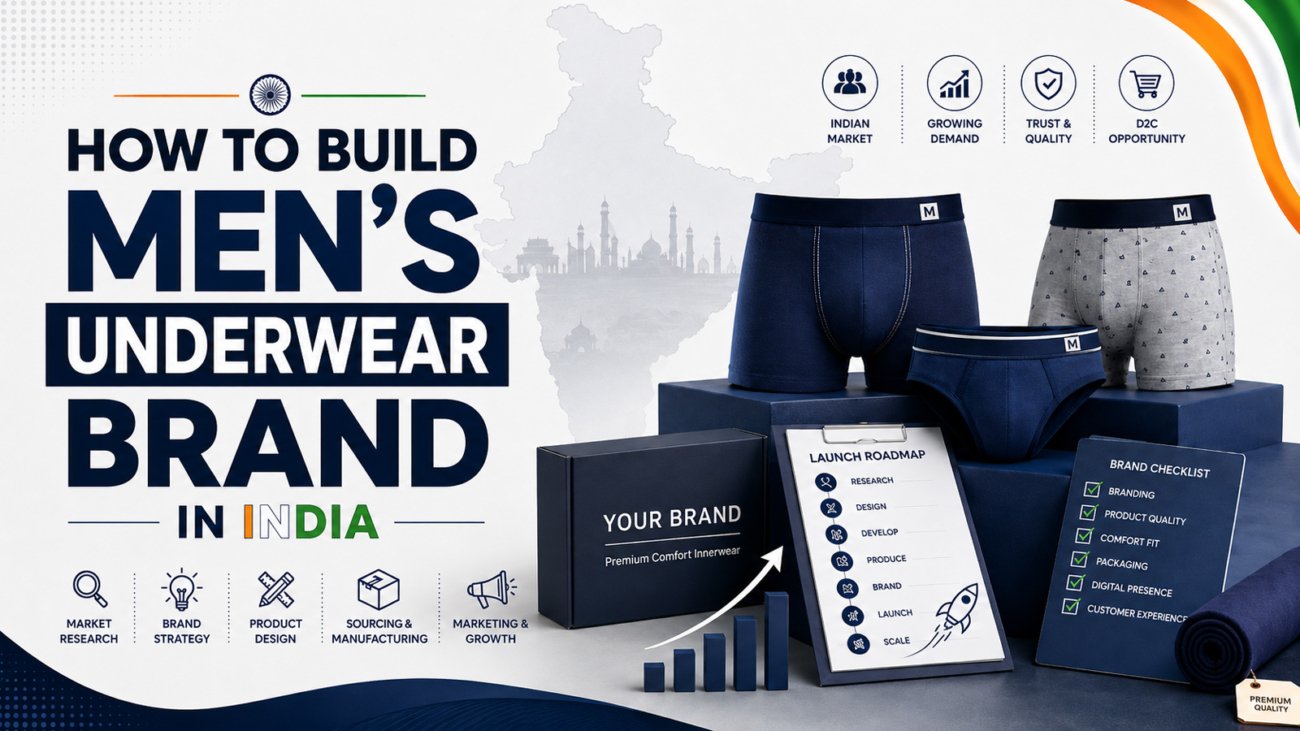
HOW TO BUILD MEN’S UNDERWEAR BRAND IN INDIA

HOW TO BUILD MEN’S UNDERWEAR BRAND IN INDIA

Starting a men’s underwear brand in India can be a strong business opportunity because innerwear is a repeat-purchase product. Unlike fashion products that customers buy occasionally, underwear is used daily, replaced frequently, and purchased in multiple packs. The Indian innerwear market was valued at around ₹1.03 lakh crore approx in 2025 and is projected to reach ₹1.86 lakh crore  by 2034, growing at a CAGR of 6.49%. The growth is driven by comfort awareness, branded product demand, e-commerce, fabric innovation, and premiumization.

India also has a strong textile and apparel manufacturing base. The textile and apparel industry supports mass-market as well as premium apparel demand and employs more than 45 million people, which makes India a suitable country for building an innerwear manufacturing or private-label business.

Understand the Men’s Underwear Market

Men’s underwear is no longer only a basic clothing product. Today, customers look for comfort, fitting, fabric quality, waistband softness, pouch support, sweat control, stretch, and stylish prints. Modern consumers are moving toward premium fabrics such as modal, micro modal, bamboo, cotton stretch, nylon blends, and polyester-lycra performance fabrics. IMARC notes that comfort, functionality, fabric technology, moisture-wicking, antibacterial, seamless, and stretchable fabrics are important demand drivers in the Indian innerwear market.

Popular men’s underwear categories

Product TypeBest ForBusiness Potential
BriefDaily wear, classic customersStable demand
TrunkModern fit, young customers, e-commerceVery strong
BoxerRelaxed comfort, nightwear, casual wearStrong
Boxer BriefLonger coverage, gym, travelGrowing
VestInnerwear + loungewearGood add-on category
Plus Size Underwear3XL, 4XL, 5XL customersHigh opportunity

For a new brand, the best starting range can be men’s trunks, briefs, boxers, and vests, because these products cover both daily comfort and modern fashion demand.

Choose Your Business Model

Before starting, decide whether you want to manufacture, outsource, or sell through marketplaces.

A. Trading Model

In the Trading Model of the underwear brand business, you do not manufacture the product yourself. Instead, you buy ready-made underwear such as trunks, briefs, boxers, vests, or combo packs from manufacturers, wholesalers, or stockists and sell them through your own sales channels. These channels can include retail shops, wholesalers, Amazon, Flipkart, Myntra, IndiaMART, Instagram, WhatsApp, or your own website. This model is suitable for beginners because it requires lower investment, no factory setup, no stitching machines, and no labour management. You can quickly test which product, size, colour, fabric, and price range works best in the market.

The main advantage of the Trading Model is that you can start fast with limited risk and offer multiple product varieties without handling production. However, the biggest drawback is limited control over quality, fit, fabric, elastic, and repeat stock availability. Since the same product may also be sold by other traders, brand uniqueness can be low. Profit margins are also usually lower compared to manufacturing or private-label models because you are buying finished goods from another supplier. This model is best for market testing, wholesale selling, and beginners who want to understand customer demand before moving into private label or own manufacturing.

B. White Label Model

In the White Label Model of the underwear brand business, you purchase ready-made underwear products from a manufacturer and sell them under your own brand name. The manufacturer already has existing designs, fabrics, patterns, sizes, and production setup. You only need to choose the product style, fabric quality, colours, size range, packaging, and brand label. For example, a manufacturer may already produce men’s trunks, briefs, boxers, and vests, and you can add your own brand name, logo, MRP sticker, barcode, and packaging before selling them in the market. This model is useful for new underwear brands because it saves time, reduces production headaches, and allows you to launch your brand faster without setting up a factory.

The main advantage of the White Label Model is that it requires less investment compared to own manufacturing and gives you a better brand identity than pure trading. You can sell the product on Amazon, Flipkart, Myntra, IndiaMART, retail stores, or through wholesale channels under your own brand name. However, the drawback is that product customization is limited because the design and fit are mostly controlled by the manufacturer. The same or similar product may also be supplied to other brands, so uniqueness can be low. Profit margin is better than trading in some cases, but lower than full private-label or own manufacturing. This model is best for brands that want to enter the underwear market quickly and test customer demand before investing in custom designs or factory production.

C. Private Label / OEM Model

In the Private Label / OEM Model of the underwear brand business, you create underwear products according to your own brand requirements, and the manufacturer produces them for you. In this model, you can decide the fabric quality, GSM, elastic type, waistband branding, stitching pattern, pouch design, size chart, colours, prints, packaging, MRP, barcode, and brand label. For example, if you want to launch men’s trunks under your own brand, you can give the manufacturer your selected fabric, elastic design, label details, size range, and packing style. The manufacturer will produce the final product as per your specifications. This model gives you more control than trading or white label because the product is made especially for your brand.

The main advantage of the Private Label / OEM Model is that you can build a unique product identity with better quality control, premium packaging, and customized branding. It is suitable for brands that want to sell on Amazon, Flipkart, Myntra, Ajio, IndiaMART, offline wholesale, or their own D2C website. However, this model requires more planning, sampling, minimum order quantity, quality checking, and investment compared to trading or white label. Sampling may take time because the fit, fabric, waistband, and stitching need to be approved before bulk production. Still, this is one of the best models for serious underwear brands because it helps create a professional brand image, better customer trust, and long-term repeat business.

D. Own Manufacturing Model

In the Own Manufacturing Model of the underwear brand business, you set up your own production unit and manufacture products under your own brand. In this model, you control the complete process, including fabric sourcing, pattern making, size grading, cutting, stitching, elastic attachment, finishing, quality checking, packing, and dispatch. You can produce men’s trunks, briefs, boxers, vests, kids’ underwear, or plus-size underwear according to your own designs and quality standards. This model is best for businesses that want full control over product quality, fit, fabric, waistband, stitching, packaging, and production planning.

The main advantage of the Own Manufacturing Model is higher long-term profit margin, complete customization, better quality control, and the ability to supply products to other brands through OEM or private-label orders. It also helps build a strong and trusted underwear brand because you can maintain consistent product quality. However, this model requires higher investment in machines, workers, factory space, fabric stock, elastic stock, cutting setup, packing material, and production management. There is also more responsibility, such as labour handling, wastage control, machine maintenance, QC issues, and stock planning. This model is best for serious brands that want to scale in online marketplaces, offline wholesale, and B2B private-label supply.

E. Marketplace + D2C Model

In the Marketplace + D2C Model of the underwear brand business, you sell your products through online marketplaces like Amazon, Flipkart, Myntra, Ajio, Meesho, and IndiaMART, along with your own direct sales channels such as Shopify website, Instagram, Facebook, WhatsApp, and your brand website. Marketplaces help you reach a large customer base quickly because they already have traffic, payment systems, delivery support, and customer trust. For a new men’s underwear brand, this model is useful because you can launch products like trunks, briefs, boxers, vests, and combo packs without depending only on offline distributors or retailers.

The main advantage of the Marketplace + D2C Model is wider reach, faster brand visibility, direct customer feedback, and better opportunity to scale across India. D2C sales give you more control over branding, pricing, customer data, offers, and repeat purchases, while marketplaces help generate sales volume. However, this model also has challenges such as high competition, marketplace commission, shipping charges, returns, advertising cost, discount pressure, and strict listing guidelines. To succeed in this model, your product images, size chart, fabric details, reviews, packaging, pricing, and customer service must be very strong.

Build the Right Product Range

Do not launch too many products at once. Start with limited but strong SKUs.

Suggested launch plan

CategoryLaunch Quantity
Men’s Trunk6–12 colours/prints
Men’s Brief4–8 colours
Men’s Boxer4–6 designs
Men’s Vest3 basic colours
Combo PacksPack of 2 and Pack of 3

Design and Fit Development is one of the most important parts of underwear product creation because comfort depends not only on fabric but also on correct pattern, pouch shape, rise, leg opening, waistband placement, and size grading. A good underwear design should provide proper support without being too tight, allow easy movement, and stay comfortable for daily wear, office use, travel, gym, and sleep. For men’s trunks, briefs, and boxers, the pouch area must be shaped properly, the thigh opening should not roll up, and the waistband should sit smoothly on the body. The design should also match the target customer, such as basic daily wear, premium fashion wear, plus-size comfort, or sports/active underwear.

Fit development includes making samples, testing them on different body types, checking size accuracy, and improving the pattern before bulk production. Important points include waistband comfort, fabric stretch recovery, no skin irritation, no loose fitting, no tight marks, no riding up, and proper coverage from front and back. A strong size chart from M to 5XL helps reduce returns and customer complaints, especially in online selling. Before final production, the product should be tested after washing to check shrinkage, elastic recovery, colour fading, and overall comfort. A well-developed fit helps build customer trust and increases repeat purchases for an underwear brand.

Pack-of-3 is very useful for online marketplaces because customers feel they are getting better value. For premium products, pack-of-2 also works well.

Brand Name, Logo and Trademark

Your brand name should be short, memorable, premium, and easy to pronounce. Before finalizing the name, check whether the same or similar name is already registered as a trademark. India’s official trademark public search portal allows brand-name searches by wordmark, phonetic search, and class.

For clothing and innerwear, trademark filing is usually done under Class 25, but you should confirm exact filing details with a trademark professional before applying.

Brand identity should include

  • Brand name
  • Logo
  • Tagline
  • Packaging style
  • Size chart
  • Product story
  • Fabric story
  • Social media look
  • E-commerce image style

Example positioning line:
“Premium everyday comfort for modern Indian men.”

Costing and Pricing

Costing and Pricing is a very important part of underwear product planning because profit does not depend only on selling price. You must calculate every small cost before deciding the final MRP or selling price. The basic cost of an underwear product includes fabric cost, elastic cost, stitching labour, thread, labels, tags, packaging, barcode, transport, wastage, quality checking, and finishing. For example, in men’s trunks, fabric and elastic are usually the main cost factors, but premium packaging, branded waistband, and better stitching can also increase the final product cost.

For online selling, you also need to add marketplace-related expenses such as commission, shipping charges, return cost, advertising cost, discounts, GST, payment gateway charges, and warehouse charges. Many new brands make the mistake of calculating only manufacturing cost and then setting the selling price. But if you sell on Amazon, Flipkart, Myntra, or Ajio, the platform charges can reduce your profit margin quickly. That is why your product costing should include both production cost and selling cost.

A simple pricing formula is: Final Selling Price = Product Cost + Packaging Cost + Logistics Cost + Platform Charges + Marketing Cost + Profit Margin. For example, if one men’s trunk costs ₹100 to manufacture and packaging/logistics/platform expenses add another ₹80, then your total cost becomes ₹180. In this case, if you sell the product at ₹199, your margin will be very low. But if you sell it as a premium product or combo pack at ₹299–₹399, you may get better profit depending on platform charges and return ratio.

For an underwear brand, combo pricing works very well because customers usually prefer buying pack of 2, pack of 3, or pack of 4. Combo packs help increase order value and reduce per-piece logistics cost. Your pricing should also depend on your product positioning. A basic cotton underwear product should be priced competitively, while modal, bamboo, micro modal, premium waistband, plus-size, or printed fashion underwear can be priced higher. The best strategy is to maintain a balance between affordable pricing, premium product quality, and healthy profit margin.

Marketing Strategy & Brand Awareness

For online marketing, product presentation is very important. Underwear products need professional photos, model images, fabric close-ups, waistband details, stretch demonstration, size chart, lifestyle images, and combo pack images. On platforms like Amazon, Flipkart, Myntra, Ajio, and IndiaMART, customers mostly depend on images and product descriptions before buying. The listing title, bullet points, and description should include strong keywords such as men’s trunk underwear, breathable underwear, cotton stretch underwear, bamboo underwear, modal underwear, pack of 3 underwear, plus-size underwear, and anti-rash underwear. Good reviews, clear size guidance, and attractive pricing also help increase conversion and reduce returns.

Social media marketing is also very useful for an underwear brand. Instagram Reels, Facebook posts, YouTube Shorts, and Pinterest creatives can be used to show fabric comfort, product fit, lifestyle use, packing, manufacturing process, and customer benefits. The brand can create content around topics like Trunk vs Brief vs Boxer, Best Underwear for Summer, How to Choose the Right Size, Benefits of Bamboo Fabric, and Why Waistband Quality Matters. Influencer marketing can also help, but the content should look premium, decent, and comfort-focused, not vulgar. For men’s underwear, the best marketing style is clean, confident, modern, and premium.

For offline and B2B marketing, the brand should focus on distributors, garment retailers, wholesalers, IndiaMART buyers, and private-label customers. A strong catalogue, proper price list, sample kit, packaging options, size chart, fabric details, and MOQ details help create trust with buyers. Combo packs, festive offers, dealer margins, and repeat stock availability are important for wholesale growth. The best strategy is to combine marketplace selling + social media branding + offline distribution + B2B private label supply, so the brand can grow from multiple sales channels instead of depending on only one platform.

For stronger awareness, the brand should also focus on reviews, influencer marketing, lifestyle photoshoots, product videos, packaging experience, and repeat customer offers. A customer may not buy a new underwear brand immediately, but if he sees the brand multiple times with a clear comfort message, professional images, and positive reviews, trust slowly develops. Good brand awareness increases customer recall, improves marketplace conversion, builds repeat purchase, and helps the underwear brand compete with bigger brands in both online and offline markets. There many option to increase you brand visibility like facebook marketing, instagram reel, youtube channel, google brand page, or other social media platform.

Profit and Finance

Profit and Finance are very important in the underwear brand business because the final profit depends on proper costing, pricing, sales channel, and stock planning. The main cost in underwear production includes fabric, elastic, stitching, thread, label, packaging, barcode, transport, GST, labour, quality checking, and wastage. If the brand sells online, then marketplace commission, shipping charges, advertising cost, return cost, discount, and warehouse charges must also be added. Many new brands make the mistake of calculating only manufacturing cost, but actual profit comes after deducting all hidden expenses.

In the underwear business, profit margin changes according to the business model. In the trading model, margin is usually lower because the product is purchased from another supplier. In the white label or private label model, margin can be better because the product is sold under your own brand. In the own manufacturing model, long-term profit can be higher because you control fabric purchase, production cost, quality, and bulk manufacturing. Online marketplace selling may show high selling prices, but after commission, ads, returns, and shipping, the net profit can reduce. Offline wholesale gives lower margin but faster bulk movement and repeat orders.

A strong finance plan should include working capital for raw material, production, packaging, photoshoot, marketing, online listing, stock holding, and payment cycle. For example, if one men’s trunk costs ₹100 to manufacture and the total selling expense is ₹60, then your actual cost becomes ₹160. If you sell it at ₹249, your gross profit is ₹89 before other business expenses. Combo packs like Pack of 2, Pack of 3, and Pack of 4 help improve average order value and reduce per-piece shipping cost. The best strategy is to keep proper costing, avoid dead stock, focus on fast-moving sizes, maintain quality, and balance pricing between customer affordability and healthy profit margin.

Legal and Compliance Requirements in India

This section is important before launching.

Business registration

You can start as:

  • Proprietorship
  • Partnership
  • LLP
  • Private Limited Company

For a small starting brand, proprietorship or partnership is easier. For scaling, investor funding, and stronger brand structure, LLP or Private Limited can be better.

GST registration

GST registration rules depend on business type, turnover, interstate supply, and online selling. The GST Council’s registration guide states that small businesses exclusively supplying goods are generally below the registration requirement up to specified turnover limits, but interstate taxable supply and several other cases require registration.

For e-commerce selling, Section 24 of the CGST Act lists compulsory registration cases, including persons supplying through e-commerce operators required to collect TCS under Section 52.

Udyam / MSME registration

Udyam Registration is useful for MSME recognition. The official Udyam portal requires Aadhaar and PAN verification and is used for MSME registration.

Startup India recognition

If your business is innovative and scalable, you may check DPIIT Startup Recognition. Startup India states that DPIIT-recognised startups can access benefits such as tax benefits, easier compliance, and IPR fast-tracking, subject to eligibility.

Packaging and labelling

Under Legal Metrology rules, packaged commodities require proper declarations. For garments and hosiery sold loose/open, the government has also provided specific declaration requirements such as manufacturer/marketer/brand owner details, consumer care details, size, and MRP inclusive of all taxes.

For underwear packaging, include:

  • Brand name
  • Product name
  • Size
  • Waist measurement
  • Fabric composition
  • MRP inclusive of all taxes
  • Quantity: pack of 1, 2, 3, etc.
  • Manufacturer/packer/marketer details
  • Month and year of manufacture/packing
  • Customer care email/phone
  • Country of origin
  • Wash care
  • Barcode/SKU code

Conclusion

Starting a men’s underwear brand in India is a practical and scalable business if you focus on the right product, right fabric, right fit, and right sales channel. The opportunity is strong because innerwear is a daily-use product with repeat demand, and Indian customers are shifting toward better comfort, branded products, and premium fabrics.

The best way to start is with a focused range: men’s trunks, briefs, boxers, vests, and pack-of-3 combos. Keep your USP clear: soft fabric, breathable comfort, 4-way stretch, premium waistband, modern fit, and sizes from M to 5XL. With proper branding, legal compliance, product photography, and marketplace strategy, a men’s underwear brand can grow from a small launch into a strong online and offline business.

undergarment-evolutin-form-15th-century-to-now-days

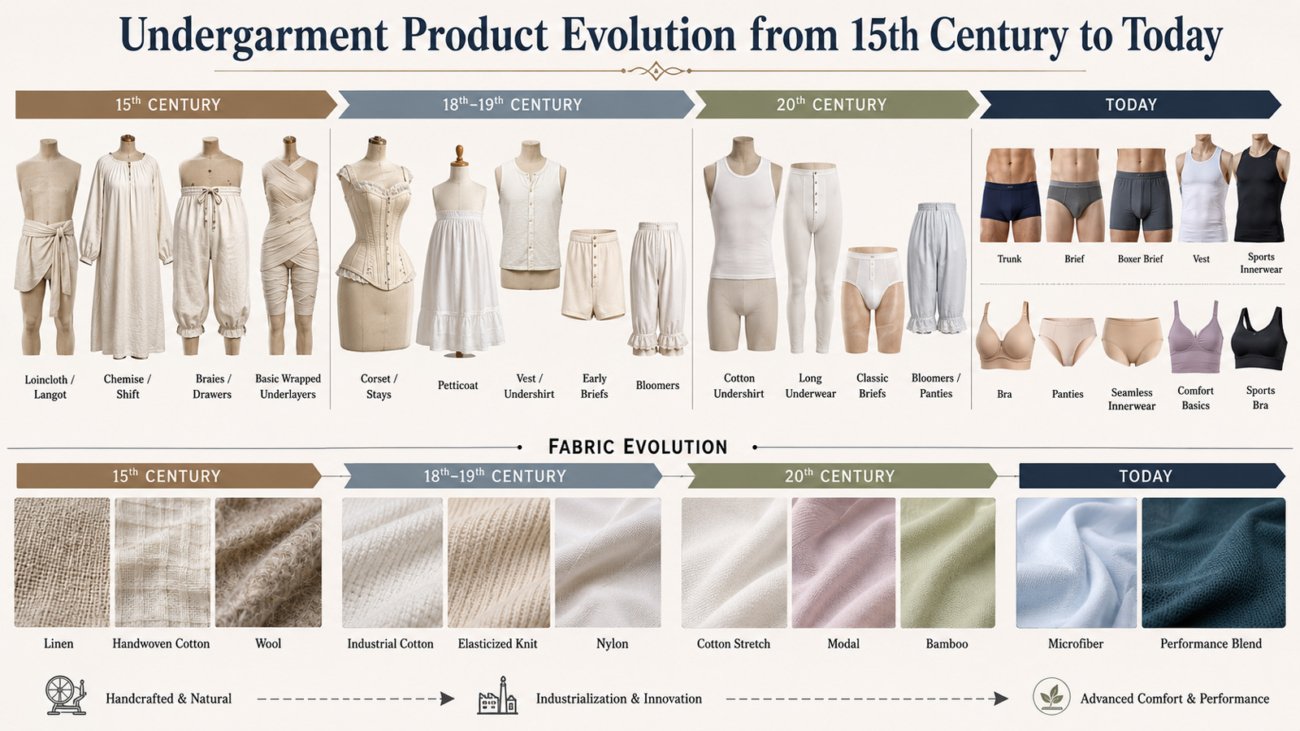
Undergarment Product Evolution from 15th Century to now days

Undergarment / Innerwear means clothing worn close to the skin, mainly for hygiene, body support, comfort, modesty, warmth, and later fashion. Earlier, undergarments were mostly simple cloth layers. Today, innerwear is a full business category covering men’s underwear, women’s lingerie, vests, bras, shapewear, thermal wear, kidswear, sports innerwear, plus-size, maternity, and athleisure innerwear.

Around 1500 AD / 16th century, people did not wear modern underwear like today’s briefs, trunks, bras, panties, or vests. Men mostly wore linen shirts on the upper body and braies on the lower body. Braies were loose underpants, similar to long shorts or drawers, usually tied at the waist with a cord. Men also wore hose, which covered the legs, and sometimes a codpiece in front, especially in European fashion. Linen was common because it absorbed sweat and was easier to wash than outer garments.

Women usually wore a chemise, also called a shift or smock, under their gown. It was a simple loose linen garment worn next to the skin. In many places, women did not wear modern-style underpants at that time. The chemise protected expensive outer dresses from sweat and body oils, so it worked like both an inner layer and hygiene layer. Wealthy women used finer linen, while poorer women used rougher, simple cloth.

In India and South Asia, common male undergarments were more like langot / kaupina / loincloth-style cloth, especially for daily work, physical activity, and wrestling. The main purpose of undergarments in that period was modesty, support, sweat absorption, and protection of outer clothing—not fashion or branding. There was no innerwear “brand business” like today; most garments were handmade at home, stitched by local tailors, or produced by local weavers.

Historically, underwear changed because of four big forces: body coverage, hygiene, fashion silhouette, and fabric technology. The V&A notes that underwear reflects changes in gender, morality, hygiene, body image, fashion, and fabric innovation.

Century-wise Undergarment Product & Business Model

CenturyMain product developmentFabric & technologyCustomer / society useBusiness model
6th–10th century CEBasic loincloths, wrapped cloth, simple tunic-like underlayers. In India, traditional forms like kaupinam/langot were used as male underclothing and for wrestling/physical work.Linen, cotton in warmer regions, wool in colder regions, handwoven cloth.Main purpose was modesty, protection, sweat absorption, and support during labour.Mostly home-made, local weavers, village tailoring, barter/local market. No brand concept.
11th centuryIn Europe, men used loose lower undergarments similar to braies; women used simple chemise/shift under gowns.Linen became important because it could be washed more easily than heavy outer garments.Undergarment became a hygiene layer between body and outer clothing.Cloth was still expensive; people owned limited pieces. Local textile trade grew slowly.
12th centuryBraies, hose, chemise, tunics became more organized. Undergarments started differing by class.More wool, linen, silk for wealthy people.Rich people used finer fabric; common people used rougher fabric.Tailors, dyers, cloth merchants grew in towns.
13th centuryMen’s hose and braies became common in Europe; women continued chemise/shift as base layer.Better weaving and dyeing.Underwear was still not fashion product; it was practical and hidden.Local guilds and tailoring professions became stronger in Europe.
14th centuryMen’s garments became shorter outside, so fitted hose and supportive underlayers became more important.Linen underlayers, wool hose.Shape and fit became more visible in men’s clothing.Tailored garments increased among wealthy and urban customers.
15th centuryChemise became a major women’s undergarment. Men used linen shirts and drawers with hose. FIT’s Fashion History Timeline says that in the 1450s, women’s dress foundation was an undyed linen chemise worn by rich and poor, while men used linen shirts and drawers. (Fashion History Timeline)Linen was important because it was washable.Hygiene and layering became more structured.Tailoring, weaving, and laundering became service-based work in cities.
16th centuryRenaissance period: corset-like “bodies,” farthingales, codpieces, chemise, petticoats. Innerwear started shaping the body.Linen, silk, whalebone, leather, stiffening materials.Underwear moved from only hygiene to body shaping and social status.Elite customers ordered custom garments. Court fashion influenced demand.
17th century“Bodies” or early stays shaped women’s torso. The line between underwear and outerwear was not always fixed; some garments could be both. Dress historian Sarah Bendall notes that 17th-century “bodies” could be underwear or outerwear depending on status, occasion, and use. (Sarah A. Bendall)Boning, buckram, silk, linen, ribbons, hand-stitching.Underwear became linked with class, posture, and discipline.Specialist makers, tailors, and women garment workers developed stronger roles.
18th centuryStays, chemise, petticoats, panniers, drawers in some regions. Underwear created fashionable silhouettes.Linen, silk, cotton, whalebone, hand embroidery.Innerwear reflected morality, modesty, and upper-class fashion.Colonial textile trade increased cotton movement. Made-to-measure garments dominated.
19th centuryHuge change: corsets, drawers, petticoats, crinolines, bustles, union suits, undershirts. V&A describes the 1870s bustle as a separate undergarment used to support the back shape of skirts. (Victoria and Albert Museum)Sewing machine, steel boning, elastic, industrial cotton, factory production.Underwear became more structured, especially for women’s silhouette. Men’s practical underwear also became standardized.Industrial Revolution created mass production, sizes, catalogs, department stores, and ready-made underwear.
Early 20th centuryCorsets started declining. Bras, briefs, undershirts, vests, slips, girdles, union suits became common. Mary Phelps Jacob patented the “Backless Brassiere” in 1914; MIT notes she later sold the patent to Warner Brothers Corset Company. (Lemelson MIT)Cotton knits, elastic, rayon, early synthetic materials.Women wanted lighter alternatives to corsets. Men wanted comfort and movement.Branded innerwear companies began growing through department stores and advertising.
1930s–1940sMen’s modern brief became a major innovation. Jockey says its brief launched in 1935 and sold strongly through Marshall Field & Company. (Jockey) Nylon stockings also became a major textile breakthrough; Science History Institute notes national nylon stocking sales began in 1940 and sold out quickly. (Science History Institute)Nylon, elastic waistbands, better knitting machines.Innerwear became a modern consumer product, not just basic clothing.Branded packaging, store displays, advertising, and mass distribution expanded.
1950s–1960sBras, panties, briefs, boxers, vests, girdles, slips, and children’s underwear became common household products.Lycra/spandex changed fit. LYCRA’s history says Joseph Shivers invented “Fiber K” in 1958, later known as LYCRA/spandex, which could stretch and recover. (Coolmax)Fit, stretch, femininity, and modern lifestyle became selling points.Television advertising and national brands became powerful.
1970s–1980sFashion underwear, low-rise briefs, sports underwear, shapewear, branded waistbands, designer innerwear.Polyester, nylon, spandex blends.Innerwear became visible in fashion culture. Men’s underwear marketing became aspirational.Brand identity, celebrity endorsement, department stores, and export licensing grew.
1990sBoxer briefs, trunks, padded bras, seamless panties, microfiber innerwear, premium men’s underwear.Microfiber, modal, better elastics, improved stitching.Comfort + fashion + sex appeal became major demand drivers.Mall retail, brand stores, catalogs, and early e-commerce started.
2000sSeamless, no-line panties, athleisure innerwear, shapewear, performance underwear, kids branded innerwear.Modal, micro modal, bamboo blends, moisture-wicking fabrics.Customers started caring about comfort, body fit, skin feel, and brand lifestyle.Organized retail, franchise stores, private labels, OEM/white-label manufacturing expanded.
2010sD2C brands, online lingerie, plus-size, body positivity, sports bras, printed men’s trunks, subscription underwear.Bamboo, modal, organic cotton, antimicrobial finish, 4-way stretch.Innerwear became personal, fashionable, and identity-based.Marketplaces, influencer marketing, Instagram ads, Amazon/Myntra/Flipkart-style selling.
2020s–todayComfort-first innerwear, sustainable fibers, bamboo/modal, breathable trunks, anti-rash stitching, seamless bras, shapewear, gender-neutral products, AI-based sizing, online-first launches.Bamboo modal, recycled fibers, Tencel/lyocell, performance polyester, micro modal, elastane.Customer wants comfort, hygiene, breathability, style, correct fit, fast delivery, and trusted reviews.E-commerce, marketplaces, quick commerce, D2C websites, AI search, creator-led ads, marketplace SEO, and data-driven manufacturing.

Undergarment Product Evolution from 15th Century to now days

We have to update undergarment products from the 15th century to today because human lifestyle, fabric technology, hygiene needs, and customer expectations have completely changed.

In the 15th century, undergarments were very basic. People mainly used linen shirts, chemise, braies, drawers, or loincloth-style garments. The main purpose was only body coverage, sweat absorption, modesty, and protecting outer clothes. There was no concept of branded innerwear, stretch fabric, perfect fitting, antibacterial finish, or fashion design.

Today, undergarments are not just hidden clothing. They are connected with comfort, skin health, confidence, hygiene, body support, and lifestyle. People wear innerwear for office, gym, travel, sleep, sports, daily work, and fashion. That is why modern products need soft fabric, breathable material, stretch, proper fitting, anti-rash stitching, waistband comfort, plus-size options, and better durability.

So the main reason is: undergarments changed from “basic body covering” to “daily comfort and confidence product.” That is why every innerwear brand must keep updating product design, fabric, fit, packaging, photoshoot, listing content, and customer experience according to modern demand.

“DispenserStore manufactur & delivers innerwear that supports every undergrament lifestyle—whether it’s daily wear, active routines, or relaxed moments at home. We blend innovation with reliable manufacturing to create men, women, and kids undergrament products that not only look good but feel even better. At Dispenserstore, our goal is simple: to make innerwear that offers confidence, comfort, and trust in every wear.“

List Of following data of which are updated undergarments product from 15th century to now days

Undergarments Old versionUndergarments Modern version
Loincloth / langotBriefs, trunks, athletic supporters
Chemise / shiftCamisole, slip, nightwear, women’s inner top
Braies / drawersBoxers, briefs, boxer briefs, trunks
Corset / staysBra, shapewear, waist cincher
PetticoatSaree petticoat, underskirt, shapewear skirt
UndershirtVest, tank top, T-shirt innerwear
GirdleModern shapewear
Wool thermal layerThermal innerwear, winter base layer
Handmade cotton undergarmentBranded cotton/modal/bamboo/spandex innerwear

India-specific Undergarment’s Product evolution

India-specific undergarment product evolution from the 15th century to today started from very simple, functional clothing. Around the 15th century, common Indian undergarments were not like today’s briefs, trunks, bras, panties, or vests. Men mainly used langot / kaupina / loincloth-style underclothing, especially for daily labour, farming, wrestling, and physical activity. The langot was a simple cotton cloth tied around the waist and between the legs, used for modesty, support, and movement. Even today, it is connected with Indian wrestling, kushti, kabaddi, and akhara culture.

For women, the product evolution was different because Indian clothing was traditionally based on draped garments, not fully stitched garments. Women wore sari-style drapes, ghagra-choli, odhani, and regional clothing forms. In many communities, the idea of a separate stitched blouse and petticoat became more standardized much later. Before the 1870s, some sources describe Indian women’s sari dressing as more fluid, with unstitched fabric being the norm and tailored blouse or petticoat not yet universal.

During the colonial period, Indian undergarment and inner-layer clothing changed strongly. British Victorian ideas of modesty influenced women’s dressing, especially in urban and elite society. The stitched blouse and petticoat became more common under the sari, creating the modern sari silhouette. This was a very important stage because Indian women’s innerwear slowly moved from only draped coverage to more structured supporting garments under outerwear.

From the 1990s to 2010s, Indian innerwear changed from a basic necessity to a branded product. Customers started asking for better fit, fabric, elastic quality, stitching, size chart, color, and packaging. Men’s underwear evolved into briefs, trunks, boxer briefs, boxers, and printed waistbands. Women’s innerwear evolved into padded bras, T-shirt bras, sports bras, seamless panties, hipsters, maternity innerwear, and shapewear. Online shopping also helped because customers could buy innerwear with more privacy and more product choice.

In the 20th century, India’s undergarment market became more organized. Men’s innerwear moved from langot and loose cotton drawers to baniyan, briefs, vests, boxers, and elastic-waist underwear. Women’s products also expanded into bras, panties, slips, petticoats, camisoles, and shapewear. This period created the foundation of India’s hosiery and innerwear business, where local manufacturers, wholesale markets, and retail shops became important.

Nowadays, people no longer see undergarments as just basic clothing worn beneath outerwear. Consumers expect innerwear to provide all-day comfort, proper fit, breathability, skin-friendly fabric, and confidence. Modern customers pay close attention to fabric quality, softness, stretchability, waistband comfort, moisture control, and durability. Many people believe that a good undergarment can improve their daily comfort, productivity, and overall confidence, whether at work, during exercise, or while relaxing at home.

At the same time, undergarments have become a lifestyle and fashion product. Customers look for features such as premium fabrics like cotton, bamboo, modal, and microfiber, along with attractive colors, prints, and modern designs. Online reviews, ratings, brand reputation, and product images strongly influence purchasing decisions. Today’s consumers want innerwear that not only feels comfortable but also reflects quality, personal style, and value for money, making undergarments an important part of their everyday wardrobe rather than just a necessity.

“DispenserStore manufactur & delivers innerwear that supports every undergrament lifestyle—whether it’s daily wear, active routines, or relaxed moments at home. We blend innovation with reliable manufacturing to create men, women, and kids undergrament products that not only look good but feel even better. At Dispenserstore, our goal is simple: to make innerwear that offers confidence, comfort, and trust in every wear.“

white-label production

White Label Manufacturing: Empowering Brands with Faster Market Entry and Sustainable Growth

A white label brand is a business model where a manufacturer produces products, and another company sells those products under its own brand name. The manufacturer remains behind the scenes, while the retailer or brand owner markets and sells the product as their own. This allows businesses to launch products quickly without investing in manufacturing facilities, product development, or production expertise.

White labeling is common in industries such as innerwear, clothing, cosmetics, food products, electronics, and health supplements. For example, a manufacturer may produce men’s trunks, briefs, and vests, while multiple brands sell the same products with different logos, packaging, and branding. Customers recognize the retailer’s brand rather than the actual manufacturer.

One of the biggest advantages of a white label business is the lower startup cost and faster market entry. Brand owners can focus on marketing, sales, customer service, and brand building instead of managing production. This helps entrepreneurs and retailers create their own product lines without the complexities of manufacturing and inventory development.

For manufacturers, white labeling creates additional business opportunities by allowing them to produce products for multiple brands. For brand owners, it provides flexibility to build a unique market presence through packaging, branding, and marketing strategies. When executed properly, a white label model can be a profitable way to grow a brand while leveraging the expertise and production capabilities of an established manufacturer.

Here are 5 examples of businesses that commonly use white label products:

  1. Fashion & Apparel Brands
    A company launches its own clothing or innerwear brand but gets products manufactured by a third-party factory. The products are sold under the company’s brand name, while the manufacturer remains hidden.
  2. Supermarket & Retail Store Brands
    Large retailers often sell products under their own private labels. The products are manufactured by external companies but carry the retailer’s branding and packaging.
  3. Cosmetics & Skincare Brands
    Many beauty brands do not own manufacturing facilities. Instead, they source white label creams, face washes, shampoos, and skincare products and sell them under their own brand names.
  4. Health Supplements & Nutrition Brands
    Protein powders, vitamins, and nutritional supplements are frequently produced by specialized manufacturers and then rebranded by fitness and wellness companies.
  5. Home & Kitchen Product Brands
    Sellers on e-commerce platforms often purchase white label products such as water bottles, storage containers, kitchen tools, and household accessories from manufacturers and market them under their own brands.

Example :

If a retailer wants to launch a men’s innerwear brand called “BONO”, they can partner or job work with Dispenser Store to only manufacture service for trunks, briefs, and vests. Dispenser Store handles production, while the retailer sells the products under the BONO brand name. This is a typical white label business model.

Dispenser Store – Powering Innerwear Brands with White Label Manufacturing

Dispenser Store helps businesses build their own innerwear brands through white label manufacturing solutions. We provide end-to-end production support, allowing entrepreneurs, retailers, wholesalers, and online sellers to launch high-quality innerwear products under their own brand name.

Our white label services cover a complete range of men’s, women’s, and kids’ underwear products. From trunks, briefs, boxers, and vests to women’s panties and kids’ innerwear, we manufacture products that can be customized with your brand identity.

Dispenser Store assists in product development by helping clients select suitable fabrics, designs, fits, and size ranges according to their target market. We offer various fabric options, including cotton blends, bamboo modal, micro modal, and other premium materials to meet different customer preferences.

We also support custom branding requirements such as printed elastic waistbands, brand labels, packaging, hang tags, and polybags. This enables businesses to create a professional and consistent brand image without investing in their own manufacturing setup.

Quality control is an important part of our manufacturing process. Every product undergoes production checks to ensure proper stitching, fabric quality, comfort, fit, and durability before being packed and dispatched to customers.

For businesses entering the market for the first time, Dispenser Store provides guidance on product selection, size planning, packaging requirements, and branding strategies. This helps new brands launch their products with confidence and a strong market presence.

Our manufacturing capabilities allow brands to scale efficiently as their business grows. Whether you require small production quantities for a new launch or larger volumes for established sales channels, we can support your production needs.

By partnering with Dispenser Store for white label innerwear manufacturing, businesses can focus on marketing, sales, and brand growth while we handle the production process. This allows brand owners to launch and expand their innerwear business faster, more efficiently, and with reduced operational complexity.

DISPENSER STORE Production Capacity

Dispenser Store operates with a robust manufacturing infrastructure capable of meeting large-scale production requirements across multiple innerwear categories. Our daily production capacity includes approximately 7000 to 8000 pieces of men’s innerwear, 3,000 pieces of women’s innerwear, and 2,000 pieces of kids’ innerwear.

With a combined production capacity of 12,000 – 13,000 pieces per day, Our Monthly Production is 3Lacs to 3.5lacs. we are well-equipped to support both established brands and emerging businesses through private label and white label manufacturing solutions. Our streamlined production processes, skilled workforce, and strict quality control standards ensure consistent product quality, timely deliveries, and scalable manufacturing support for growing brands.

Complete Guide Line For Innerwear Production Process By DISPENSER STORE

The innerwear manufacturing process begins with product planning, fabric sourcing, and design development. Based on customer requirements, suitable fabrics such as cotton blends, bamboo modal, micro modal, or viscose blends are selected to achieve the desired comfort, durability, and performance characteristics. Once the fabric is finalized, patterns and size specifications are developed, followed by fabric inspection and cutting. Precision cutting ensures consistency across all sizes while minimizing material wastage and maintaining production efficiency.

The next stage involves stitching and garment assembly. Cut fabric panels are stitched using specialized machinery to create the final garment structure. Key components such as elastic waistbands, leg openings, labels, and branding elements are carefully attached during this process. Throughout production, quality checkpoints are implemented to verify stitching accuracy, measurement consistency, fabric appearance, and overall garment construction. Any defects are identified and corrected before proceeding to the finishing stage.

After stitching is completed, the garments undergo finishing, quality inspection, and packaging. This includes thread trimming, ironing or steaming, metal detection (where required), size verification, and final quality checks to ensure every product meets established standards. Approved garments are then folded, tagged, packed into branded polybags or retail packaging, and prepared for dispatch. The finished products are subsequently distributed to retailers, wholesalers, e-commerce platforms, or private label clients, completing the end-to-end innerwear manufacturing cycle from raw fabric to ready-to-sell product.

Brands We Manufacture In Undergarments Categories

Dispenser Store is a trusted innerwear manufacturing partner, providing high-quality production solutions for a diverse portfolio of established and emerging brands. Our manufacturing expertise, quality standards, and scalable production capabilities have enabled us to support multiple brands across the men’s, women’s, and kids’ innerwear segments.

We are currently involved in the production of innerwear products for brands including HRX, Roadster, Dressberry, BONO, M&H (Mast & Harbour), and FIVEFLAG. Each brand has unique product specifications, design requirements, and quality standards, which are carefully managed through our structured manufacturing processes and quality control systems.

By combining modern manufacturing techniques, skilled craftsmanship, and reliable supply chain management, Dispenser Store delivers consistent product quality and timely production support, helping our brand partners strengthen their market presence and meet growing customer demand.

DispenserStore manufactur & delivers innerwear that supports every undergrament lifestyle—whether it’s daily wear, active routines, or relaxed moments at home. We blend innovation with reliable manufacturing to create men, women, and kids undergrament products that not only look good but feel even better. At Dispenserstore, our goal is simple: to make innerwear that offers confidence, comfort, and trust in every wear.

modern lifestyle in innerwear

The Role of Innerwear in Modern’s Lifestyle

Modern lifestyle in innerwear means innerwear designed for today’s way of living, where people want comfort, style, performance, and confidence in one product. It is not just basic underwear anymore; modern innerwear focuses on soft fabrics, better fit, stretch, breathability, and premium looks that match an active and stylish lifestyle.

In modern lifestyle branding, innerwear is shown as part of daily life such as working, traveling, gym, relaxing at home, or active routines. Brands promote features like moisture control, anti-odor fabric, body fit, support, and fashionable design because today’s customers want innerwear that performs well and also makes them feel confident.

Modern lifestyle innerwear is about combining function + fashion + comfort. Premium fabrics like cotton blends, bamboo viscose, modal, and stretch fabrics are used to create underwear that feels soft, looks premium, and suits the needs of modern consumers who care about comfort, health, and lifestyle.

“DispenserStore manufactur & delivers innerwear that supports every undergrament lifestyle—whether it’s daily wear, active routines, or relaxed moments at home. We blend innovation with reliable manufacturing to create men, women, and kids undergrament products that not only look good but feel even better. At Dispenserstore, our goal is simple: to make innerwear that offers confidence, comfort, and trust in every wear.“

TYPE OF MODERN LIFESTYLE IN INNERWEAR

  • Athletic / Active Lifestyle

Athletic / Active Lifestyle in innerwear means innerwear designed for people with an active routine such as gym, sports, running, travel, or busy daily movement. It focuses on features like stretchability, breathability, moisture control, support, and body fit so the wearer stays comfortable during movement and long hours.

In branding and lifestyle shoots, Athletic / Active innerwear is shown with energetic, confident models in fitness or action-based settings to highlight performance, flexibility, sweat comfort, and an active modern lifestyle. It gives a sporty, strong, and performance-driven brand image.

  • Home Comfort / Relaxed Lifestyle

Home Comfort / Relaxed Lifestyle in innerwear means innerwear designed for comfort during everyday indoor routines like relaxing at home, sleeping, lounging, or casual daily wear. It focuses on features like ultra-soft fabric, breathable feel, stretch comfort, lightweight fit, and irritation-free support so the wearer feels relaxed for long hours.

In branding and lifestyle shoots, this style is shown in cozy home settings such as bedrooms, sofas, or morning routines to highlight softness, ease, comfort, and a relaxed premium lifestyle. It creates a calm, cozy, and comfort-focused brand image that connects with modern consumers.

  • Premium Luxury Lifestyle

Premium Luxury Lifestyle in innerwear means innerwear designed to deliver a high-end feel, superior comfort, and stylish appearance. It focuses on premium fabrics, perfect fit, refined detailing, softness, and body-enhancing design so the wearer feels comfortable, confident, and luxurious in everyday wear.

In branding and lifestyle shoots, this style is presented in elegant settings such as modern interiors, luxury bedrooms, or premium studio environments with confident styling to highlight sophistication, confidence, exclusivity, and premium quality. It creates a rich, aspirational brand image for customers who value comfort with luxury.

“DispenserStore manufactur & delivers innerwear that supports every undergrament lifestyle—whether it’s daily wear, active routines, or relaxed moments at home. We blend innovation with reliable manufacturing to create men, women, and kids undergrament products that not only look good but feel even better. At Dispenserstore, our goal is simple: to make innerwear that offers confidence, comfort, and trust in every wear.“

  • Travel Lifestyle

Travel Lifestyle in innerwear means innerwear designed for people who are always on the move and need all-day comfort, breathability, stretch, moisture control, and freshness during long journeys or busy travel routines. In branding and lifestyle shoots, it is shown in travel-related settings to highlight lightweight comfort, easy movement, odor control, and reliable support, creating a practical yet modern lifestyle image for active travelers.

  • Beach / Vacation Lifestyle

Beach / Vacation Lifestyle in innerwear means innerwear designed to offer lightweight comfort, breathability, softness, and freedom of movement for relaxed holiday and summer lifestyles. It focuses on fabrics that feel cool, comfortable, and easy to wear in warm weather while maintaining a stylish body fit.

In branding and lifestyle shoots, this style is shown in resort, beachside, or vacation-inspired settings to highlight confidence, relaxation, comfort, and a carefree premium lifestyle. It creates a fresh, stylish, and attractive brand image that connects with leisure and holiday moods.

  • Romantic / Confidence Lifestyle

Romantic / Confidence Lifestyle in innerwear means innerwear designed to make the wearer feel attractive, confident, and self-assured. It focuses on body fit, premium fabrics, stylish design, and comfortable support that enhance both comfort and appearance.

This lifestyle is often associated with a well-groomed, stylish, and confident personality, where innerwear becomes more than a basic essential and contributes to the wearer’s overall confidence and self-image. Soft textures, sleek fits, and premium detailing help create a refined and appealing feel.

In branding and lifestyle shoots, this style is presented with confident poses, premium styling, and elegant settings to highlight attractiveness, sophistication, confidence, and emotional appeal. It creates a bold, premium, and aspirational brand image.

“DispenserStore manufactur & delivers innerwear that supports every undergrament lifestyle—whether it’s daily wear, active routines, or relaxed moments at home. We blend innovation with reliable manufacturing to create men, women, and kids undergrament products that not only look good but feel even better. At Dispenserstore, our goal is simple: to make innerwear that offers confidence, comfort, and trust in every wear.“

bono men underwear

BONOMEN Underwear – Reliable Support , Comfort & Innovative Design

BONOMEN’s underwear combines premium comfort, modern style, and everyday durability for confident all-day wear. Designed with soft breathable fabrics and a body-fit structure, BONO trunks deliver a snug yet flexible fit with stylish printed designs. Perfect for active and fashion-conscious men, BONO offers comfort, support, and a premium waistband finish for daily use

What Makes BONOMEN Underwear “Innovative”?

Innovative underwear goes beyond basic comfort by combining advanced fabric technology, ergonomic design, and modern functionality. Features like moisture-wicking materials, stretchable fabric blends, breathable mesh zones, anti-odor protection, and seamless construction help improve comfort, hygiene, and overall performance throughout the day. A well-designed waistband, body-contouring fit, and reduced friction areas also make underwear feel more supportive and premium.

Today’s innovative underwear is also focused on lifestyle and fashion. Brands are creating stylish prints, better pouch support, lightweight fabrics, and performance-based fits for gym wear, travel, and daily use. Sustainable materials, long-lasting elasticity, and smart tailoring further enhance durability and comfort, making modern underwear a blend of technology, style, and everyday practicality.

“DispenserStore manufactur & delivers innerwear that supports every undergrament lifestyle—whether it’s daily wear, active routines, or relaxed moments at home. We blend innovation with reliable manufacturing to create men, women, and kids undergrament products that not only look good but feel even better. At Dispenserstore, our goal is simple: to make innerwear that offers confidence, comfort, and trust in every wear.“

Innerwear Fabric Material Science: To focuses on improving comfort, breathability, durability, and performance through advanced material engineering. Modern underwear fabrics often include moisture-wicking properties to keep the skin dry, stretchable elastane for better flexibility and fit. A breathable cotton blends for airflow, anti-odor and antibacterial treatments for hygiene, and soft-touch finishes that reduce irritation.

Important Point in Underwear Pattern And Stitching:

  • Clean and even stitching with no loose threads or skipped seams,
  • Flatlock or seamless stitching to reduce skin irritation and friction,
  • Symmetrical panel cutting and accurate alignment of fabric patterns,
  • Proper pouch construction for comfort, support, and natural fit,
  • Smooth leg openings with balanced stretch and recovery,
  • Reinforced stress points to prevent tearing during movement
  • Precision finishing and neat hemming for a premium appearance

Tested Durability Of BONOMEN’s Underwear : BONO Men’s underwear durability is tested by evaluating fabric strength, stitching quality, elasticity, color fastness, and wash performance. Manufacturers perform repeated stretch tests on waistbands and leg openings to check elasticity retention, while seam strength tests ensure stitching can handle daily movement without tearing. Fabric abrasion tests measure resistance to friction and pilling, and wash tests are conducted through multiple laundry cycles to verify shape retention, softness, and color durability.

Key Function of Underwear Waistband: The waistband is one of the most important functional parts of men’s underwear, designed to provide secure fit, comfort, flexibility, and support throughout the day. A high-quality waistband keeps the underwear in place without rolling, slipping, or creating excessive pressure on the waist. It also helps maintain garment shape, improves overall fit, and enhances comfort during daily activities, workouts, and movement. Premium waistbands use soft, stretchable elastic materials that offer long-lasting elasticity, durability, and a stylish finish while reducing skin irritation and discomfort.

BONOMEN Plus Size Underwear Collection (M to 5XL) : The collection is crafted for modern men who want style, durability, and freedom of movement in every size. With reinforced stitching, shape-retention technology, and stylish modern designs, BONOMEN ensures that comfort and confidence are never limited by size.

“DispenserStore manufactur & delivers innerwear that supports every undergrament lifestyle—whether it’s daily wear, active routines, or relaxed moments at home. We blend innovation with reliable manufacturing to create men, women, and kids undergrament products that not only look good but feel even better. At Dispenserstore, our goal is simple: to make innerwear that offers confidence, comfort, and trust in every wear.“

The Gen’Z Design Philosophy of BONOMEN Underwear

BONOMEN underwear is designed for the Gen Z generation that values comfort, confidence, style, and individuality in everyday essentials. With modern fits, premium fabrics, bold aesthetics, and performance-driven comfort, BONOMEN blends fashion-forward design with all-day functionality.

Gen-Z Boy’s Thinking About Underwear : Gen Z boy see underwear as more than a basic necessity — they want a combination of comfort, style, performance, and self-expression. Soft breathable fabrics, stretch fit, moisture-wicking technology, and stylish waistbands are highly important for daily wear and gym lifestyles. Many young men also prefer premium-looking designs, bold prints, minimal branding, and underwear that feels fashionable enough to match their personality and confidence. Sustainability, ethical production, and body-inclusive sizing are also becoming major buying factors for this generation.

Gen-Z Girl’s Thinking About Underwear : Gen Z women prioritize comfort, confidence, inclusivity, and versatility in underwear. They prefer soft seamless fabrics, wire-free support, breathable materials, and body-positive fits that work for everyday comfort without compromising style. Women today also look for underwear brands that promote diversity, sustainability, gender-neutral thinking, and authentic representation rather than unrealistic beauty standards. Matching sets, aesthetic colors, fashionable cuts, and eco-friendly fabrics are highly popular, but comfort remains the top priority for most women while shopping for innerwear.

Gen Z Thinking About Underwear Design & Pattern : This generation sees underwear as part of personal style rather than just a basic essential. They are attracted to premium waistbands, clean silhouettes, body-fit cuts, and designs that feel fashionable enough for social media, gym culture, and modern lifestyles. Comfort remains important, but visual appeal and individuality strongly influence buying decisions.

Most Popular Gen Z Underwear Design & Pattern Choices

  • Minimal solid colors with premium waistband branding
  • Bold typography and logo-based waistband designs
  • Urban streetwear-inspired prints and patterns
  • Geometric and abstract modern patterns
  • Monochrome luxury themes (black, grey, navy, olive)
  • Sporty athletic designs with performance look
  • Stylish camouflage and textured prints
  • Graphic and youth-inspired artistic prints
  • Seamless and contour-fit modern cuts
  • Matching couple or coordinated color themes
  • Eco-friendly and soft natural fabric aesthetics
  • Limited-edition fashion collections and trendy seasonal colors

Gen Z mainly chooses underwear that looks stylish, feels premium, photographs well, and reflects confidence, personality, and lifestyle identity.

“DispenserStore manufactur & delivers innerwear that supports every undergrament lifestyle—whether it’s daily wear, active routines, or relaxed moments at home. We blend innovation with reliable manufacturing to create men, women, and kids undergrament products that not only look good but feel even better. At Dispenserstore, our goal is simple: to make innerwear that offers confidence, comfort, and trust in every wear.“