

 Cart is empty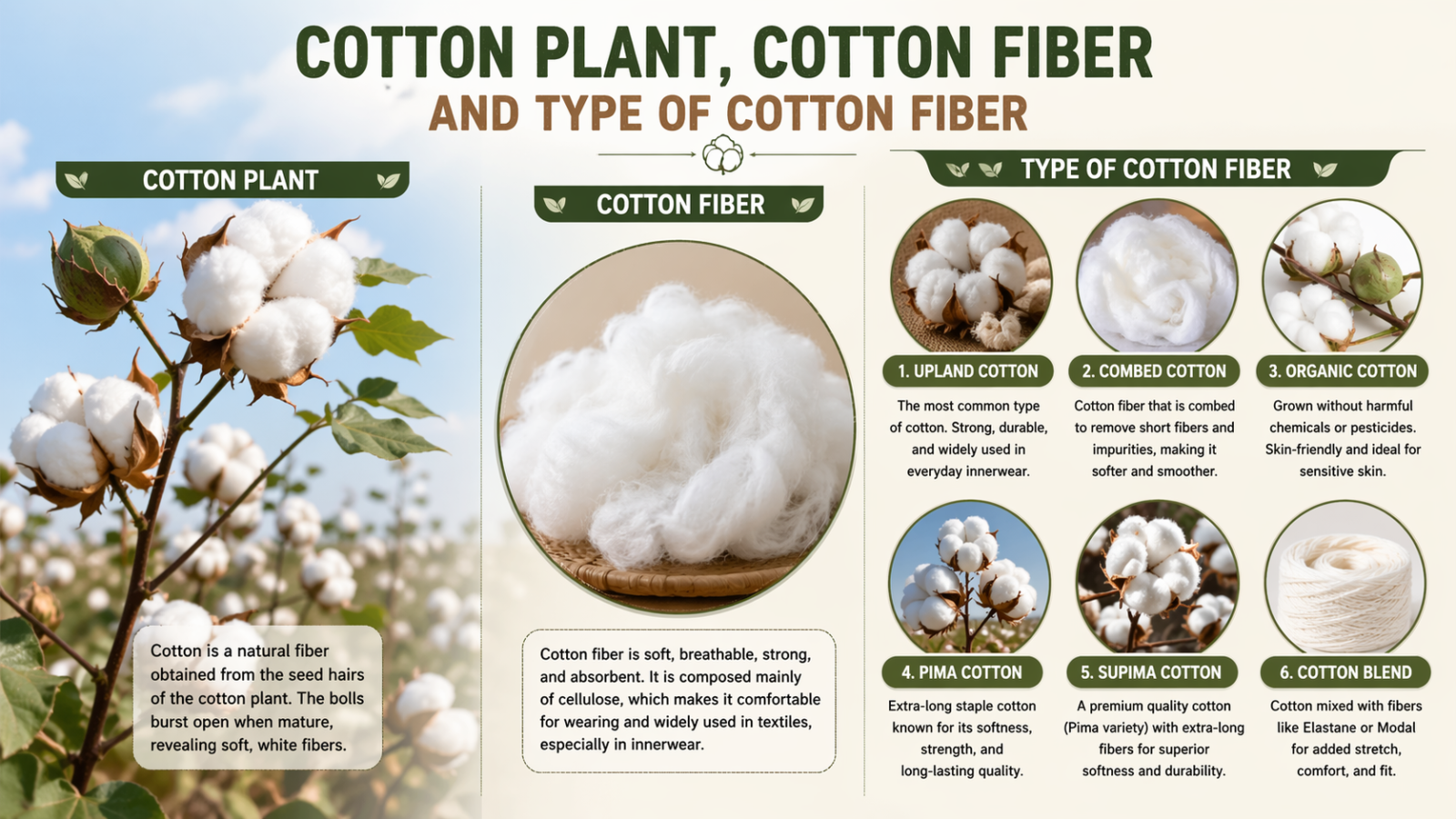
HOW COTTON FIBER GROW FROM NATURE?
Cotton fiber is naturally produced by the cotton plant as soft, fluffy hairs that grow around its seeds inside a protective boll. As the plant matures, these bolls develop and eventually burst open, revealing the white cotton fibers. The fibers are made primarily of cellulose, which forms as the plant converts sunlight, water, and nutrients through photosynthesis. After harvesting, the cotton undergoes a process called ginning, where the fibers are separated from the seeds. These raw fibers are then cleaned, carded, and spun into yarn, making them ready for use in textile production.
Cotton fiber is a natural cellulose fiber obtained from the seed hairs of the cotton plant, widely valued for its softness, breathability, and comfort. It is composed primarily of cellulose, which gives it strength and the ability to absorb moisture efficiently. Cotton fibers have a twisted, ribbon-like structure that helps them spin easily into yarn, making them ideal for textile production. Due to its natural origin, cotton is biodegradable and generally considered skin-friendly, which is why it is extensively used in clothing, especially for innerwear and everyday garments.
In the textile industry, cotton fiber is preferred for its versatility and durability. It can be woven or knitted into a wide range of fabrics, from lightweight muslin to heavy denim. Cotton also has good dye affinity, allowing it to retain color well after multiple washes. However, it may shrink or wrinkle if not treated properly. The quality of cotton fiber is often determined by factors such as staple length, fineness, and strength, with longer fibers producing smoother and stronger fabrics.
HOWMANY TYPE OF COTTON FIBER USED IN INNERWEAR ?
Innerwear typically uses a few key types of cotton fiber, chosen based on comfort, softness, stretch, and durability. The most common is regular (upland) cotton, which is affordable, breathable, and widely used in everyday innerwear. A premium option is combed cotton, where short fibers and impurities are removed, resulting in a smoother, softer, and stronger fabric—ideal for high-quality underwear. Another upgrade is organic cotton, grown without harmful chemicals, making it more skin-friendly and suitable for sensitive skin.
For more premium or performance-focused innerwear, brands may use Pima cotton or Supima cotton, both known for their extra-long staple fibers that provide superior softness, strength, and color retention. In addition, cotton blends (such as cotton with elastane or spandex) are very common in innerwear, as they add stretch, shape retention, and a better fit. Overall, around 4–6 main types or categories of cotton fibers and cotton variants are commonly used in innerwear, depending on the quality level and intended comfort.
“DispenserStore manufactur & delivers innerwear that supports every undergrament lifestyle—whether it’s daily wear, active routines, or relaxed moments at home. We blend innovation with reliable manufacturing to create men, women, and kids undergrament products that not only look good but feel even better. At Dispenserstore, our goal is simple: to make innerwear that offers confidence, comfort, and trust in every wear.“
ABOUT UPLAND COTTON FIBER
Upland cotton is the most widely grown and commonly used type of cotton fiber in the world, especially in the production of everyday garments like innerwear, t-shirts, and casual fabrics. It belongs to the species Gossypium hirsutum and accounts for nearly 90% of global cotton production. This type of cotton has medium staple length, which makes it suitable for mass production while still offering a good balance of softness, strength, and affordability.
One of the key advantages of upland cotton is its versatility and durability. The fibers are strong enough to withstand regular washing and daily wear, making them ideal for products that require long-term use. While it may not be as soft or luxurious as premium varieties like Pima or Supima cotton, upland cotton still provides a comfortable and breathable fabric. This makes it a preferred choice for innerwear where comfort and cost-effectiveness are both important factors.
In textile manufacturing, upland cotton is easy to spin and dye, which allows it to be used in a wide range of fabric types and finishes. It absorbs color well, ensuring good color retention after multiple washes. Additionally, it can be blended with other fibers such as elastane to enhance stretch and fit, which is especially useful in modern innerwear design. Overall, upland cotton remains a practical and reliable choice for both manufacturers and consumers due to its availability, performance, and value.
Add a Comment