Gen-z-Think

Gen Z Is Looking for the Next Innovation in Innerwear

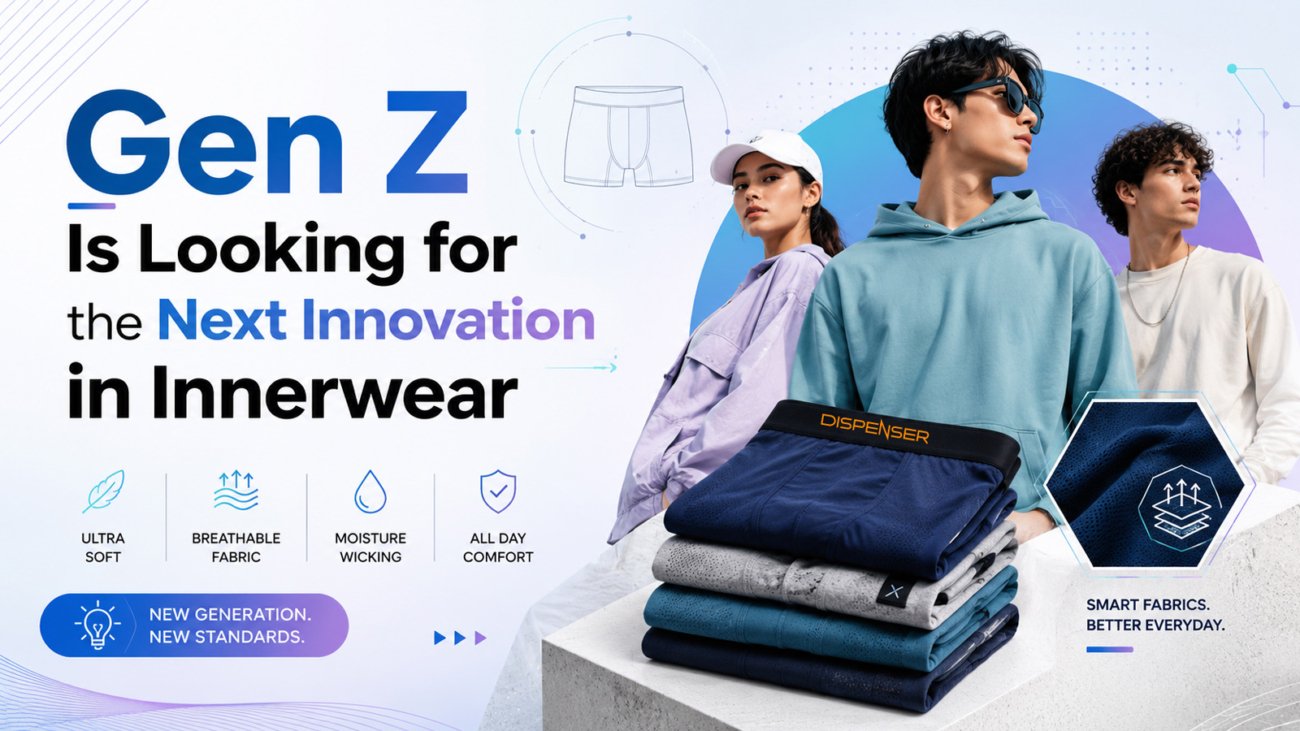
Underwear is no longer only a hidden basic. Gen Z increasingly sees it as part of comfort, confidence, personal style and self-expression. Indian-market reporting also points to younger consumers expecting better fabrics, fit, design and brand identity—not just low price.

For Gen Z, intimate-area comfort is usually the first priority even when they want something romantic or special. They are more aware of softness, breathability, sweat control, irritation, waistband pressure, fabric feel, and how innerwear behaves during long wear. For men, this means soft stretch fabric, supportive but non-restrictive fit, smooth seams, and a waistband that does not dig into the skin. For women, the preference is often toward soft-touch fabrics, breathable panties, comfortable waist and leg openings, bras without excessive pressure, and designs that feel attractive without becoming uncomfortable after a short time.

In design, many Gen Z do not want innerwear that looks too traditional, overly dramatic, or “special occasion only.” They usually prefer clean, premium, modern and slightly playful designs that can still be worn normally after marriage. Deep colours like wine, black, navy, plum and burgundy can give a romantic feel, while softer shades such as lavender, blush, cream, sage and dusty blue create a more intimate and relaxed mood. Minimal lace, contrast piping, subtle prints, small symbols, tonal patterns and premium waistbands generally feel more modern than very loud romantic graphics.

Gen Z think about Men – Underwear, Boxer & Vest

“I wear this all day. It should feel great, make me look good and match my personality.”

Dispenser India’s own Gen-Z-oriented content describes men’s innerwear as a mix of comfort, function and individual taste, while broader Indian innerwear reporting points to breathable fabrics, modal/microfiber-type softness, moisture management and seamless construction becoming more important.

For men’s underwear, I would rank Gen Z needs:

Comfort → Fit → Freshness → Style → Confidence → Brand image.

They are likely to appreciate soft cotton blends/modal, 4-way stretch, a soft but visually strong waistband, anti-ride-up construction and moisture management.

But colour shouldn’t be limited to black, navy and grey. Keep those essentials and add wine, olive, sage, sky blue, electric blue, orange, lavender, burgundy and earthy tones.

Pattern direction should be more “Instagram/streetwear cool” than traditional: abstract loops, geometric shapes, micro prints, graffiti-inspired graphics, check patterns, topographic lines and minimal typography.

Over All Basic Parameters of Gen-Z Men’s think

Comfort thinking : Underwear and boxer are soft, breathable, stretchable, sweat-control, no riding-up, comfortable waistband and vest should be lightweight, breathable, sweat absorbing, invisible under shirts

Style / design thinking : Wants underwear to look modern, not like an old-fashioned basic and vest want clean athletic fit; something that can sometimes double as home/lounge wear, Gen Z men have more interest in premium, coordinated and occasion-based innerwear

Emotional feeling : Fresh, confident, active, attractive

Romantic element : On dates, wants to feel well-groomed and confident without looking like he tried too hard, Mostly Genz men are depend her partner choice in underwear. they preferred matching undergarment with their partner.

Patterns / colours : Mostly underwear choice in print like Geometric, abstract, minimal graphics, checks, stripes, typography, dark solids + bold accents, Now days they want’s printed trunk and boxer which look morden and vest are Clean, cool, energetic. GenZ men also interested in Matching/coordinated colours, subtle hearts, initials, playful messages, premium solids, tasteful prints

Gen Z think about Women – Bra, Panties, Boy-shot

For many Gen Z women, “sexy” does not automatically mean lace + push-up + uncomfortable fit. A recent Cosmopolitan India piece specifically describes Gen Z moving toward soft underwear, playful prints, boy briefs and comfort-led sensuality. It frames intimacy increasingly around how the wearer herself feels.

Current lingerie commentary similarly describes Gen Z’s priorities as identity, self-expression, confidence and comfort rather than performing a traditional idea of sexiness.

So the mindset becomes: “I want my lingerie to make me feel pretty and confident—but I don’t want to suffer for it.”

For bras, think wireless, seamless, lightly padded, T-shirt bras, bralettes, supportive everyday bras and stylish sports-inspired designs. Wacoal India’s recent Gen-Z discussion likewise emphasizes comfort, softness, support and ease of movement.

For panties, consider hipster + boyshort + seamless + comfortable briefs, not only traditionally seductive cuts.

And don’t make everything pink/red/black. Gen Z gives you permission to experiment with sage, lilac, peach, butter yellow, powder blue, mocha, burgundy, black, cream and colour-block combinations.

Over All Basic Parameters of Gen-Z Women’s think

Comfort thinking : Bra want Strong preference toward comfort: soft support, wireless/seamless options, no digging straps, correct fit and Panties/Boy shot want Soft elastic, breathable fabric, no wedgie/riding-up, seamless options

Style / design thinking : Wants bras that can be beautiful without being uncomfortable, Panties look like Brief, hipster, boyshort and comfortable silhouettes can all feel stylish. Genz women have more interest in premium, coordinated and occasion-based innerwear

Emotional feeling : The feel Confidence, self-love, body positivity in Bra and Freedom, security, confidence feel in panties

Romantic element : Bra should be given look her body attractive for herself first, not only for a partner and panties look playful and comfortable is increasingly more appealing than stereotypical “sexy only” lingerie and intimacy that feels natural rather than overly dramatic

Patterns / colours : Mostly Pastels, neutrals, black, ribbed texture, subtle lace, florals, colour blocking are more choice in bra and Panties are cute prints, small florals, cherries/hearts, abstract graphics, solids, contrast trims. GenZ women also interested in Matching/coordinated colours, subtle hearts, initials, playful messages, premium solids, tasteful prints

Gen Z Parents think about their kids undergarments

This needs a completely different emotional strategy.

The parent is thinking: “My child wears this directly on the skin for many hours. Is it soft, safe and comfortable?” & The child is thinking: “Is it comfortable—and does it look fun?”

For Indian kidswear overall, cotton led material preference in 2025, with breathability and suitability for sensitive skin cited as important drivers. Guidance aimed at kids’ innerwear similarly stresses comfortable fit, breathable cotton and bright/fun patterns. Soft cotton/combed cotton, flat or comfortable seams, fabric-covered/soft waistband, tag-free construction, breathable construction and no scratchy decorative parts.

For boys: dinosaurs, rockets, football, cars, robots, sharks, planets over the design.

For girls: stars, fruits, flowers, butterflies, clouds, cute animals, abstract doodles over the design.

And increasingly you can offer gender-neutral themes such as space, ocean, jungle, smileys, food, nature and cartoons; contemporary Indian kidswear coverage notes growing interest in sustainable and less rigidly gender-coded design

Over All Basic Parameters of Gen-Z Parents’s think

Comfort thinking : Parents mostly care about their kids so they must have to think about natural fabric like bamboo, cotton and micro modal which help to given best comfort of their kids.

Style / design thinking : Parents want practical; child wants fun so they mostly take care about product print like cartoon characters.

Emotional feeling : care, protection, trust. Child are happy and independent

Patterns / colours : Animals, space, sports, fruits, dinosaurs, vehicles, nature, cheerful graphics

Gen Z Couple think about Innerwear

GenZ Couple want Matching in innerwear and also becoming more about coordination rather than wearing exactly the same design. For example, the woman may wear a burgundy bra-and-panty set while the man wears a black trunk with a burgundy waistband or burgundy print accents. A navy floral set for her can be matched with a navy geometric trunk for him. This gives the couple a private feeling of connection without making the products look childish or overly obvious. Matching colours, similar print themes, shared initials, subtle symbols, or coordinated packaging can make the product feel more personal and romantic.

Emotionally, Gen Z newlyweds are likely to value comfort, confidence, closeness and playfulness together. They want to feel attractive in front of their partner, but they also want the product to feel natural on the body. A strong product idea for this audience is therefore not simply “sexy innerwear,” but “comfortable couple innerwear with chemistry.” The best collection would combine soft fabric, attractive fit, coordinated colours, tasteful patterns and His & Her packaging so the couple feels that the product belongs to both of them.

Why Gen Z want’s Branded Innerwear

Gen Z generally expects an innerwear brand to understand their lifestyle, not just sell underwear. They look for a brand that feels young, modern, relatable and authentic. Comfort is the entry point—soft fabric, good fit, breathability, stretch and irritation-free construction—but once those basics are satisfied, brand personality matters a lot. Recent Gen Z-focused innerwear commentary consistently emphasizes comfort, individuality, confidence and long-term value.

They also judge the brand by design and identity. Gen Z is more open to bold colours, playful prints, minimal graphics, gender-neutral ideas, coordinated collections and innerwear that expresses personality. They don’t necessarily want a brand that communicates only “sexy” or only “basic.” A stronger position is: comfortable enough for everyday life, stylish enough to make you feel good about yourself. Younger consumers are also moving away from forced or highly stereotyped ideas of sensuality toward more natural, comfortable self-expression.

Trust is very important. Gen Z tends to respond better when a brand shows real product benefits, real-looking bodies, clear sizing, genuine reviews and transparent communication instead of exaggerated advertising. Social media, creators and customer-generated content can strongly influence Gen Z purchase intention, so Instagram/Reels/TikTok-style storytelling and community participation are particularly useful.

So the brand thought you should aim to create is: “This brand understands me.” Not just “they make underwear.” Your Gen Z innerwear brand should represent Comfort + Confidence + Style + Self-expression + Inclusivity + Trust. For DISPENSER, for example, the opportunity would be to move from simply “men’s innerwear brand” toward a more emotional position such as “Innerwear for the way the new generation lives, moves and feels.”
undergarment-evolutin-form-15th-century-to-now-days

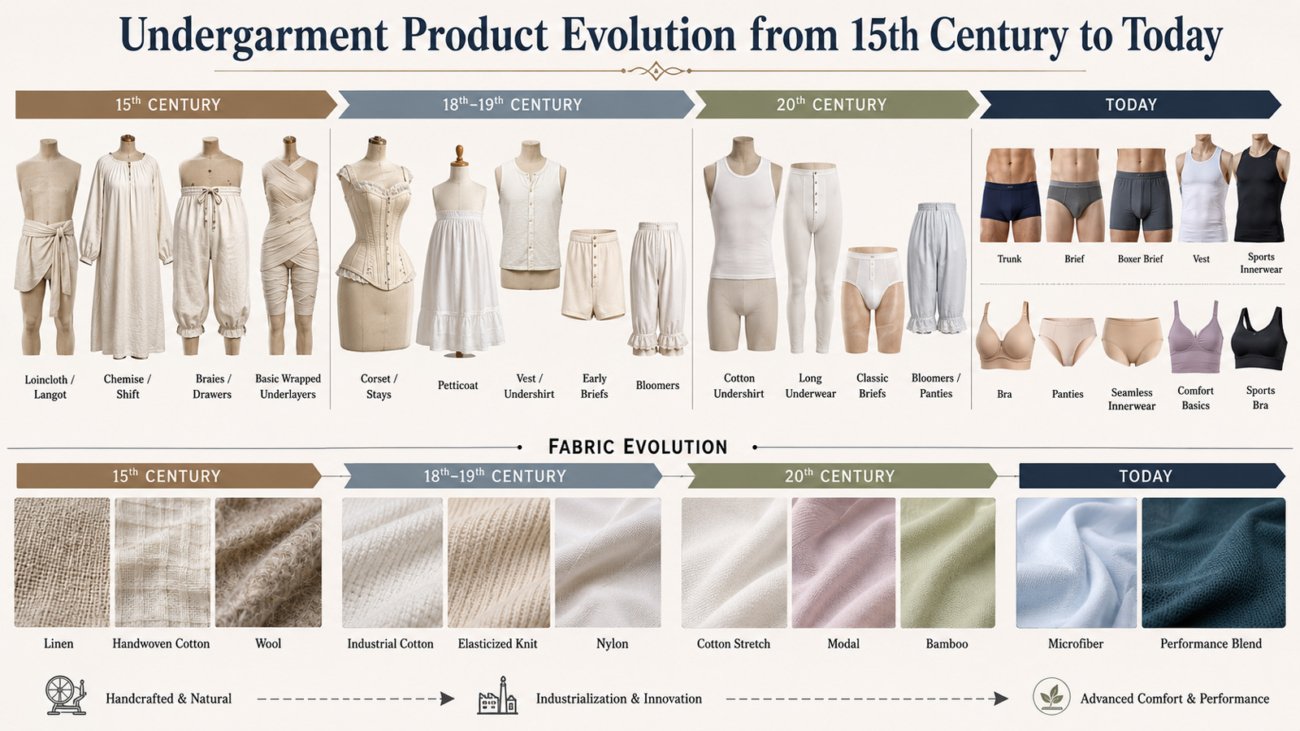
Undergarment Product Evolution from 15th Century to now days

Undergarment / Innerwear means clothing worn close to the skin, mainly for hygiene, body support, comfort, modesty, warmth, and later fashion. Earlier, undergarments were mostly simple cloth layers. Today, innerwear is a full business category covering men’s underwear, women’s lingerie, vests, bras, shapewear, thermal wear, kidswear, sports innerwear, plus-size, maternity, and athleisure innerwear.

Around 1500 AD / 16th century, people did not wear modern underwear like today’s briefs, trunks, bras, panties, or vests. Men mostly wore linen shirts on the upper body and braies on the lower body. Braies were loose underpants, similar to long shorts or drawers, usually tied at the waist with a cord. Men also wore hose, which covered the legs, and sometimes a codpiece in front, especially in European fashion. Linen was common because it absorbed sweat and was easier to wash than outer garments.

Women usually wore a chemise, also called a shift or smock, under their gown. It was a simple loose linen garment worn next to the skin. In many places, women did not wear modern-style underpants at that time. The chemise protected expensive outer dresses from sweat and body oils, so it worked like both an inner layer and hygiene layer. Wealthy women used finer linen, while poorer women used rougher, simple cloth.

In India and South Asia, common male undergarments were more like langot / kaupina / loincloth-style cloth, especially for daily work, physical activity, and wrestling. The main purpose of undergarments in that period was modesty, support, sweat absorption, and protection of outer clothing—not fashion or branding. There was no innerwear “brand business” like today; most garments were handmade at home, stitched by local tailors, or produced by local weavers.

Historically, underwear changed because of four big forces: body coverage, hygiene, fashion silhouette, and fabric technology. The V&A notes that underwear reflects changes in gender, morality, hygiene, body image, fashion, and fabric innovation.

Century-wise Undergarment Product & Business Model

CenturyMain product developmentFabric & technologyCustomer / society useBusiness model
6th–10th century CEBasic loincloths, wrapped cloth, simple tunic-like underlayers. In India, traditional forms like kaupinam/langot were used as male underclothing and for wrestling/physical work.Linen, cotton in warmer regions, wool in colder regions, handwoven cloth.Main purpose was modesty, protection, sweat absorption, and support during labour.Mostly home-made, local weavers, village tailoring, barter/local market. No brand concept.
11th centuryIn Europe, men used loose lower undergarments similar to braies; women used simple chemise/shift under gowns.Linen became important because it could be washed more easily than heavy outer garments.Undergarment became a hygiene layer between body and outer clothing.Cloth was still expensive; people owned limited pieces. Local textile trade grew slowly.
12th centuryBraies, hose, chemise, tunics became more organized. Undergarments started differing by class.More wool, linen, silk for wealthy people.Rich people used finer fabric; common people used rougher fabric.Tailors, dyers, cloth merchants grew in towns.
13th centuryMen’s hose and braies became common in Europe; women continued chemise/shift as base layer.Better weaving and dyeing.Underwear was still not fashion product; it was practical and hidden.Local guilds and tailoring professions became stronger in Europe.
14th centuryMen’s garments became shorter outside, so fitted hose and supportive underlayers became more important.Linen underlayers, wool hose.Shape and fit became more visible in men’s clothing.Tailored garments increased among wealthy and urban customers.
15th centuryChemise became a major women’s undergarment. Men used linen shirts and drawers with hose. FIT’s Fashion History Timeline says that in the 1450s, women’s dress foundation was an undyed linen chemise worn by rich and poor, while men used linen shirts and drawers. (Fashion History Timeline)Linen was important because it was washable.Hygiene and layering became more structured.Tailoring, weaving, and laundering became service-based work in cities.
16th centuryRenaissance period: corset-like “bodies,” farthingales, codpieces, chemise, petticoats. Innerwear started shaping the body.Linen, silk, whalebone, leather, stiffening materials.Underwear moved from only hygiene to body shaping and social status.Elite customers ordered custom garments. Court fashion influenced demand.
17th century“Bodies” or early stays shaped women’s torso. The line between underwear and outerwear was not always fixed; some garments could be both. Dress historian Sarah Bendall notes that 17th-century “bodies” could be underwear or outerwear depending on status, occasion, and use. (Sarah A. Bendall)Boning, buckram, silk, linen, ribbons, hand-stitching.Underwear became linked with class, posture, and discipline.Specialist makers, tailors, and women garment workers developed stronger roles.
18th centuryStays, chemise, petticoats, panniers, drawers in some regions. Underwear created fashionable silhouettes.Linen, silk, cotton, whalebone, hand embroidery.Innerwear reflected morality, modesty, and upper-class fashion.Colonial textile trade increased cotton movement. Made-to-measure garments dominated.
19th centuryHuge change: corsets, drawers, petticoats, crinolines, bustles, union suits, undershirts. V&A describes the 1870s bustle as a separate undergarment used to support the back shape of skirts. (Victoria and Albert Museum)Sewing machine, steel boning, elastic, industrial cotton, factory production.Underwear became more structured, especially for women’s silhouette. Men’s practical underwear also became standardized.Industrial Revolution created mass production, sizes, catalogs, department stores, and ready-made underwear.
Early 20th centuryCorsets started declining. Bras, briefs, undershirts, vests, slips, girdles, union suits became common. Mary Phelps Jacob patented the “Backless Brassiere” in 1914; MIT notes she later sold the patent to Warner Brothers Corset Company. (Lemelson MIT)Cotton knits, elastic, rayon, early synthetic materials.Women wanted lighter alternatives to corsets. Men wanted comfort and movement.Branded innerwear companies began growing through department stores and advertising.
1930s–1940sMen’s modern brief became a major innovation. Jockey says its brief launched in 1935 and sold strongly through Marshall Field & Company. (Jockey) Nylon stockings also became a major textile breakthrough; Science History Institute notes national nylon stocking sales began in 1940 and sold out quickly. (Science History Institute)Nylon, elastic waistbands, better knitting machines.Innerwear became a modern consumer product, not just basic clothing.Branded packaging, store displays, advertising, and mass distribution expanded.
1950s–1960sBras, panties, briefs, boxers, vests, girdles, slips, and children’s underwear became common household products.Lycra/spandex changed fit. LYCRA’s history says Joseph Shivers invented “Fiber K” in 1958, later known as LYCRA/spandex, which could stretch and recover. (Coolmax)Fit, stretch, femininity, and modern lifestyle became selling points.Television advertising and national brands became powerful.
1970s–1980sFashion underwear, low-rise briefs, sports underwear, shapewear, branded waistbands, designer innerwear.Polyester, nylon, spandex blends.Innerwear became visible in fashion culture. Men’s underwear marketing became aspirational.Brand identity, celebrity endorsement, department stores, and export licensing grew.
1990sBoxer briefs, trunks, padded bras, seamless panties, microfiber innerwear, premium men’s underwear.Microfiber, modal, better elastics, improved stitching.Comfort + fashion + sex appeal became major demand drivers.Mall retail, brand stores, catalogs, and early e-commerce started.
2000sSeamless, no-line panties, athleisure innerwear, shapewear, performance underwear, kids branded innerwear.Modal, micro modal, bamboo blends, moisture-wicking fabrics.Customers started caring about comfort, body fit, skin feel, and brand lifestyle.Organized retail, franchise stores, private labels, OEM/white-label manufacturing expanded.
2010sD2C brands, online lingerie, plus-size, body positivity, sports bras, printed men’s trunks, subscription underwear.Bamboo, modal, organic cotton, antimicrobial finish, 4-way stretch.Innerwear became personal, fashionable, and identity-based.Marketplaces, influencer marketing, Instagram ads, Amazon/Myntra/Flipkart-style selling.
2020s–todayComfort-first innerwear, sustainable fibers, bamboo/modal, breathable trunks, anti-rash stitching, seamless bras, shapewear, gender-neutral products, AI-based sizing, online-first launches.Bamboo modal, recycled fibers, Tencel/lyocell, performance polyester, micro modal, elastane.Customer wants comfort, hygiene, breathability, style, correct fit, fast delivery, and trusted reviews.E-commerce, marketplaces, quick commerce, D2C websites, AI search, creator-led ads, marketplace SEO, and data-driven manufacturing.

Undergarment Product Evolution from 15th Century to now days

We have to update undergarment products from the 15th century to today because human lifestyle, fabric technology, hygiene needs, and customer expectations have completely changed.

In the 15th century, undergarments were very basic. People mainly used linen shirts, chemise, braies, drawers, or loincloth-style garments. The main purpose was only body coverage, sweat absorption, modesty, and protecting outer clothes. There was no concept of branded innerwear, stretch fabric, perfect fitting, antibacterial finish, or fashion design.

Today, undergarments are not just hidden clothing. They are connected with comfort, skin health, confidence, hygiene, body support, and lifestyle. People wear innerwear for office, gym, travel, sleep, sports, daily work, and fashion. That is why modern products need soft fabric, breathable material, stretch, proper fitting, anti-rash stitching, waistband comfort, plus-size options, and better durability.

So the main reason is: undergarments changed from “basic body covering” to “daily comfort and confidence product.” That is why every innerwear brand must keep updating product design, fabric, fit, packaging, photoshoot, listing content, and customer experience according to modern demand.

“DispenserStore manufactur & delivers innerwear that supports every undergrament lifestyle—whether it’s daily wear, active routines, or relaxed moments at home. We blend innovation with reliable manufacturing to create men, women, and kids undergrament products that not only look good but feel even better. At Dispenserstore, our goal is simple: to make innerwear that offers confidence, comfort, and trust in every wear.“

List Of following data of which are updated undergarments product from 15th century to now days

Undergarments Old versionUndergarments Modern version
Loincloth / langotBriefs, trunks, athletic supporters
Chemise / shiftCamisole, slip, nightwear, women’s inner top
Braies / drawersBoxers, briefs, boxer briefs, trunks
Corset / staysBra, shapewear, waist cincher
PetticoatSaree petticoat, underskirt, shapewear skirt
UndershirtVest, tank top, T-shirt innerwear
GirdleModern shapewear
Wool thermal layerThermal innerwear, winter base layer
Handmade cotton undergarmentBranded cotton/modal/bamboo/spandex innerwear

India-specific Undergarment’s Product evolution

India-specific undergarment product evolution from the 15th century to today started from very simple, functional clothing. Around the 15th century, common Indian undergarments were not like today’s briefs, trunks, bras, panties, or vests. Men mainly used langot / kaupina / loincloth-style underclothing, especially for daily labour, farming, wrestling, and physical activity. The langot was a simple cotton cloth tied around the waist and between the legs, used for modesty, support, and movement. Even today, it is connected with Indian wrestling, kushti, kabaddi, and akhara culture.

For women, the product evolution was different because Indian clothing was traditionally based on draped garments, not fully stitched garments. Women wore sari-style drapes, ghagra-choli, odhani, and regional clothing forms. In many communities, the idea of a separate stitched blouse and petticoat became more standardized much later. Before the 1870s, some sources describe Indian women’s sari dressing as more fluid, with unstitched fabric being the norm and tailored blouse or petticoat not yet universal.

During the colonial period, Indian undergarment and inner-layer clothing changed strongly. British Victorian ideas of modesty influenced women’s dressing, especially in urban and elite society. The stitched blouse and petticoat became more common under the sari, creating the modern sari silhouette. This was a very important stage because Indian women’s innerwear slowly moved from only draped coverage to more structured supporting garments under outerwear.

From the 1990s to 2010s, Indian innerwear changed from a basic necessity to a branded product. Customers started asking for better fit, fabric, elastic quality, stitching, size chart, color, and packaging. Men’s underwear evolved into briefs, trunks, boxer briefs, boxers, and printed waistbands. Women’s innerwear evolved into padded bras, T-shirt bras, sports bras, seamless panties, hipsters, maternity innerwear, and shapewear. Online shopping also helped because customers could buy innerwear with more privacy and more product choice.

In the 20th century, India’s undergarment market became more organized. Men’s innerwear moved from langot and loose cotton drawers to baniyan, briefs, vests, boxers, and elastic-waist underwear. Women’s products also expanded into bras, panties, slips, petticoats, camisoles, and shapewear. This period created the foundation of India’s hosiery and innerwear business, where local manufacturers, wholesale markets, and retail shops became important.

Nowadays, people no longer see undergarments as just basic clothing worn beneath outerwear. Consumers expect innerwear to provide all-day comfort, proper fit, breathability, skin-friendly fabric, and confidence. Modern customers pay close attention to fabric quality, softness, stretchability, waistband comfort, moisture control, and durability. Many people believe that a good undergarment can improve their daily comfort, productivity, and overall confidence, whether at work, during exercise, or while relaxing at home.

At the same time, undergarments have become a lifestyle and fashion product. Customers look for features such as premium fabrics like cotton, bamboo, modal, and microfiber, along with attractive colors, prints, and modern designs. Online reviews, ratings, brand reputation, and product images strongly influence purchasing decisions. Today’s consumers want innerwear that not only feels comfortable but also reflects quality, personal style, and value for money, making undergarments an important part of their everyday wardrobe rather than just a necessity.

“DispenserStore manufactur & delivers innerwear that supports every undergrament lifestyle—whether it’s daily wear, active routines, or relaxed moments at home. We blend innovation with reliable manufacturing to create men, women, and kids undergrament products that not only look good but feel even better. At Dispenserstore, our goal is simple: to make innerwear that offers confidence, comfort, and trust in every wear.“

bono men underwear

BONOMEN Underwear – Reliable Support , Comfort & Innovative Design

BONOMEN’s underwear combines premium comfort, modern style, and everyday durability for confident all-day wear. Designed with soft breathable fabrics and a body-fit structure, BONO trunks deliver a snug yet flexible fit with stylish printed designs. Perfect for active and fashion-conscious men, BONO offers comfort, support, and a premium waistband finish for daily use

What Makes BONOMEN Underwear “Innovative”?

Innovative underwear goes beyond basic comfort by combining advanced fabric technology, ergonomic design, and modern functionality. Features like moisture-wicking materials, stretchable fabric blends, breathable mesh zones, anti-odor protection, and seamless construction help improve comfort, hygiene, and overall performance throughout the day. A well-designed waistband, body-contouring fit, and reduced friction areas also make underwear feel more supportive and premium.

Today’s innovative underwear is also focused on lifestyle and fashion. Brands are creating stylish prints, better pouch support, lightweight fabrics, and performance-based fits for gym wear, travel, and daily use. Sustainable materials, long-lasting elasticity, and smart tailoring further enhance durability and comfort, making modern underwear a blend of technology, style, and everyday practicality.

“DispenserStore manufactur & delivers innerwear that supports every undergrament lifestyle—whether it’s daily wear, active routines, or relaxed moments at home. We blend innovation with reliable manufacturing to create men, women, and kids undergrament products that not only look good but feel even better. At Dispenserstore, our goal is simple: to make innerwear that offers confidence, comfort, and trust in every wear.“

Innerwear Fabric Material Science: To focuses on improving comfort, breathability, durability, and performance through advanced material engineering. Modern underwear fabrics often include moisture-wicking properties to keep the skin dry, stretchable elastane for better flexibility and fit. A breathable cotton blends for airflow, anti-odor and antibacterial treatments for hygiene, and soft-touch finishes that reduce irritation.

Important Point in Underwear Pattern And Stitching:

  • Clean and even stitching with no loose threads or skipped seams,
  • Flatlock or seamless stitching to reduce skin irritation and friction,
  • Symmetrical panel cutting and accurate alignment of fabric patterns,
  • Proper pouch construction for comfort, support, and natural fit,
  • Smooth leg openings with balanced stretch and recovery,
  • Reinforced stress points to prevent tearing during movement
  • Precision finishing and neat hemming for a premium appearance

Tested Durability Of BONOMEN’s Underwear : BONO Men’s underwear durability is tested by evaluating fabric strength, stitching quality, elasticity, color fastness, and wash performance. Manufacturers perform repeated stretch tests on waistbands and leg openings to check elasticity retention, while seam strength tests ensure stitching can handle daily movement without tearing. Fabric abrasion tests measure resistance to friction and pilling, and wash tests are conducted through multiple laundry cycles to verify shape retention, softness, and color durability.

Key Function of Underwear Waistband: The waistband is one of the most important functional parts of men’s underwear, designed to provide secure fit, comfort, flexibility, and support throughout the day. A high-quality waistband keeps the underwear in place without rolling, slipping, or creating excessive pressure on the waist. It also helps maintain garment shape, improves overall fit, and enhances comfort during daily activities, workouts, and movement. Premium waistbands use soft, stretchable elastic materials that offer long-lasting elasticity, durability, and a stylish finish while reducing skin irritation and discomfort.

BONOMEN Plus Size Underwear Collection (M to 5XL) : The collection is crafted for modern men who want style, durability, and freedom of movement in every size. With reinforced stitching, shape-retention technology, and stylish modern designs, BONOMEN ensures that comfort and confidence are never limited by size.

“DispenserStore manufactur & delivers innerwear that supports every undergrament lifestyle—whether it’s daily wear, active routines, or relaxed moments at home. We blend innovation with reliable manufacturing to create men, women, and kids undergrament products that not only look good but feel even better. At Dispenserstore, our goal is simple: to make innerwear that offers confidence, comfort, and trust in every wear.“

The Gen’Z Design Philosophy of BONOMEN Underwear

BONOMEN underwear is designed for the Gen Z generation that values comfort, confidence, style, and individuality in everyday essentials. With modern fits, premium fabrics, bold aesthetics, and performance-driven comfort, BONOMEN blends fashion-forward design with all-day functionality.

Gen-Z Boy’s Thinking About Underwear : Gen Z boy see underwear as more than a basic necessity — they want a combination of comfort, style, performance, and self-expression. Soft breathable fabrics, stretch fit, moisture-wicking technology, and stylish waistbands are highly important for daily wear and gym lifestyles. Many young men also prefer premium-looking designs, bold prints, minimal branding, and underwear that feels fashionable enough to match their personality and confidence. Sustainability, ethical production, and body-inclusive sizing are also becoming major buying factors for this generation.

Gen-Z Girl’s Thinking About Underwear : Gen Z women prioritize comfort, confidence, inclusivity, and versatility in underwear. They prefer soft seamless fabrics, wire-free support, breathable materials, and body-positive fits that work for everyday comfort without compromising style. Women today also look for underwear brands that promote diversity, sustainability, gender-neutral thinking, and authentic representation rather than unrealistic beauty standards. Matching sets, aesthetic colors, fashionable cuts, and eco-friendly fabrics are highly popular, but comfort remains the top priority for most women while shopping for innerwear.

Gen Z Thinking About Underwear Design & Pattern : This generation sees underwear as part of personal style rather than just a basic essential. They are attracted to premium waistbands, clean silhouettes, body-fit cuts, and designs that feel fashionable enough for social media, gym culture, and modern lifestyles. Comfort remains important, but visual appeal and individuality strongly influence buying decisions.

Most Popular Gen Z Underwear Design & Pattern Choices

  • Minimal solid colors with premium waistband branding
  • Bold typography and logo-based waistband designs
  • Urban streetwear-inspired prints and patterns
  • Geometric and abstract modern patterns
  • Monochrome luxury themes (black, grey, navy, olive)
  • Sporty athletic designs with performance look
  • Stylish camouflage and textured prints
  • Graphic and youth-inspired artistic prints
  • Seamless and contour-fit modern cuts
  • Matching couple or coordinated color themes
  • Eco-friendly and soft natural fabric aesthetics
  • Limited-edition fashion collections and trendy seasonal colors

Gen Z mainly chooses underwear that looks stylish, feels premium, photographs well, and reflects confidence, personality, and lifestyle identity.

“DispenserStore manufactur & delivers innerwear that supports every undergrament lifestyle—whether it’s daily wear, active routines, or relaxed moments at home. We blend innovation with reliable manufacturing to create men, women, and kids undergrament products that not only look good but feel even better. At Dispenserstore, our goal is simple: to make innerwear that offers confidence, comfort, and trust in every wear.“