

 Cart is empty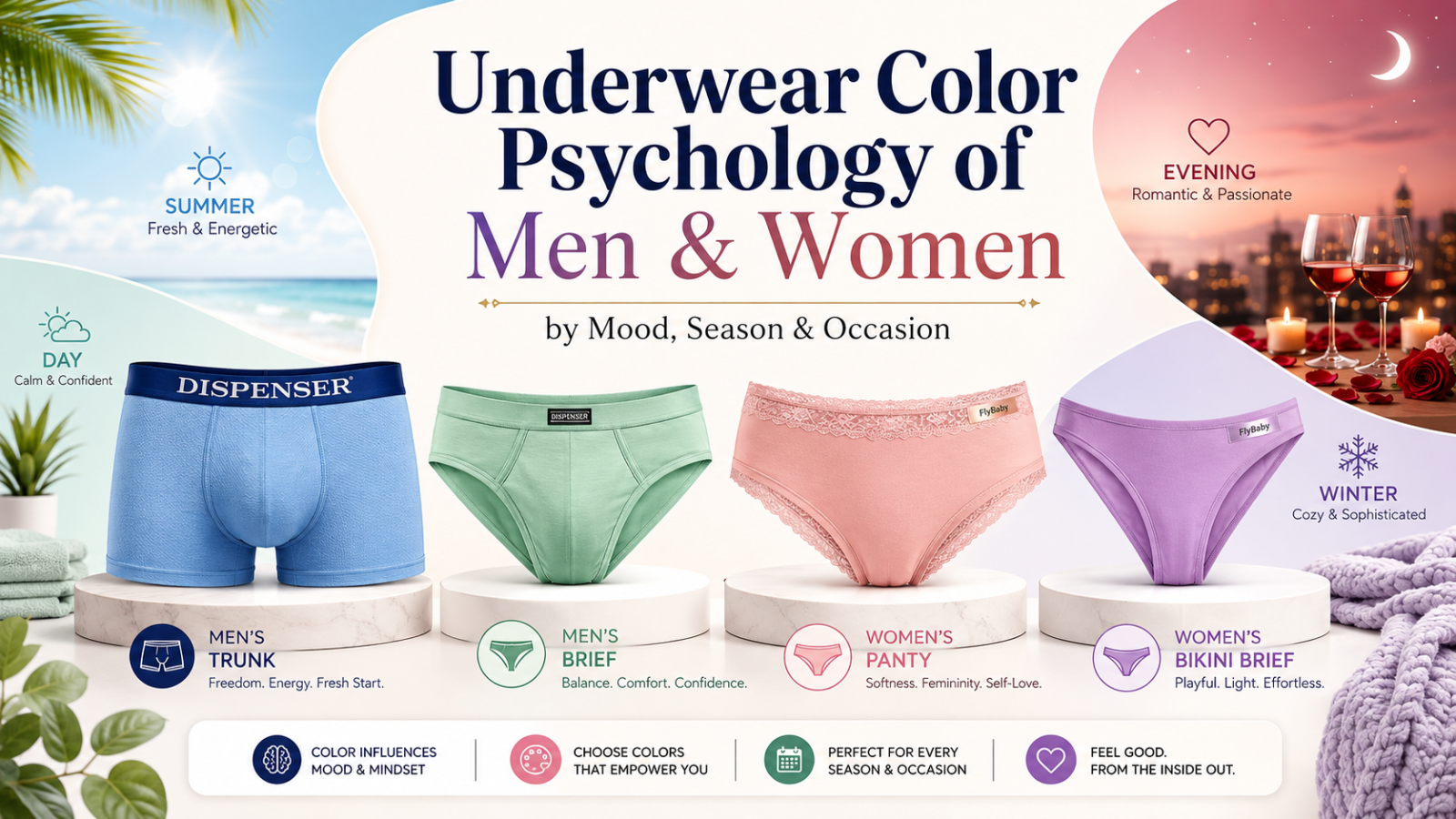
Underwear is the first layer we wear and one of the most personal parts of our wardrobe. We normally choose innerwear by size, fabric, fit and design, but color also plays an important role in how the product feels emotionally and visually.
A bright red pair may make someone feel bold and attractive, blue may feel calm and dependable, while white can give a clean and fresh impression. Research into color psychology suggests that colors can carry emotional associations, but these associations depend strongly on context, culture and personal preference. In other words, a color can influence mood and perception, but it does not literally create positive or negative biological “energy” in the intimate area.
For intimate-skin health, fabric breathability, fit, moisture control, washing, dye quality and skin sensitivity are much more important than the color itself. Textile dyes and finishing chemicals can occasionally cause irritation or contact dermatitis in sensitive people, particularly in warm, sweaty areas where clothing rubs against the skin.
1. Why Is Color Important in Underwear and Undergarments?
Color can affect confidence
Underwear may remain hidden beneath clothing, but knowing what you are wearing can still affect how you feel. Red, wine or black innerwear may create a bold or sophisticated feeling, while blue, white or pastel shades may feel relaxed and fresh.
Color helps express personality
People increasingly treat underwear as part of their personal style rather than simply a basic garment. Someone may prefer energetic orange, romantic wine, peaceful blue, minimalist grey or classic black depending on their personality and mood.
Color can match the occasion
A person’s preferred everyday underwear may be different from what they select for a workout, holiday, romantic evening or relaxed weekend. This gives innerwear brands an opportunity to build occasion-based color collections rather than offering only basic black and white.
Color matters under outerwear
White underwear isn’t always the least visible option underneath white clothing. A nude, beige or skin-tone shade close to the wearer’s complexion is often more discreet under light-colored garments.
Color can play a small role in heat
Darker surfaces generally absorb more radiant energy than lighter ones. However, because underwear is normally covered by other clothing, fabric weight, airflow and moisture management matter much more for actual intimate comfort than color alone.
2. Positive Underwear Colors and What Each Color Communicates
There is no medically defined “positive underwear color.” The following are better understood as positive psychological and fashion associations.
| Color | Feeling & Best Use |
|---|---|
| White | Communicates freshness, cleanliness and simplicity. It is also a practical option for people who prefer minimal dye exposure; Cleveland Clinic notes that people who are particularly sensitive to dyes may prefer plain white cotton underwear. |
| Beige / Nude | Soft, natural and understated. Excellent for daily wear and underneath light-colored clothing because it can blend more closely with skin tone. |
| Sky Blue | Often associated with calmness, clarity and relaxation. A good choice for everyday, sleepwear and warm-weather collections. |
| Navy Blue | Gives a mature, dependable and premium appearance. It works particularly well for men’s everyday innerwear and winter collections. |
| Mint / Light Green | Green is commonly associated with nature, balance and peacefulness. Mint shades also visually communicate freshness and can work well in summer ranges. |
| Pink / Blush | Soft pink can create a gentle, warm and romantic impression. Blush and dusty pink are particularly versatile for women’s intimate-wear collections. |
| Lavender | Feels soft, relaxed and slightly luxurious. It works well for sleep, lounge and premium women’s underwear ranges. |
| Red | One of the strongest statement colors. Red has associations with energy, attraction, passion and excitement, although its meaning varies depending on context. |
| Wine / Burgundy | Offers some of red’s romantic character while appearing deeper and more premium. Ideal for romantic, evening and winter collections. |
| Black | Classic, sophisticated and confident. It is extremely versatile, although individuals with known textile-dye sensitivity may prefer lighter or less heavily dyed garments. |
| Grey | Neutral, minimal and contemporary. Particularly suitable for everyday basics, activewear and men’s innerwear collections. |
| Orange / Coral | Energetic, youthful and playful. These colors can work particularly well for Gen Z-oriented, sporty or summer collections. |
Important skin-care point: A specific color is not automatically good or bad for genital skin. When irritation occurs, the issue can be the particular dye, finishing chemical, elastic, fabric or friction rather than “red,” “black” or another color itself. Textile dye reactions may worsen in areas exposed to sweat and friction.
3. Which Underwear Colors Are Best for Different Seasons, Times and Moods?
| Time / Occasion wise Recommended Colors | Why They Work |
|---|---|
| Summer (White, beige, mint, sky blue, pastel pink) | Light shades visually feel fresh and cool. For real summer comfort, combine them with breathable, lightweight and moisture-managing fabrics. |
| Winter (Navy, wine, burgundy, charcoal, forest green, black) | Rich, deeper shades create a warm and premium winter aesthetic and pair naturally with darker seasonal wardrobes. |
| Monsoon (Navy, teal, charcoal, burgundy) | Medium-to-dark shades can be practical when travelling during wet weather. More importantly, use underwear that manages moisture well and change out of damp underwear promptly. |
| Daytime (Nude, white, grey, blue, soft pastels) | Clean, versatile colors work easily with everyday clothing and provide a relaxed visual feel. |
| Night / Sleep (Sky blue, lavender, mint, soft grey, nude) | Softer colors are commonly associated with calmness and relaxation. Loose, breathable construction is more important than color for sleeping comfort |
| Romantic Time (Red, wine, burgundy, black, blush pink) | Red-family colors traditionally communicate passion and attraction, while black adds sophistication and confidence. |
| Relax Time (Blue, mint, green, lavender, grey) | Calm, low-intensity shades suit lounging, weekends and relaxed homewear. |
| Workout Time (Black, navy, charcoal, electric blue, green) | Sporty darker shades create an athletic look. Moisture management, stretch and changing after heavy sweating matter much more than color. |
| Couple Time (Wine, red, black, navy, blush, coordinated shades) | Couples can match the same color or use complementary colors to create a more intentional, intimate look. |
| Office / Daily Wear (Navy, grey, black, beige, white) | Neutral shades are practical, versatile and easy to pair with daily wardrobes. |
| Holiday / Travel (Teal, blue, coral, olive, beige) | Fresh and adventurous shades create a relaxed vacation mood while remaining practical for everyday use. |
| Special Date (Burgundy, black, deep red, plum) | Rich colors can make innerwear feel more premium and occasion-focused. |
4. Which Colors Can Give Men a More Positive Feeling in Underwear?
Rather than saying these colors physically give positive energy to men’s intimate areas, we can say that certain colors may support feelings such as confidence, calmness, freshness or attraction.
Blue and Navy — Calm & Confidence
Blue is commonly linked with calmness, clarity and dependability. Navy makes men’s underwear look sophisticated and is one of the easiest colors to include in everyday collections.
Green — Balance & Freshness
Green carries associations with nature, stability and balance. Olive, forest green and mint also give men’s innerwear a modern alternative to standard black and navy.
Red — Energy & Attraction
Red visually communicates strength, action and attraction. It can be an excellent choice when a man wants underwear that feels bold rather than basic.
Burgundy / Wine — Mature Romance
Wine and burgundy are less visually aggressive than bright red while still creating a romantic and premium feeling. They work especially well for date-night or couple-oriented collections.
White — Fresh & Minimal
White communicates cleanliness and simplicity. For people with very sensitive skin or known dye sensitivity, plain white cotton may also be worth considering.
Black — Strong & Sophisticated
Black remains one of the strongest men’s underwear colors because it looks modern, premium and versatile. There is no scientific basis for describing black underwear as “negative energy.”
Best men’s color wardrobe: Instead of wearing one “lucky” color every day, a practical wardrobe could include white or nude for light clothing, navy/grey/black for daily wear, blue/green for relaxed days, and red/wine for romantic occasions.
5. Which Underwear Colors Give Men “Negative Energy”?
Scientifically, there are no negative-energy underwear colors for men.
Black does not harm male intimate health because it is black. Red does not increase intimate energy because it is red. Grey does not reduce masculinity or testosterone.
However, some color choices can become less practical in particular situations.
Very dark underwear may feel visually heavy during hot summer months, while neon or very intensely dyed garments may not be ideal for someone who already has a known textile-dye allergy. The important factor is the type and quality of dye, not whether the finished garment happens to be red, blue or black.
DermNet notes that textile dye allergy can lead to dermatitis and that perspiration can encourage some unbound dyes to leach from clothing. For dye-sensitive individuals, lighter-colored clothing may be preferable.
6. Which Colors Can Give Women a More Positive Feeling in Underwear?
Women’s intimate wear has an especially broad color palette because underwear can represent comfort, fashion, confidence and intimacy simultaneously.
White — Clean and Fresh
White has a simple, clean appearance and is especially useful for women with very sensitive skin who prefer fewer dyes. Cleveland Clinic specifically advises plain white cotton as an option for people who are extra sensitive to colorful underwear dyes.
Nude / Skin Tone — Natural Confidence
Nude underwear is one of the most practical choices for everyday dressing. Offering multiple nude shades rather than a single “beige” also allows more women to find colors that complement their own skin tone.
Blush Pink — Soft & Romantic
Dusty pink and blush communicate softness without being overly bright. They work well for everyday premium underwear as well as romantic collections.
Lavender — Calm & Premium
Lavender combines a relaxing pastel feeling with a more fashion-led appearance and is especially suited to lounge and sleep collections.
Mint Green — Fresh & Relaxed
Mint feels light, fresh and modern. It can be especially attractive for spring and summer underwear collections.
Blue — Calm & Contemporary
Pastel blue creates a fresh impression, while navy creates a sophisticated one. Both can provide an alternative for women who do not want traditionally feminine pink or red.
Red / Wine — Confidence & Romance
Red is strongly associated with attraction and energy in many contexts, which explains its continued popularity in intimate apparel. Wine provides a more mature, luxurious interpretation of the same concept.
Black — Classic Confidence
Black remains timeless for women’s underwear because of its elegant, confident appearance. Again, black itself isn’t harmful to intimate health.
7. Which Colors Give Women “Negative Energy” and Should Be Avoided?
There is no scientific list of negative-energy colors that women need to avoid around the intimate area.
What deserves more attention is skin sensitivity.
The vulvar area can be sensitive to irritation, and clothing dyes, synthetic materials, sweat, tight garments and other textile chemicals can sometimes contribute to problems. Cleveland Clinic recommends breathable cotton underwear for regular wear and notes that people who are particularly sensitive to dyes can choose plain white cotton.
Dermatology guidance also explains that clothing dermatitis can become worse where there is friction and sweating, including the groin area.
Therefore, a woman with no dye sensitivity does not need to stop wearing black, red, purple, blue or any other favorite color.
But someone who repeatedly experiences irritation after wearing certain colored garments could try:
lighter or undyed underwear, breathable cotton, properly washed new garments, a comfortable fit and products from manufacturers using reliable textile dyes and finishing processes.
Persistent itching, burning, rash or irritation should be discussed with an appropriate healthcare professional rather than assuming that a particular color is responsible.
The best underwear combines the color you enjoy with breathable fabric, skin-friendly dyeing, comfortable stretch, moisture control, soft seams, the right fit and good hygiene. For women especially, breathable underwear such as cotton can help manage moisture, while dye-sensitive consumers may benefit from simpler, lighter-colored options.
Add a Comment