

 Cart is empty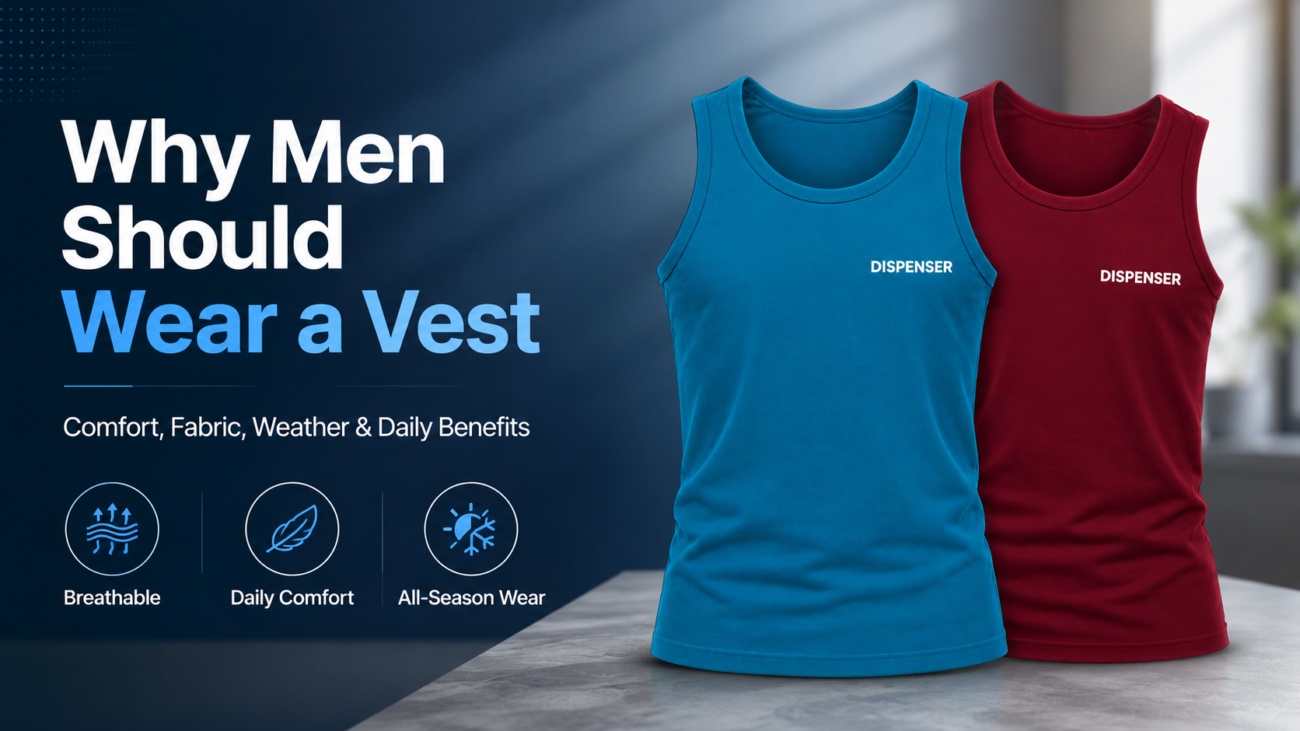
Why Should Men Wear a Vest? Complete Guide for Everyday Comfort
A vest is one of the simplest pieces of men’s clothing, but its role is much bigger than many people realise. For generations, men have worn vests underneath shirts, T-shirts, kurtas and formal clothing. Today, modern fabrics such as cotton, cotton Lycra, modal and bamboo blends have made men’s vests softer, lighter and more comfortable.
But do men actually have to wear a vest?
The answer is no. Wearing a vest is a personal choice. However, a good-quality vest can improve comfort, help manage perspiration, provide an additional layer between the skin and outer clothing, and make everyday dressing more convenient.
For example, imagine a man travelling to work during an Indian summer. Without an inner layer, perspiration may reach his formal shirt quickly. A lightweight, breathable vest can absorb some moisture and reduce the feeling of the shirt sticking directly to the body.
That is why a vest remains an important everyday innerwear option for many men.
1. Why Do Men Wear a Vest?
The primary purpose of a men’s vest is to create a comfortable layer between the body and outer clothing.
A vest can help with:
- Managing perspiration and reducing direct sweat transfer to shirts.
- Preventing certain rough fabrics or seams from rubbing directly against the skin.
- Giving additional coverage underneath thin or light-coloured shirts.
- Keeping outer garments fresher for longer.
- Providing light insulation during cooler weather.
- Creating a smoother base underneath formal or fitted clothing.
Example
Suppose Rahul works in an office and wears a formal light-blue shirt every day.
During summer, perspiration may become visible around his chest and back. Wearing a breathable cotton or modal vest underneath can absorb some of that moisture before it reaches his shirt.
For someone travelling by public transport or working for long hours, the additional comfort can make a noticeable difference.
2. Which Fabrics and Patterns Are Used in Men’s Vests?
Modern men’s vests are available in many fabrics. The best choice depends on weather, activity level, budget and personal preference.
| Fabric | Characteristics & Best For |
|---|---|
| Cotton | Soft, breathable and familiar – Everyday wear |
| Combed Cotton | Smoother and softer than regular cotton – Premium daily wear |
| Cotton Lycra | Cotton comfort with added stretch – Active everyday use |
| Modal | Very soft, lightweight and smooth – Premium comfort |
| Bamboo-based fabric/blends | Soft, breathable and moisture-friendly – Hot weather and premium innerwear |
| Cotton-Modal Blend | Balance of softness, breathability and durability – Daily premium use |
| Polyester Blend | Quick drying and durable – Gym and sports |
| Microfiber | Lightweight and quick drying – Travel and active use |
| Wool/Merino Blend | Provides greater warmth – Cold winter conditions |
Cotton Vest
Cotton is perhaps the most commonly recognised fabric for men’s vests. It is breathable and comfortable for regular use.
Example: A basic white cotton vest worn underneath an office shirt.
Cotton Lycra Vest
Adding Lycra or elastane gives the vest stretch and helps it follow body movement.
Example: A man who rides a bike, works out or moves frequently during his workday may prefer a stretch cotton vest.
Modal Vest
Modal has a smooth and soft hand feel. It is commonly used in premium innerwear because the fabric can feel lighter and softer against the skin.
Example: Someone wearing a vest for 10–12 hours may prefer modal because of its smooth feel.
Bamboo-Based Vest
Bamboo-derived viscose or bamboo blends are increasingly used in innerwear because they can feel soft and breathable.
Example: A lightweight bamboo-blend vest can be comfortable during warm weather or long working days.
Popular Vest Patterns and Constructions
Men’s vests do not need to be limited to plain white designs.
| Pattern / Construction | Description |
|---|---|
| Solid | Single-colour vest; most common style |
| Ribbed | Vertical knitted texture with stretch |
| Mesh / Perforated | Designed to improve airflow |
| Striped | Horizontal or vertical stripe designs |
| Printed | Fashion-oriented graphics or patterns |
| Melange | Mixed-yarn appearance, commonly grey |
| Contrast Binding | Different colour around neck or armholes |
| Logo Vest | Small chest branding for a premium look |
For innerwear, solid white, black, grey and skin-friendly neutral colours remain very popular, while modern vests are increasingly available in navy, teal, maroon and other fashion colours.
3. Which Vest Is Best for Summer, Winter and Monsoon?
The best vest should be selected according to weather rather than using the same heavy or light fabric throughout the year.
Best Vest for Summer
Indian summers can be hot and humid. During this season, breathability and lightweight construction become important.
Recommended fabrics include:
Cotton, combed cotton, modal, bamboo blends and lightweight cotton-modal fabrics.
The vest should ideally feel: Breathable, lightweight, soft and comfortable during perspiration.
Summer Example
A person travelling from home to office in 38°C weather may choose a lightweight modal or cotton vest underneath a formal shirt.
A thick or heavy fabric may feel uncomfortable in such conditions, while a lighter material can provide better everyday comfort.
Best Vest for Monsoon
During monsoon, clothes may take longer to dry because of high humidity. Therefore, a vest that dries relatively quickly can be useful.
Suitable options include: Light Nylon blends, modal blends, microfiber and performance polyester blends.
Monsoon Example
Imagine travelling to work on a rainy morning. Your clothes become slightly damp because of humidity or rain.
A very heavy cotton garment may remain wet longer. A nylon blend or quick-drying fabric can be more practical.
Best Vest for Winter
During winter, the purpose of the vest changes slightly. Instead of focusing only on sweat management, it can become part of a layering system.
Suitable options include: Medium or high weight cotton, cotton blends, thermal fabrics and wool/merino blends for colder climates.
Winter Example
A man living in Delhi during December may wear : Vest → Shirt → Sweater/Jacket
The vest adds another layer without requiring a bulky garment directly against the skin.
Weather-Wise Vest Guide
| Season | Recommended Fabric & Important Feature |
|---|---|
| Summer | Cotton, Modal, Bamboo Blend – Breathability |
| Humid Summer | Modal, Lightweight Cotton Blend – Moisture comfort |
| Monsoon | Cotton Blend, Microfiber – Faster drying |
| Mild Winter | Medium-weight Cotton – Light insulation |
| Cold Winter | Thermal / Wool Blend – Warmth |
| Gym / Active Use | Polyester Blend, Cotton Lycra – Stretch + quick drying |
4. What Are the Benefits of Wearing a Vest Every Day?
A vest can offer several practical advantages when worn as part of daily clothing.
Sweat Management
One of the biggest reasons men wear vests is to create an absorbent layer underneath their shirts.
For example, during an office commute, the vest may absorb perspiration around the back and chest before it reaches the outer shirt.
Better Comfort
A soft vest keeps a layer of fabric between your skin and your shirt. This can be helpful when wearing uniforms, formal shirts or fabrics that feel less comfortable directly against the skin.
Helps Protect Outer Clothing
Perspiration, body oils and deodorant can affect shirts over time. A vest creates an additional barrier, potentially reducing how much direct contact the outer garment has with the body.
Additional Coverage
A vest underneath a light-coloured shirt can provide more coverage.
For example, under a thin white office shirt, a well-fitted vest can make the overall outfit feel more comfortable and appropriate.
Useful for Layering
During winter, a vest can form the first layer of clothing without adding significant bulk.
5. Why Wear a Vest at Night?
It is not necessary for everyone to wear a vest while sleeping. The choice depends on weather, room temperature and personal comfort. During warmer months, some people may prefer sleeping without a vest because fewer layers can feel cooler. However, a lightweight, loose and breathable vest can also work as comfortable sleepwear, especially when someone wants more upper-body coverage.
Example: Summer Night
If your bedroom is warm and humid, a lightweight cotton or modal vest with loose shorts may provide comfortable sleepwear.
Example: Air-Conditioned Room
When sleeping in a strongly air-conditioned room, a soft vest provides a light extra layer without requiring a full T-shirt.
Example: Winter Night
During winter, a vest can become the first layer underneath a T-shirt, night suit or thermal garment. The important point is that a night vest should be comfortable, breathable and not excessively tight.
6. Which Colours Are Most Popular in Men’s Vests?
White remains one of the most traditional men’s vest colours because it works underneath many shirts. But men’s innerwear has evolved significantly, and modern consumers increasingly choose coloured vests as well.
| Vest Colour | Best Usage |
|---|---|
| White | Traditional daily and formal wear |
| Black | Modern, versatile styling |
| Grey | Casual and neutral |
| Navy Blue | Premium everyday look |
| Teal / Airforce Blue | Contemporary fashion |
| Maroon / Wine | Premium and stylish appearance |
| Skin / Beige | Useful under some light-coloured clothing |
| Orange / Bright Colours | Casual and fashion-focused wear |
Example
A white vest may work well under a business shirt. A black, teal or maroon premium vest can also be worn as relaxed homewear or styled as an outer layer in appropriate casual settings. That means today’s vest is no longer only an invisible piece of innerwear.
7. Can Wearing a Vest Make Your Lifestyle Look Rich?
A vest does not make someone wealthy, and clothing alone cannot create a “rich lifestyle.” However, premium innerwear can make everyday dressing feel more refined, comfortable and well considered. There is an important difference between looking expensive and living comfortably. A high-quality vest made from soft fabric, with clean stitching, good fitting, subtle branding and premium colours can contribute to a polished personal style.
Example : Modern Lifestyle Vest
A basic white cotton vest underneath a shirt serves a purely functional purpose.
Imagine a well-fitted teal modal vest with subtle DISPENSER branding, paired with lounge trousers while relaxing at home. The same product may offer both comfort and a modern premium appearance.
A man travelling may wear a soft stretch vest underneath an overshirt. When he reaches the hotel or home, the vest can also work as comfortable lounge clothing. This kind of versatility is what makes modern premium innerwear feel more lifestyle-oriented.
Conclusion: Is a Vest Worth Wearing Every Day?
For many men, yes.
A vest is a simple garment, but it can improve everyday comfort by adding a breathable layer between the body and outer clothing, helping manage perspiration, providing additional coverage and supporting seasonal layering.
From classic cotton vests to premium modal and bamboo-blend styles, modern men’s vests are designed for far more than basic innerwear.
Whether you’re heading to the office, travelling, relaxing at home, working out or layering clothes during winter, choosing the right vest can make everyday dressing more comfortable.
And today’s vest does not always have to remain hidden underneath a shirt.
With modern colours, premium fabrics and clean designs, it can become part of a man’s everyday comfort lifestyle.
Suggested DISPENSER closing line
DISPENSER Men’s Vests — Made for Everyday Comfort, Modern Style and Every Season.